Beyond the Text: How Emojis Guide Meaning in Your Private Chats

Feb 21,2026
Think about your last few one-on-one text conversations. Chances are, they were sprinkled with emojis. We add them almost without thinking—a heart here, a laughing face there. But have you ever stopped to consider just how much weight these tiny icons carry in a private chat? They're not just digital confetti. In the absence of vocal tone and body language, emojis become essential guides, subtly shaping how our messages are interpreted and received.
When you're texting with a friend, partner, or colleague, the plain text of your message is just the skeleton. The emoji you choose puts flesh on the bones. It provides the emotional context that words alone can struggle to convey. A simple "okay" can feel cold, neutral, or even sarcastic. But "okay 😊" feels warm and agreeable, while "okay 🙄" carries a whole different, more dismissive energy. The core message is identical, but the perceived meaning shifts entirely based on that single visual cue.
The Mechanics of Clarity and Disambiguation
One of the most powerful functions of emojis in private messaging is disambiguation. They act as a preventative measure against misunderstanding. Sarcasm and dry humor are notoriously difficult to communicate in text. A comment that would be delivered with a wink and a smile in person can land flat or even seem rude in a chat. This is where the winking face 😉 or the upside-down smiley 🙃 often comes to the rescue, signaling playful intent.
Similarly, emojis can soften requests or critical feedback. "Can you send me that file?" is a direct question. "Can you send me that file? 🙏" feels more like a polite request. The praying hands emoji adds a layer of courtesy and appreciation that the text lacks. This subtle guidance helps maintain the harmony of the conversation, ensuring the emotional subtext matches your intent. For more on how these cues operate in fast-paced exchanges, you might find this analysis of emojis in rapid chat interesting.
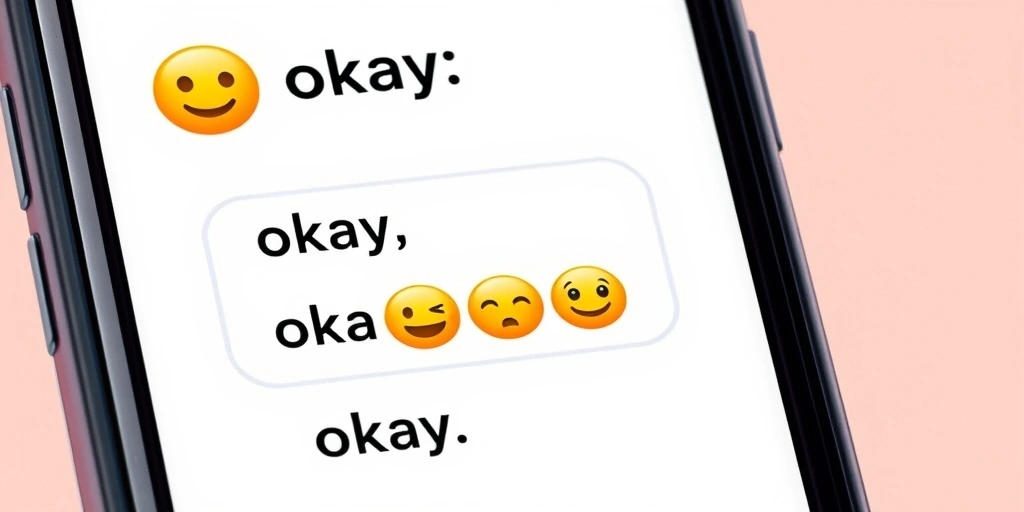
This guidance system extends to building and maintaining rapport. In a flowing conversation, reciprocating or mirroring the emoji tone of the other person can create a sense of alignment and understanding. If they use a lot of positive, expressive emojis, responding in kind reinforces a friendly, engaged dynamic. It's a non-verbal way of saying, "I'm on your wavelength."
Establishing Tone and Building Connection
From the very first messages in a chat, emojis help set the tone. A conversation that starts with a cheerful "Hey there! 👋" immediately establishes a more casual, friendly atmosphere than a simple "Hello." This initial cue helps both parties understand the expected register for the interaction—is this a formal discussion or a relaxed catch-up?
As the chat progresses, emojis serve as continuous emotional feedback. They are the nods, smiles, and raised eyebrows of the digital world. A heart ❤️ in response to good news amplifies shared joy. A thoughtful face 🤔 shows you're considering what they've said. A crying-laughing emoji 😂 tells them their joke truly landed. This feedback loop is crucial for connection, making the other person feel heard and the conversation feel alive and responsive, even through a screen.
It's fascinating to consider how these small icons influence the very rhythm of our digital dialogues. The placement and frequency of emojis can pace a conversation, creating pauses or emphasis much like punctuation, but with more emotional resonance. You can explore this idea further in our piece on the unseen rhythm of emojis in chat.
When Guidance Becomes Noise
Of course, this system of guidance isn't foolproof. The interpretation of emojis can vary between people, generations, and cultures. What feels like a friendly gesture to one person might be perceived as overly familiar or unprofessional by another. Overuse of certain emojis can also dilute their meaning or make a message seem cluttered and difficult to parse. The key is intentionality—using emojis not as automatic filler, but as deliberate tools to clarify and enhance your intended message.
Ultimately, in the intimate space of a one-on-one chat, emojis function as a sophisticated layer of non-verbal communication. They fill the gap left by our voices and expressions, providing the tonal color and emotional nuance that pure text strips away. They guide interpretation, prevent missteps, and foster a sense of closeness. So the next time you tap that smiley face before hitting send, remember: you're not just decorating your words. You're carefully steering how they'll be understood.
Understanding these mechanics can make us all more mindful and effective communicators in our digital lives. For more insights into how emojis shape our interactions, browse other articles in our emoji & communication category.
📒 Related Blogs
More...The Tiny Peacekeepers: How Emojis Calm Unexpected Reactions in Chat
The Quiet Language of Family: How a Simple Emoji Says 'I'm Here'
Emoji Etiquette: Mastering the Unwritten Rules of Digital Communication
Decoding Emoji Trends: What's Hot, What's Not, and Why It Matters
Emoji Evolution: A Fascinating History of Digital Feelings & Communication
The Art of Intentionality: How Emojis Transform Casual Digital Chats