The Emoji Effect: How Tiny Icons Shape the Mood of Fast-Paced Chats

Feb 20,2026
You know the feeling. You're in a lively group chat, messages are flying, and you type out a quick comment. You hit send. A beat of silence. Then, a reply that feels… off. A little defensive, maybe a touch cold. What happened? Chances are, in the speed of the exchange, your tone got lost in translation. This is where our tiny, colorful friends—emojis—step in as unsung heroes of digital conversation.
In fast-moving threads, whether it's a work Slack channel, a family WhatsApp group, or a Twitter reply chain, we don't have the luxury of body language or vocal inflection. Text alone is a stark landscape. A simple "Okay" can be read as agreeable, passive-aggressive, or downright annoyed. Without a cue, people default to their own emotional state or, worse, assume the worst.
The Speed of Misunderstanding
When conversations move quickly, there's no time for lengthy explanations or clarifications. A sarcastic joke can land like a lead balloon. A genuine suggestion can be misinterpreted as criticism. This is the breeding ground for digital friction. An emoji acts as a instant tone-setter, a flag planted on your message that says, "Read me this way."
Think about the difference between "Great job 😊" and "Great job." The first feels warm and appreciative. The second can feel curt, even sarcastic. The emoji doesn't just add emotion; it actively defines the emotional container for the words. It's the difference between a high-five and a blank stare.
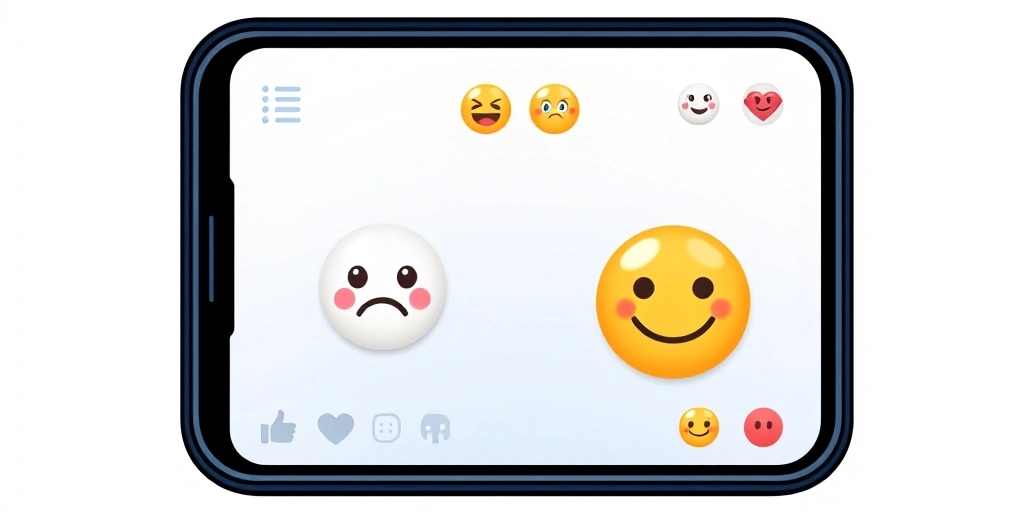
This becomes crucial in collaborative or stressful environments. A team is debating a tight deadline. Someone messages, "This is taking too long." It could be a frustrated complaint. But add a weary face 😩 or a thinking face 🤔, and it transforms into a shared expression of challenge or a thoughtful observation. The emoji signals your intent to the group, keeping the conversation productive instead of personal.
Beyond the Obvious: Nuance at Pace
It's not just about slapping a smiley on everything. The choice of emoji carries specific weight. In a fast thread, a 😅 (smiling face with sweat) can de-escalate a minor mistake, saying "Oops, my bad, let's move on." A 🎉 (party popper) can instantly rally the group around a small win. A simple ❤️ (red heart) on a supportive message deepens the connection without needing a paragraph of affirmation.
These icons function as emotional filters. They can soften a blunt request ("Can you send that file? 🙏") or sharpen a witty comeback ("Nice try. 😏"). They provide the subtext we naturally communicate in person, delivered at the speed of the conversation itself.
Perhaps the most powerful function in rapid exchanges is the emoji's ability to manage expectations. As discussed in our look at the unspoken rules of emojis, a 🕒 (clock) can signal patience, a 👍 (thumbs up) can seal an agreement without further chat, and a 😬 (grimacing face) can preemptively acknowledge a tricky subject. This silent coordination keeps the thread moving smoothly.
Building Rhythm and Culture
In recurring groups, emojis develop a shared shorthand. A particular inside-joke emoji, a recurring reaction gif (often emoji-based), or a standard celebratory icon creates a unique conversational rhythm and group culture. This shared language builds cohesion and makes fast-paced interactions feel less chaotic and more like a coherent, flowing discussion among friends or colleagues.
Of course, it's not foolproof. Overuse can dilute meaning, and misinterpretations still happen (the infamous 😬 grimace is a classic chameleon). But in the vast, text-heavy plains of our daily digital communication, emojis are the quickest, most effective tools we have to paint our words with the right feeling. They are the punctuation of emotion for the modern age, ensuring that in the race to communicate, our humanity doesn't get left behind.
So next time you're typing into a buzzing chat, pause for a half-second. Consider the emotional space your words will occupy. That one tiny icon might be all it takes to turn a potential miscommunication into a moment of perfect, speedy understanding.
For more insights into how emojis shape our digital dialogues, explore our articles on emoji and communication.
📒 Related Blogs
More...How Emojis Keep Up with the Ever-Changing Digital World
Unlock Clarity: How Emojis Transform Quick Chats from Confusing to Crystal Clear
Unlocking Emotions: How Emojis Completely Transform How Your Messages Are Received Online
Emoji Magic: Why a Simple Icon Beats a Thousand Words in Casual Conversation
The Evolving World of Emojis: Trends, Innovations, and What's Next for Digital Expression