The Emoji Filter: How a Tiny Icon Softens or Sharpens Your Text

Feb 19,2026
The Unspoken Tone of Our Screens
Think about the last time you sent a simple, factual text. Maybe it was "I'm running 10 minutes late" or "The meeting is at 3." On their own, these statements are neutral, pure information. But in the silent void of a text bubble, neutrality can sometimes feel cold, or even sharp. It's in this space that the humble emoji steps in, not as a replacement for words, but as a crucial filter for them.
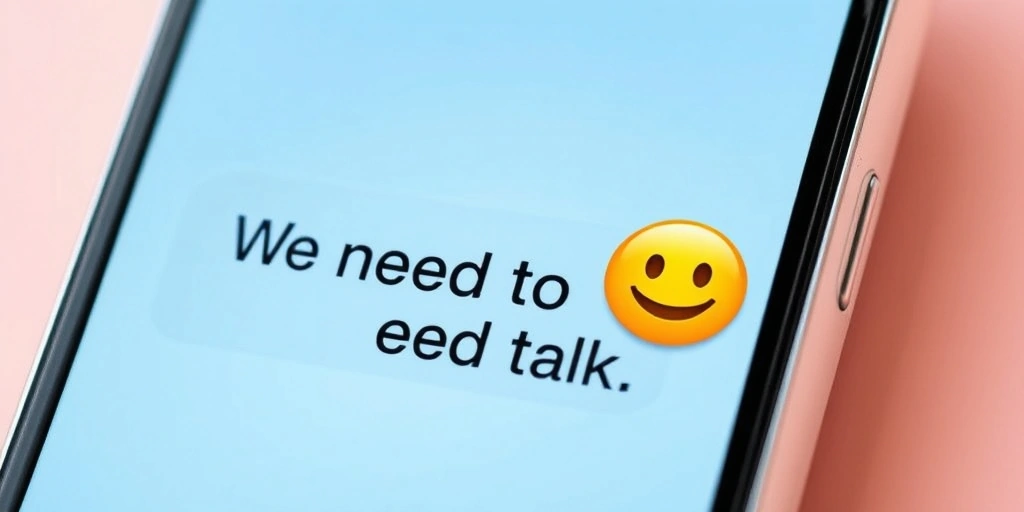
We use emojis instinctively to adjust the perceived directness of our messages. A period can feel final; a smiling face can make the same sentence feel like a gentle nudge. This isn't about being dishonest or sugar-coating. It's about compensating for the lack of body language, vocal tone, and facial expressions that naturally soften our communication in person. In a way, emojis are the digital equivalent of a warm tone of voice or a friendly shrug.
From Statement to Suggestion
Consider the difference between these two messages:
"Can you take out the trash?"
Versus:
"Can you take out the trash? 😊"
The first is a direct question. It's clear, but it can land as a bare command depending on the context and relationship. The second, with the simple addition of a smile, transforms the request. It injects warmth and friendliness, framing it as a collaborative ask rather than a directive. The emoji acts as a cushion, softening the potential bluntness of the written question. It makes the message feel less like a transaction and more like a conversation between people who like each other.
This softening effect is a key part of how emojis function in our daily chats. You can read more about this phenomenon in our piece on how emojis change the tone of professional messages.
The Flip Side: Amplifying Directness
But emojis aren't just for softening. They can also be used to amplify a message's directness or urgency, often by replacing words that would otherwise be needed. A single 🚫 can convey a firm "no" or "don't" more powerfully than the word itself in some contexts. A string of red exclamation marks ❗❗❗ screams urgency without typing "this is super important!!!"
In these cases, the emoji isn't softening the message; it's concentrating it. It removes ambiguity and leaves little room for interpretation. This is particularly useful in fast-paced, casual conversations where efficiency is key. A thumbs-up 👍 can swiftly confirm agreement, closing a loop more neatly than "sounds good" might.
Navigating the Gray Areas
The power of emojis to adjust directness isn't always straightforward. Their interpretation is deeply cultural and personal. A winking face 😉 following a critique might be intended to soften the blow, signaling it's all in good fun. But to the recipient, it could feel dismissive or sarcastic, making the critique feel even more pointed.
Similarly, the period (.) has evolved in digital talk. For many, especially in casual chats, ending a sentence with a period can now feel intentionally severe or passive-aggressive. Adding a harmless-looking emoji after that period can become a necessary peace offering, a way to say, "See? I'm not mad. I'm just using proper punctuation."
This dance is constant. We're all subconsciously calibrating, asking ourselves: Is this too blunt? Will they think I'm annoyed? Does this need a little warmth? The emoji palette is our toolkit for that calibration. For a deeper look at how these tiny icons shape longer conversations, explore the secret life of emojis in slow chats.
The Implication of a Filter
What does it mean that we've come to rely on these pictorial filters so heavily? It speaks to a fundamental desire in human communication: to be understood not just for our words, but for our intent. In the efficient, text-heavy world of messaging, emojis restore a layer of emotional context that gets stripped away. They allow us to be direct with our information while being gentle with our tone, or to be emphatic without being overly wordy.
They remind us that behind every text bubble is a person trying to connect. The next time you pause before hitting send, considering which emoji to add (or whether to add one at all), you're not just decorating your text. You're fine-tuning your voice, adjusting the volume and temperature of your words, and actively participating in the subtle, ongoing project of being clearly and kindly understood.
📒 Related Blogs
More...The Secret Life of Emojis: How Internet Trends Shape Our Digital Emotions
The Ever-Shifting Emoji Code: How Online Trends Reshape Digital Language
How a Simple Emoji Can Save Your Busy Workday
How Emojis Evolve: The Secret Life of Our Favorite Digital Symbols
The Secret Life of Emojis in Slow Chats: How a Simple Icon Changes Everything
The Secret to Friendly Slack Messages? It's All in the Emoji