How Emojis Evolve: The Secret Life of Our Favorite Digital Symbols

Feb 18,2026
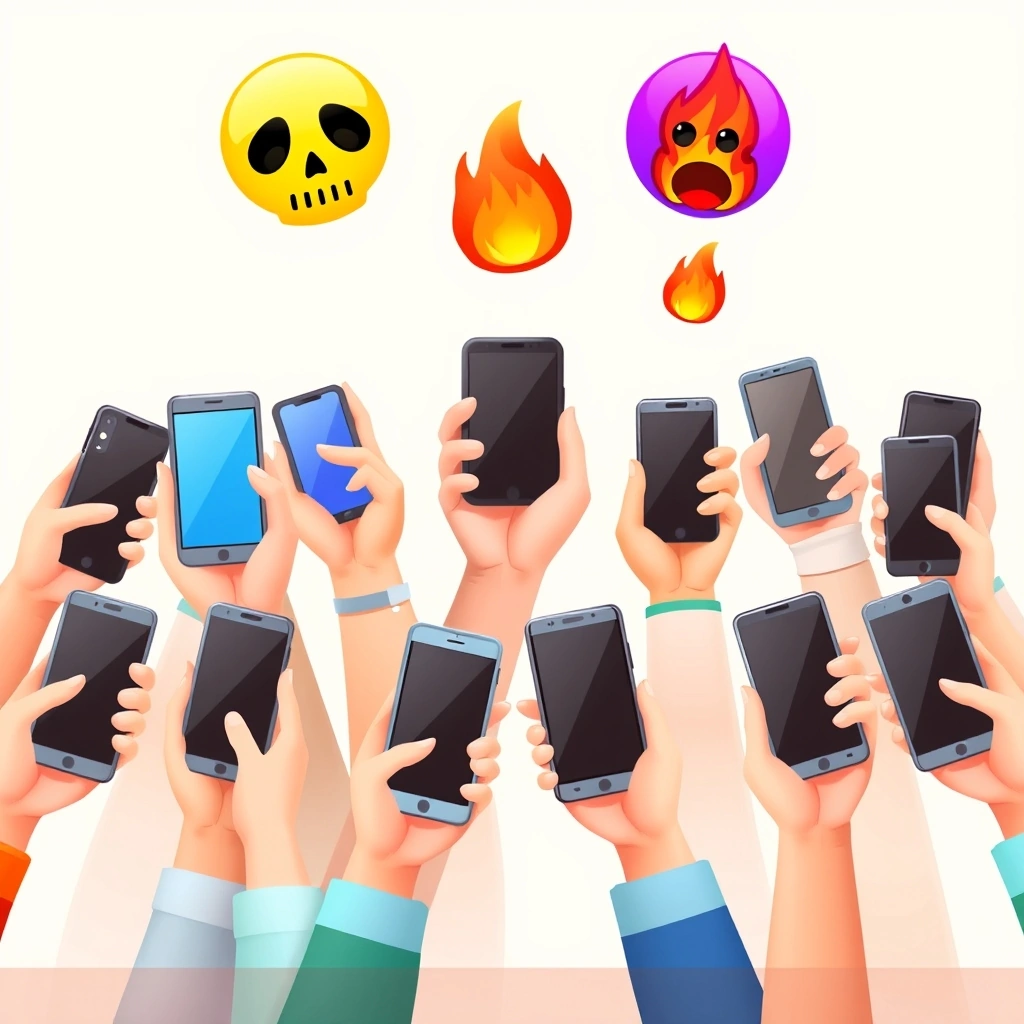
Think about the last time you sent a skull emoji. Chances are, you weren't talking about actual mortality. You were probably laughing so hard you felt like you might die. This is the magic of emojis in action. They don't just represent static ideas; they live, breathe, and change meaning right alongside us.
This evolution isn't dictated by any official committee. It happens organically, in group chats, comment sections, and viral tweets. A symbol designed for one purpose is repurposed by a community, and if the new meaning resonates, it spreads like wildfire. It's a bottom-up, grassroots linguistic shift happening at the speed of the internet.
The Power of the Collective
Every time we use an emoji in a slightly new context, we're casting a tiny vote. When enough people start using the pleading face to express desperate hope instead of just sadness, or the fire emoji to signify something is amazing rather than literally hot, the definition expands. The original meaning doesn't disappear; it simply gains a new layer, a new cultural context.
This process mirrors how slang develops in spoken language, but accelerated. Online, a new usage can go from niche in-group signal to global understanding in a matter of weeks. Platforms like Twitter and TikTok act as giant petri dishes, cultivating these new meanings through memes, trends, and shared jokes.
For more on how emojis reflect our changing online worlds, check out our piece on the shifting faces of digital culture.
When Emojis Tell Their Own Stories
Some of the most fascinating adaptations happen with sequences of emojis. A single peach might be a fruit, but placed next to an eggplant? The context creates a narrative—and a new, often cheeky, meaning—that neither symbol had on its own. This combinatorial creativity allows for incredibly nuanced, context-dependent communication that feels personal and alive.
This isn't just about being clever or creating secret codes. It's about filling gaps in our digital vocabulary. How do you quickly convey the specific feeling of bittersweet nostalgia, or sarcastic agreement, or overwhelmed excitement? Sometimes, a string of three emojis does it perfectly where words fail. They become a kind of emotional shorthand, a way to pack tone, subtext, and feeling into a tiny visual package.
Adapting to New Realities
Emojis also evolve to meet the moment. Consider the microscope. Once a simple symbol for science, during the pandemic it became a poignant stand-in for testing, research, and the global scientific effort. The rocket ship, beyond space travel, now often symbolizes a rapid launch or success in tech and business circles. These symbols absorb the concerns and conversations of the day, becoming markers of their time.
This adaptability is why the emoji keyboard feels so relevant. It's not a dusty old dictionary; it's a living archive of how we feel and what we're talking about right now. The icons themselves may stay the same, but the cultural weight they carry is in constant flux.
Exploring how these symbols capture collective feeling is a journey in itself. Dive deeper into this idea in our article on how emojis became our digital mood ring.
A Language Without Borders, Yet Full of Nuance
While emojis are often called a universal language, their evolution highlights fascinating regional and generational dialects. The same emoji can tell a different story in Tokyo, Berlin, or São Paulo, influenced by local memes, celebrities, or events. A thumbs-up might be encouragement in one context and a passive-aggressive dismissal in another. Understanding these subtle shifts is key to truly fluent digital communication.
This is why paying attention to context is everything. You learn the new meanings not by reading a manual, but by observing, participating, and sometimes even miscommunicating. It's a social language, learned through interaction.
So, the next time you reach for an emoji, remember you're not just picking a picture. You're tapping into a vast, collaborative, and ever-changing story. You're using a tool that has been shaped by millions of conversations before yours, and you're adding your own little twist to its ongoing evolution. That's the quiet, beautiful power of our shared digital symbols.
📒 Related Blogs
More...How a Simple Emoji Can Defuse a Heated Online Argument
The Slow Burn: How Emojis Quietly Change Their Meaning in Your Group Chats
The Psychology of Emojis: What Your Favorite Icons Really Mean
The Secret to Lighter Chats: How Emojis Make Fast-Paced Conversations Effortless
The Fascinating Evolution of Emojis: From Kaomoji to Global Unicode Standards
The Unspoken Peace: How Emojis Calm Unexpected Digital Ripples