The Secret Life of Emojis: How Internet Trends Shape Our Digital Emotions

Jan 08,2026
The internet is a wild, wonderful place, constantly shifting, reshaping how we communicate, and fundamentally altering the very fabric of our digital language. And at the heart of this linguistic revolution? Emojis. They aren’t just static little icons; they’re living, breathing entities that adapt, evolve, and sometimes even completely flip their original meaning based on the latest viral trend or shared online experience.
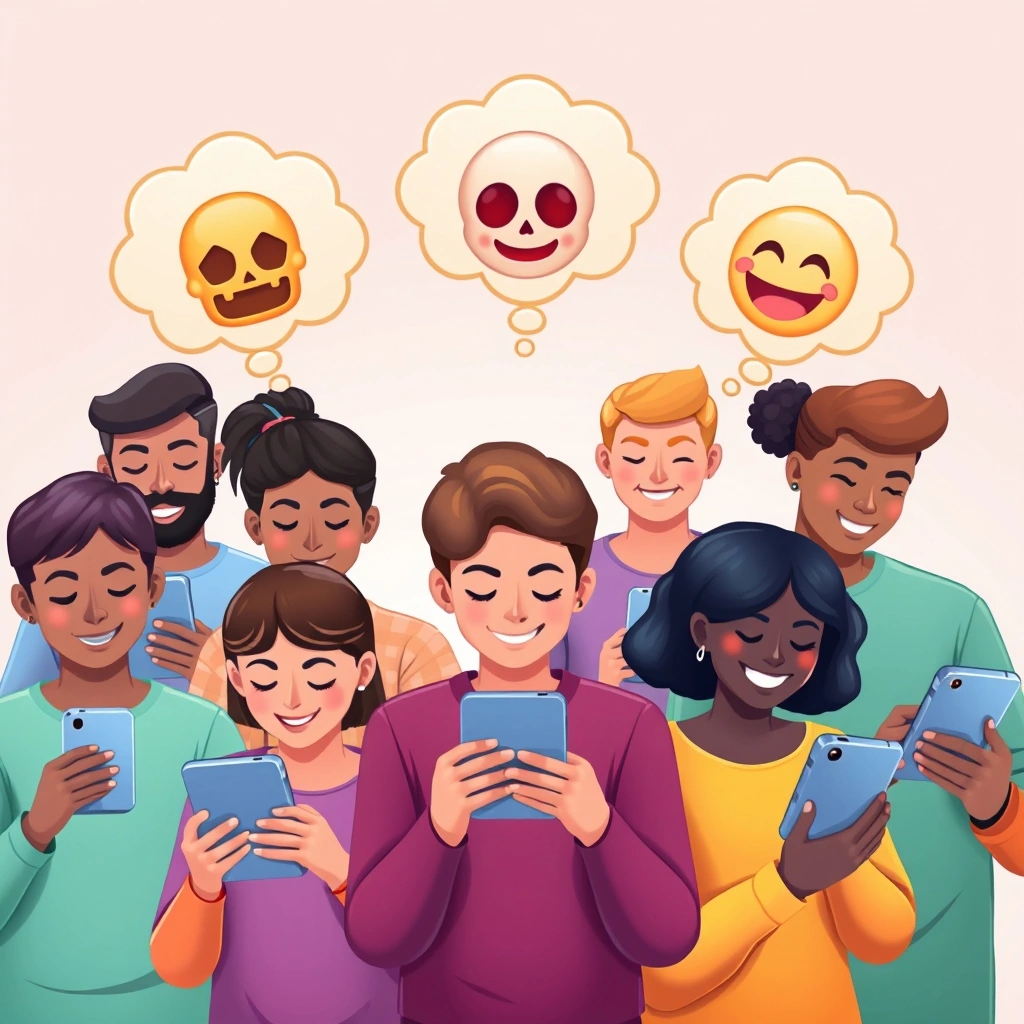
Remember when the Skull 💀 emoji simply meant... a skull? Death, danger, maybe a pirate flag. Innocent enough. But then, almost overnight, it became the quintessential symbol for "I'm dying of laughter," "I'm overwhelmed," or even "That's so relatable it hurts." It perfectly encapsulated that feeling of being absolutely floored by something hilarious or shocking, far more succinctly than typing out a lengthy explanation. It’s a subtle shift, but a profound one, demonstrating how quickly an emoji can be recontextualized by the collective digital consciousness.
The Ever-Shifting Sands of Digital Meaning
It’s truly fascinating to watch these transformations unfold. Take the ✨ Sparkles emoji. Originally, it was about glitter, magic, or something new and shiny. Now, you’ll see it sprinkled around text for emphasis, ironic commentary, or to imply a certain "aesthetic." It's become a visual cue that says, "Pay attention to this, but also, don't take it too seriously." This isn't a top-down decree from Unicode; it's a grassroots movement, a testament to how users, en masse, dictate the true semantic value of these symbols. It’s a dynamic process, and if you’re curious about how these shifts happen, you might enjoy exploring the ever-shifting emoji code and how online trends reshape digital language.
Think about the Pleading Face 🥺. Its original intent was to convey an innocent, puppy-dog eyed plea. And while it still does that, it’s also become a powerful tool for ironic begging, expressing exaggerated cuteness, or even hinting at a little bit of emotional manipulation in a playful way. The context completely changes its emotional weight. A friend sends "Can I borrow your car tonight? 🥺" and you instantly know it’s a mix of a genuine request and a playful attempt to guilt-trip you.
From Niche Memes to Global Understanding
What starts as a niche joke within a specific online community or a trending meme can quickly propagate, transforming the way millions understand and use an emoji. The internet acts as a giant cultural accelerator, taking these subtle shifts and amplifying them globally. A particular facial expression emoji might become synonymous with a viral reaction video, and suddenly, its primary use is no longer its intended one, but rather a direct reference to that specific piece of internet culture.
This phenomenon highlights a crucial aspect of digital communication: it's incredibly fluid and highly contextual. There's no fixed dictionary for emoji meanings because the "dictionary" is constantly being rewritten by the very people using them. It's a beautiful, chaotic dance between intention and interpretation, all playing out in real-time on our screens.
The "I Get It" Nod: Building Shared Experiences
Beyond the humor and irony, the evolution of emojis fosters a deeper sense of connection. When you see someone use the "Crying Laughing" 😂 emoji, or the "Sweat Smile" 😅 in a particular way that mirrors a recent online joke, there’s an immediate sense of shared understanding. It's an "I get it" nod, a silent acknowledgment of being part of the same digital tribe, privy to the same inside jokes and cultural references. This shared lexicon strengthens online communities and makes our digital interactions feel more personal, more human.
It’s not just about individual emojis either; sometimes, combinations become powerful. Think of the trend where people would put the "Eyes" 👀 emoji followed by the "Lips" 👄 emoji, often used to imply "look at this" or to draw attention to something juicy or dramatic. These mini-stories, told through a sequence of icons, are a testament to our innate human creativity and our desire to express complex ideas with minimal effort. This ability of emojis to supercharge our digital language is profound. If you're intrigued by how online trends amplify our communication, consider reading more about the emoji effect and how online trends supercharge our digital language.
More Than Just Shortcuts: Reflecting Our World
Ultimately, the dynamic nature of emojis—how they evolve with internet trends—is a mirror reflecting our ever-changing world. They capture fleeting emotions, current events, and the collective mood of online spaces. From expressions of exasperation during a global event to ironic takes on popular culture, emojis are the shorthand for our shared human experience in the digital age. They allow us to convey nuances that plain text often misses, adding layers of emotion, humor, and even sarcasm to our messages.
It’s a powerful reminder that language, in all its forms, is a living thing. And in the lightning-fast world of the internet, emojis are perhaps the fastest-evolving dialect of all. So next time you see an emoji used in a way you didn't expect, take a moment to appreciate the incredible journey it's been on, shaped by countless clicks, shares, and a little bit of internet magic. It's proof that even the smallest icons can tell the biggest stories about us.
📒 Related Blogs
More...Beyond Words: How Emojis Orchestrate the Rhythm of Professional Messaging
The Unwritten Rules: How Emojis Shape New Meanings in Online Communities
The Unspoken Rhythm: How Emojis Guide the Flow of Our Online Chats
The Ever-Shifting Emoji Code: How Online Trends Reshape Digital Language
The Secret Language of Two: How Emoji Pairs Reshape Group Chat Understanding
The Secret Life of Emojis: How Viral Moments Reshape Our Digital Language