Unlock Clarity: How Emojis Transform Quick Chats from Confusing to Crystal Clear

Dec 29,2025
We’ve all been there: a quick text exchange where a one-word reply leaves you scratching your head. “K,” “Fine,” “Sure” – these minimal messages are incredibly common in our fast-paced digital lives, but they often leave a huge gap where context, tone, and emotion should be. What does "K" really mean? Is it an enthusiastic agreement, a reluctant acceptance, or just a dismissive acknowledgment? The ambiguity can be frustrating, leading to misunderstandings, unnecessary worry, or just a general sense of disconnect.
This is precisely where emojis come into their own, acting as tiny but mighty translators for our briefest thoughts. They bridge the gap between brevity and clarity, allowing us to inject nuanced emotion and intent into even the shortest responses. Think of them as instant emotional cues, turning bland text into something vibrant and understandable.
Why Minimal Replies Need a Little Emoji Magic
In the rush of daily life, we often don't have time for elaborate explanations. We need to communicate quickly and efficiently. But without the non-verbal cues present in face-to-face conversations – things like facial expressions, tone of voice, or body language – our short replies can fall flat, or worse, be completely misinterpreted. Emojis offer a brilliant workaround for this digital dilemma.
Preventing Misinterpretations and Smoothing Over Shortness
Imagine you're asked if you can meet later. Replying with just "Yeah" might come across as uninterested or even annoyed, especially if the recipient is already feeling a little sensitive. Now, picture "Yeah 👍" or "Yeah! 😊". Suddenly, the tone shifts dramatically. The thumbs-up signals affirmation and enthusiasm, while the smiling face adds warmth and friendliness. It’s the same word, but the emoji completely transforms its emotional impact, making it clear you're happy to meet.
This simple addition can prevent countless little miscommunications throughout your day. It’s like adding a quick note of intent, ensuring your message lands exactly as you intended. For more insights on making your messages truly intentional, check out Emoji Magic: How Tiny Icons Make Your Fast Messages Truly Intentional.
Adding Nuance: From Ambiguous to Obvious
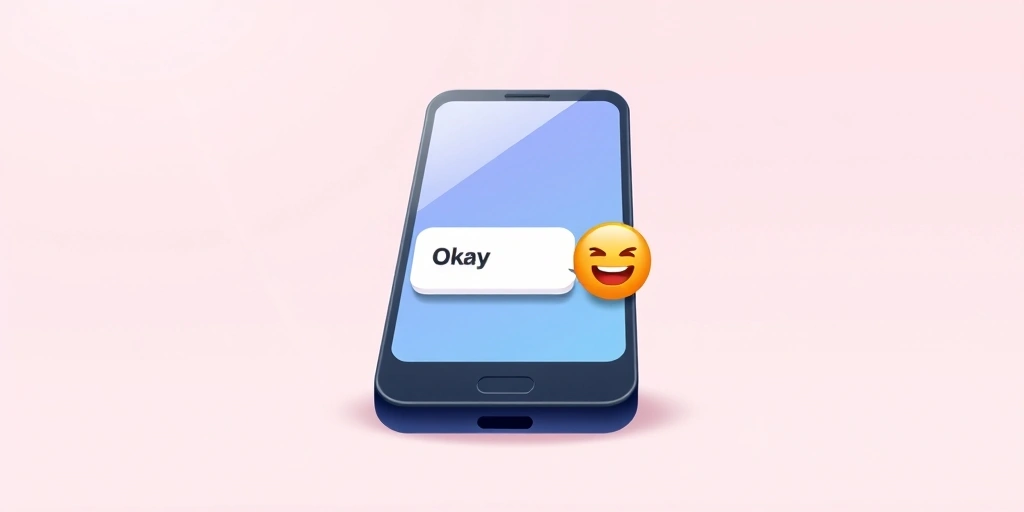
Consider the word "Okay." On its own, it’s a blank slate. Does it mean "Okay, I understand," "Okay, I'm reluctantly agreeing," or "Okay, that’s fine by me"? The context often helps, but an emoji makes it undeniable.
- "Okay 👌" – Implies agreement, approval, or "all good."
- "Okay 🙄" – Shows annoyance, skepticism, or "fine, whatever."
- "Okay 👍" – Clear affirmation, "understood and approved."
- "Okay 😊" – Friendly acceptance, "happy to do so."
Each emoji transforms the single word into a rich statement, conveying a wealth of information in just one tap. It’s an incredible shorthand for emotional context that our ancestors could only dream of.
Injecting Empathy and Understanding
When someone shares a piece of news, good or bad, a short "Oh" or "Wow" can feel cold. But add an emoji, and suddenly, you’re showing genuine human connection. "Oh 🙁" conveys sympathy, while "Wow! 🥳" expresses excitement. These little icons allow us to convey empathy, joy, sorrow, or surprise without having to type out long sentences, which might feel out of place in a rapid-fire chat.
They’re particularly powerful when you’re multitasking and need to acknowledge a message quickly but genuinely. A quick "Got it 🙏" shows appreciation or thanks, whereas "Got it ✅" simply confirms receipt. It’s about adding that human touch, even when you’re pressed for time.
Boosting Efficiency Without Sacrificing Connection
One of the biggest advantages of emojis in minimal replies is how they boost communication efficiency. Instead of typing out "Yes, I completely understand and agree with that point," a simple "Yes! 🙌" gets the message across with the same enthusiasm and clarity, but in a fraction of the time. This is invaluable in professional settings, group chats with friends, or coordinating with family members where speed and precision are key.
For those looking to deepen their understanding of how emojis can transform all forms of digital communication, exploring different categories and guides can be incredibly helpful. You can find more comprehensive guides and tips on our blog, specifically in the Emoji & Guides section, which covers a wide array of topics related to effective emoji use.
Building Rapport and Personalizing Interactions
Beyond mere clarity, emojis in minimal replies help build rapport. When you consistently use emojis to convey your true feelings, people learn to interpret your short messages with greater accuracy. This builds trust and makes interactions feel more personal and less transactional. It shows you’re not just sending a message; you’re engaging with the person on the other end, even with just a few characters.
It’s a subtle but powerful way to maintain a friendly, approachable demeanor in your digital conversations. Even if your response is brief due to a busy schedule, an emoji ensures your personality still shines through.
Mastering the Art of the Emoji-Enhanced Reply
So, how can you effectively integrate emojis into your minimal replies? It’s all about intentionality and context. Ask yourself: what emotion or tone am I trying to convey with this short message? Then, pick the emoji that best reflects that feeling.
- If you’re agreeing enthusiastically: 👍, ✅, 🙌
- If you’re acknowledging something with warmth: 😊, 🙏
- If you’re showing sympathy or sadness: 🙁, 😔
- If you’re showing excitement: 🎉, 🥳, ✨
- If you’re expressing mild annoyance or sarcasm (use sparingly!): 🙄, 😑
The beauty of emojis is their universality and their ability to add layers of meaning that plain text simply can't. They empower us to be concise without being curt, efficient without being cold, and personal without being verbose. In the fast-paced world of digital communication, they are the unsung heroes of clarity, ensuring our minimal replies are always understood, felt, and appreciated.
Next time you find yourself about to send a naked "K" or "Okay," pause for a moment. Consider adding a small, colorful icon. You might be surprised at how much difference that tiny addition makes, transforming your quick chats from potentially confusing to crystal clear, and leaving everyone feeling more connected and less bewildered.
📒 Related Blogs
More...The Emoji Lifeline: How a Simple 😅 or 👍 Can Save a Casual Chat
Emoji Psychology: Decoding What Your Favorite Emojis Reveal About You
Beyond Text: How Emojis Transform Online Communication and Express Emotion
The Unspoken Rhythm: How Emojis Guide the Flow of Our Online Chats
Beyond Words: How Emojis Orchestrate the Rhythm of Professional Messaging
The Ever-Shifting Emoji Landscape: How Digital Trends Reshape Our Favorite Icons