The Unspoken Rules: How Emojis Hint at What We Really Expect

Feb 20,2026
Think about the last time you sent a text. Maybe you shared some good news, and your friend replied with a simple "Nice!" Did it feel a little flat? Now, imagine they replied with "Nice! 🎉" or "Nice! 😊". The difference is immediate. That tiny icon doesn't just decorate the message; it transforms it, adding a layer of warmth, excitement, or sincerity that plain text often lacks. But it does something else, too. It sets a tone, and with that tone comes a quiet, unspoken expectation.
We use emojis to bridge the emotional gap in our text-based world, where tone of voice and body language are absent. In doing so, we're not just expressing ourselves—we're subtly instructing others on how to feel and respond. This is the hidden social contract of digital communication.
The Tone-Setter and the Response It Demands
Consider the humble laughing-crying emoji, 😂. It's the punctuation of the internet, signaling that something is genuinely funny. When you use it, you're doing more than labeling a joke. You're creating an expectation for the recipient's reaction. A reply of "lol" might now feel insufficient, even dismissive. The 😂 has raised the stakes, implicitly asking for an equally enthusiastic, emoji-fueled acknowledgment of the humor. A lack of one can feel like a social slight, a mismatch in emotional investment.
This dynamic plays out across countless scenarios. A heart emoji ❤️ after a vulnerable message isn't just an "I love you"; it's a request for emotional reciprocity. A thumbs-up 👍 in a work chat isn't just an "acknowledged"; it's a signal that the conversation is closed, expecting no further debate. The emoji acts as a social cue, guiding the interaction toward a specific emotional or procedural conclusion.
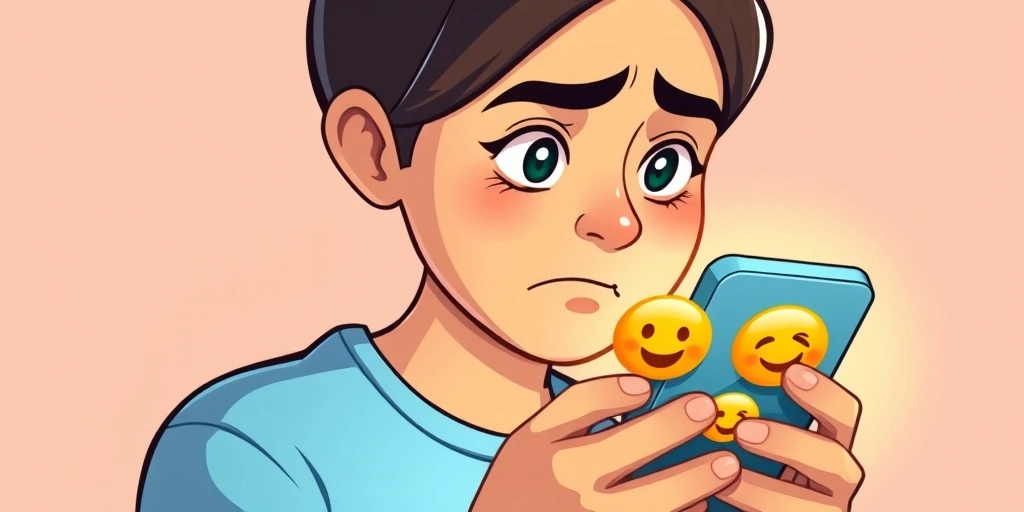
This silent guidance is a form of emotional labor. The sender uses an emoji to clarify intent and soften potential edges, making the message safer to receive. In return, there's an expectation for the receiver to match that energy. This is why choosing the wrong emoji can be so jarring. Replying to a sad story with a 😂 is catastrophic. Replying to exciting plans with a 😐 can deflate enthusiasm instantly. We've all felt that awkward pause when the emoji response doesn't land, revealing a misalignment in understanding or care.
When Absence Speaks Volumes
Sometimes, the expectation isn't set by the presence of an emoji, but by its glaring absence. In a conversation flowing with 😊, ❤️, and 🎉, a suddenly plain-text, punctuation-free reply can feel cold, angry, or distant. It breaks the established pattern. The other person is left to wonder: "Are they upset? Did I do something wrong? Is the conversation over?"
The lack of an expected emoji becomes a message in itself, often interpreted more negatively than intended. This forces us to become curators of our digital tone, constantly asking ourselves: "Is a period too harsh? Should I add a smiley to make sure this sounds friendly?" We navigate a landscape where every character carries weight. For more on this delicate balance, explore how a single emoji can act as a filter for your entire message.
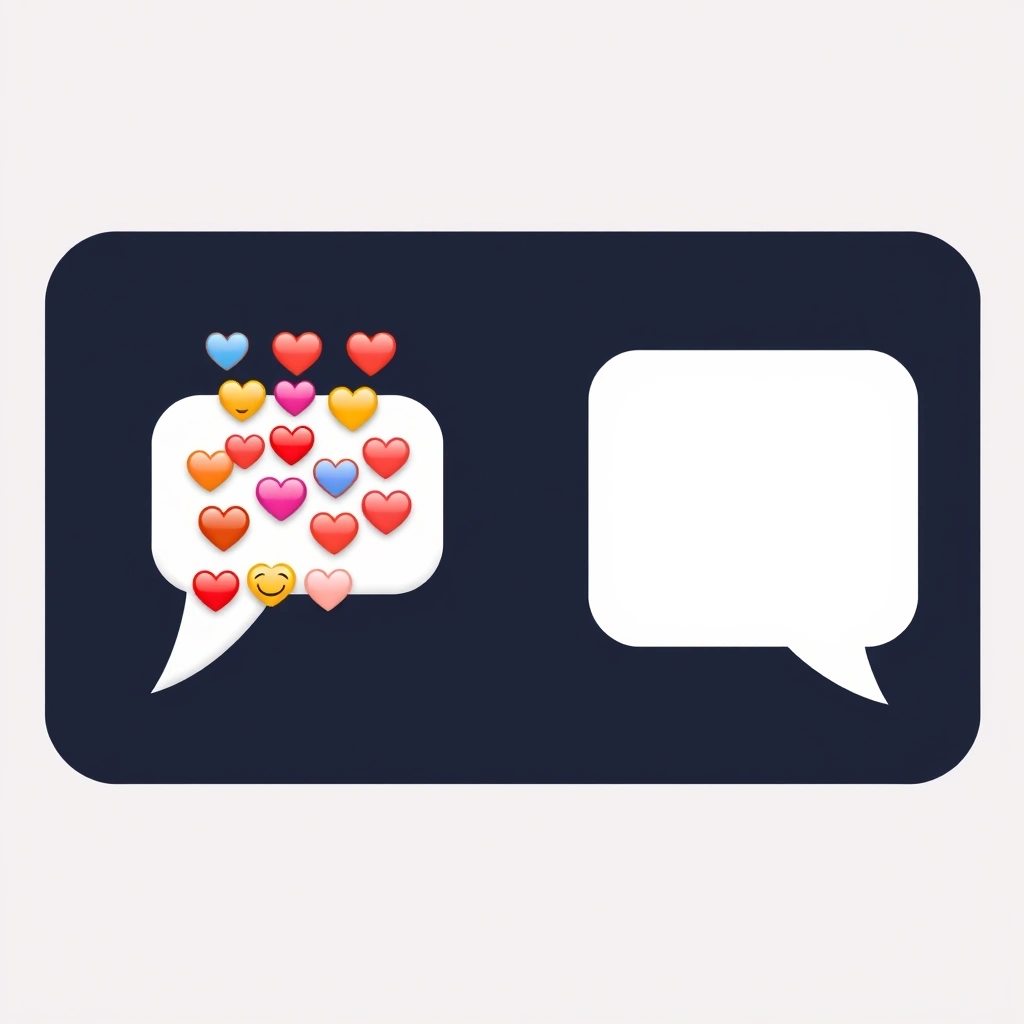
These expectations also build group norms. In a close friend group, a certain emoji (like 🔥 or 💀) might become a shared shorthand, and using it correctly signals belonging. In a professional Slack channel, the expected emoji for "got it" might be a simple checkmark ✅, while a heart reaction might be reserved for personal milestones. Learning and adhering to these micro-cultures is part of modern social literacy.
Navigating the Unspoken Rules
So, what do we do with this knowledge? The goal isn't to become anxious about every icon we send. Instead, it's to bring awareness to the rich, subtextual layer of our conversations. Recognize that when you send a 🥰, you're inviting warmth. When you send a 😬, you're acknowledging shared tension. Your choices shape the emotional space of the chat.
It also means granting grace to others. A terse reply might not be malice; it might be someone typing in a hurry, or someone from a different communication background. The rules are fluid and personal. The most important skill is paying attention to the patterns you create with the people you care about.
Emojis are the body language of our texts. They hint at our hopes for the conversation—for connection, for understanding, for a specific kind of reaction. By understanding this, we can communicate more thoughtfully, read between the lines more accurately, and build stronger, more resonant connections in a world of words on a screen. The silent expectations they create are not a burden, but a testament to our deep human need to connect meaningfully, even through a screen. To dive deeper into the nuances of private messaging, check out our thoughts on the hidden power of emojis in private chats.
Ultimately, these tiny icons are powerful because they help us do what humans have always done: seek shared understanding and emotional alignment. They are the whispers of feeling in the silence of typed text, and learning their language helps us all communicate a little better.
📒 Related Blogs
More...The Final Touch: How Emojis Make Your Fast Messages Feel Complete
The Effortless Magic of Emojis: Adding Personality to Your Chats in a Heartbeat
Emojis & Mental Health: Expressing Emotions Digitally for Well-being
The Instant Feeling: How Emojis Spark Our Quickest Emotional Reactions
How Emojis Evolve: The Secret Life of Our Favorite Digital Symbols
The Silent Echo: How Emojis Speak When Words Are Hardest to Find