Beyond Words: How Emojis Subtly Shift Meaning in Your Messages

Jan 09,2026
In our fast-paced digital world, emojis have become an almost instinctive part of our daily communication. We tap them into texts, emails, and social media posts without a second thought, often viewing them as simple embellishments or quick emotional shorthand. But what if these tiny icons were doing far more than just adding a splash of color to our messages? What if they were subtly, yet profoundly, influencing how others interpret our deepest intentions?
Think about the sheer volume of text we consume daily. Without the cues of tone, facial expressions, or body language that come with in-person conversations, our digital interactions can easily fall prey to misunderstanding. This is where emojis step in, acting as silent narrators, guiding the recipient's interpretation of our words and shaping the entire perception of our message.
The Unseen Architect of Digital Meaning
Consider the difference between "Okay." and "Okay 😊". The first feels neutral, perhaps even a little cold or dismissive. The addition of a simple smiling face instantly transforms it into something friendly, agreeable, and positive. Or imagine "Great job!" versus "Great job! 🙄". That eye-roll completely flips the script, turning praise into sarcasm. This isn't just a stylistic choice; it's a cognitive shortcut our brains employ to process information.
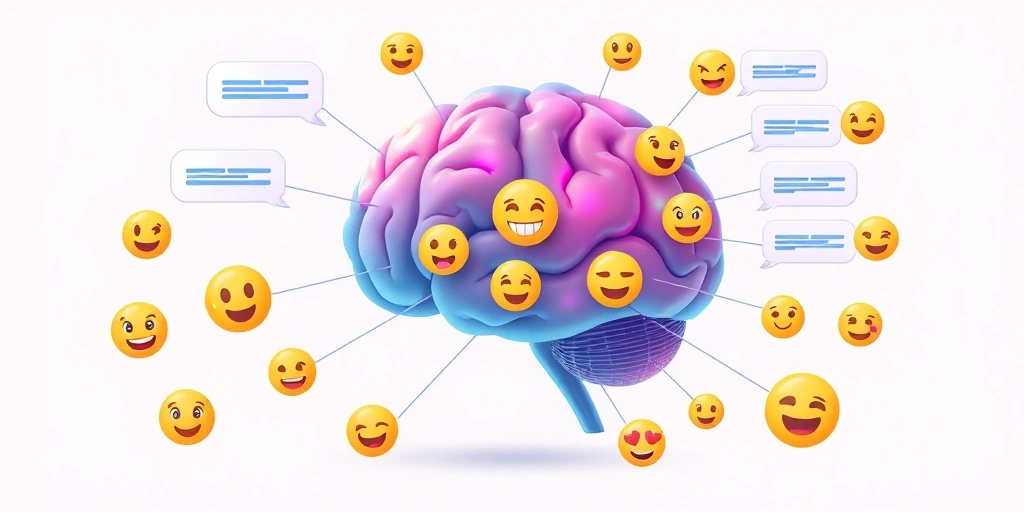
Our minds are incredibly adept at processing visual cues, often at lightning speed. When an emoji appears next to text, it triggers specific areas of the brain, influencing how we decode the accompanying words. These visual elements act as powerful emotional anchors, providing context that plain text simply cannot. They serve as a crucial bridge, helping to convey the nuances of human emotion that are otherwise lost in translation across digital mediums.
More Than Just Decoration: Decoding Intent
In face-to-face interactions, non-verbal cues — like a raised eyebrow, a slight smile, or a particular vocal inflection — are vital for understanding true intent. These elements are almost entirely absent in text-based communication. Emojis step in to fill this profound void, offering a much-needed layer of emotional context. Without them, sarcasm can be mistaken for rudeness, genuine humor for inappropriate jest, and heartfelt concern for indifference. They bridge the gap between what is said and what is truly meant, making our digital conversations richer and more precise. This fascinating interplay between words and symbols deeply influences our emoji psychology, revealing how our brains process these tiny signals.
The Psychological Lens: How Emojis Reshape Perception
Our brains are naturally wired to seek out social and emotional information. When an emoji is paired with text, it doesn't just add a visual element; it actively reshapes how the entire message is perceived. Research indicates that the presence of positive emojis can make recipients view the sender as warmer, more friendly, and even more competent. Conversely, a negative emoji can heighten the perceived severity or urgency of a statement, even if the words themselves are mild. It's a powerful and subtle tool, capable of softening a critique or emphasizing an important point, all within the blink of an eye. This is about how our perception truly works, much like understanding the hidden language of emojis that subtly shapes your digital reactions.
Mitigating Misunderstanding in a Tap
How often have you found yourself rereading a message, puzzling over the sender's tone or true sentiment? Emojis offer a valuable solution by providing immediate clarity. They function as emotional signposts, signaling whether a message is playful, serious, apologetic, or excited. This is particularly crucial in settings where misinterpretation can lead to awkwardness or even professional setbacks. By thoughtfully placing an emoji, you can proactively guide the recipient's emotional response, helping to ensure your message is received exactly as intended and avoiding unnecessary friction.
Building Connections and Empathy Digitally
Beyond simply clarifying intent, emojis play a significant role in fostering rapport and building empathy in the digital realm. A well-chosen emoji can convey warmth, support, or shared amusement, strengthening the bond between communicators. It transforms sterile, impersonal text into something more human and relatable. They add a personal touch that makes digital interactions feel less transactional and more genuinely connective, helping to rewire your brain's digital conversations for better emotional understanding and deeper connections.
The Cultural Tapestry of Emoji Use
While emojis offer a somewhat universal appeal, their interpretations are far from globally consistent. A seemingly innocuous thumbs-up 👍, for instance, might be a positive affirmation in Western cultures but can carry offensive connotations in parts of the Middle East or West Africa. Similarly, a simple waving hand 👋 can signify a friendly greeting or a dismissive goodbye depending on the context and specific cultural norms. Understanding these subtle yet significant nuances is paramount to truly mastering emoji communication and avoiding accidental missteps. It’s not just about what an emoji looks like, but what it *means* to your particular audience and within their cultural framework.
The Subtle Art of Emoji Diplomacy
Using emojis effectively is indeed an art form that demands more thought than it often receives. It requires an understanding not only of an emoji's literal or common meaning but also its emotional resonance within a specific conversational context and for a particular audience. Overusing emojis can sometimes dilute their impact, making a message feel less serious or even unprofessional. Conversely, underusing them can make your communications seem cold, abrupt, or emotionally detached. The sweet spot lies in thoughtful, strategic integration, where emojis enhance and clarify your words rather than overshadowing them.
Conscious Communication in the Digital Age
As our lives become increasingly intertwined with digital communication, recognizing the subtle yet profound power of emojis becomes more essential than ever. They are not merely decorative elements; they are integral components of our digital lexicon, capable of shaping perceptions, conveying empathy, and clarifying intent with remarkable efficiency. By being more mindful of the emojis we choose and actively considering how they might be perceived by our recipients, we can navigate the complexities of online interaction with greater precision, emotional intelligence, and ultimately, foster more meaningful connections. So, the next time you reach for that little expressive icon, remember the silent power it holds in shaping how your message truly lands.
📒 Related Blogs
More...The Anticipation Pixel: How Emojis Bridge the Gap in Emotional Uncertainty
Beyond a Single Emoji: How Combinations Speak Volumes in Group Chats
The Secret Weapon: How Emojis Balance Directness & Warmth in Work Task Coordination
Emoji Art & Design: Creative Ways to Use Digital Icons
The Evolution of Visual Language: From Ancient Hieroglyphs to Modern Emojis
The Secret Language of Smiles: How Emojis Instantly Reveal Emotions Online