From LOL to 😭: How Emojis Became Our Digital Time Capsules

Feb 20,2026
Remember when we just typed 'LOL'? It was simple, effective, and a little bit robotic. Then came the era of the 😂. This wasn't just a new way to laugh; it was a seismic shift in how we expressed joy online. The tears of joy emoji didn't just replace text—it amplified it. It conveyed a specific kind of laughter, one that was uncontrollable, genuine, and shared. Its rise to the top of most-used lists wasn't an accident. It mirrored a time when internet humor became more visual, more exaggerated, and more communal. We weren't just saying something was funny; we were performing our reaction for everyone to see.
This pattern repeats itself over and over. Emojis act as tiny, emotional anchors for the internet's collective consciousness. They give form to feelings that are too big, too complex, or too specific for words alone. A single symbol can instantly recall a meme, a news event, or a shared cultural experience. They are our digital shorthand for the zeitgeist.
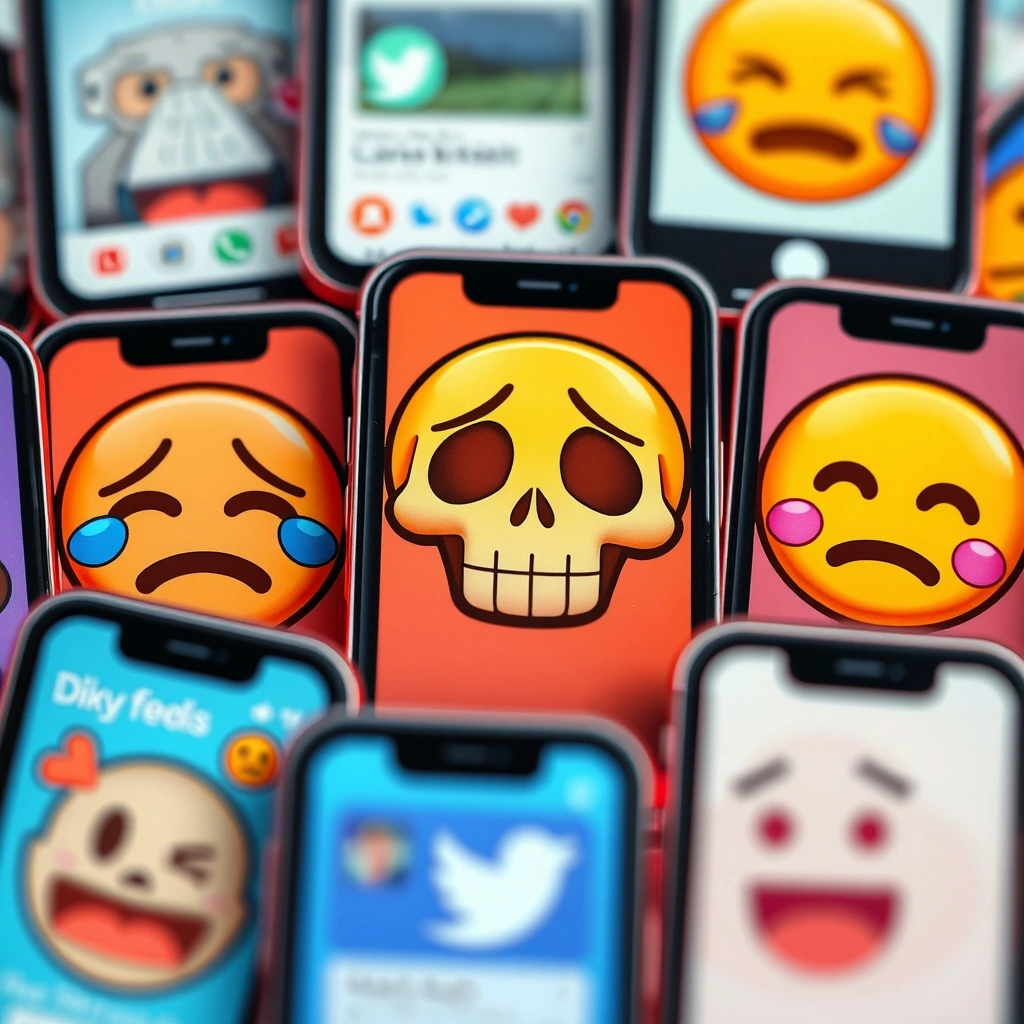
Think about the journey of the skull emoji 💀. Once a literal symbol, it was reborn online as the ultimate expression of 'I'm dead from laughter.' Its meaning transformed completely, divorced from its original morbidity to become a marker of peak humor. This wasn't a decision made by a dictionary committee; it was an organic evolution driven by millions of users on platforms like Twitter and TikTok. The emoji became the punchline itself. You can almost trace the timeline of a certain brand of absurdist humor through the rising popularity of the 💀.
Similarly, the pleading face 🥺 didn't just appear as a cute icon. It filled a gap. It captured a very specific, internet-native sentiment: a performative, slightly manipulative, but ultimately endearing form of begging or wanting. It's the face you make when you're asking for the last slice of pizza or hoping a celebrity notices your tweet. Its adoption signaled a move towards more nuanced, emotionally layered communication in our texts and DMs.
When Emojis Bear Witness
The most powerful examples come during global events. During times of crisis or social movement, emojis become tools of solidarity and witness. The black heart 🖤 or the raised fist ✊ have been used to show support and unity in ways that feel more immediate and visceral than a string of text. They are banners we carry in our digital profiles and messages.
Conversely, during the early, uncertain days of the COVID-19 pandemic, the microbe 🦠 emoji saw a massive spike in use. It was a quick, recognizable way to reference the invisible threat that was dominating global conversation. It was used in news headlines, in anxious messages between friends, and in public health reminders. For a time, that tiny, cartoon germ carried the weight of the world's fear and uncertainty. It became a symbol of the era, a shared reference point in a fragmented, frightening time. You can explore more about how emojis document our changing world in this article on how emojis tell the story of our changing digital world.
The Lifecycle of a Trendy Emoji
Not all emoji moments are heavy. Many are pure, distilled internet joy. The cascade of clown faces 🤡 to call someone (or oneself) foolish for a mistaken prediction. The specific use of the mirror ball 🪩 to celebrate a personal victory or a fun announcement. The 'brain exploding' 🤯 for moments of awe or overwhelming information. These symbols gain traction within niche communities—gamers, K-pop fans, crypto enthusiasts—before often bubbling up to the mainstream.
Their lifespan varies. Some, like the crying-laughing face, have enduring power. Others enjoy a meteoric, trend-driven rise and then settle into more occasional use. Their peak popularity is a perfect snapshot of what was captivating the online hive mind at that very moment. The morphing nature of these symbols is fascinating, as discussed in the secret life of emojis and how they morph with every internet trend.
This constant evolution is what makes emojis so compelling as a cultural record. They aren't static hieroglyphics imposed from above. They are a living language, shaped from the bottom up by every text sent, every tweet posted, every caption written. The Unicode Consortium may approve the characters, but we, the users, give them their soul and their story.
So, the next time you scroll through your recent emoji keyboard or hesitate between a ❤️ and a 🥰, remember you're not just picking a cute picture. You're tapping into a vast, ongoing, and deeply human conversation. You're using tools that have been shaped by viral videos, breaking news, inside jokes, and global movements. Each one is a tiny piece of a mosaic that shows who we are online, right now. And years from now, looking back at the emojis we used today will tell a more vivid story of our shared digital moments than any history book ever could. For more insights into this ever-changing landscape, check out our broader collection of thoughts on emoji culture and trends.
📒 Related Blogs
More...From Emoticons to Icons: The Fascinating Evolution of Emojis and Digital Expression
Emojis in Business: Boost Customer Connection & Branding with Icons
The Fascinating Evolution of Emojis: From Kaomoji to Global Unicode Standards
The Journey of Emojis: From Early Kaomoji to Global Unicode Standards
How Emojis Steer the Conversation in Fast-Paced Chats
The Unspoken Magic of Emojis: How a Simple 😊 Makes Your One-on-One Chats Feel Effortless