The Journey of Emojis: From Early Kaomoji to Global Unicode Standards

Dec 13,2025
Have you ever wondered about the journey of those tiny, expressive icons that populate our digital conversations? Emojis have become an indispensable part of how we communicate, adding layers of emotion and nuance that text alone often misses. But where did they come from? Their story is a fascinating dive into cultural innovation and technological standardization, evolving from simple text art to the rich, diverse emoji collection we use daily.
The Dawn of Digital Expression: Kaomoji
Before the colorful icons we know today, there were kaomoji. Originating in Japan in the late 1980s and early 1990s, kaomoji (顔文字, literally 'face characters') were text-based emoticons designed to be read horizontally. Unlike Western emoticons like :) which required a head tilt, kaomoji like (^_^) or (T_T) immediately conveyed joy or sadness without turning your head. They quickly gained popularity across various online platforms, offering a new way to express feelings and reactions in text-only environments. This early form of digital shorthand laid the groundwork for future graphical representations of emotion. 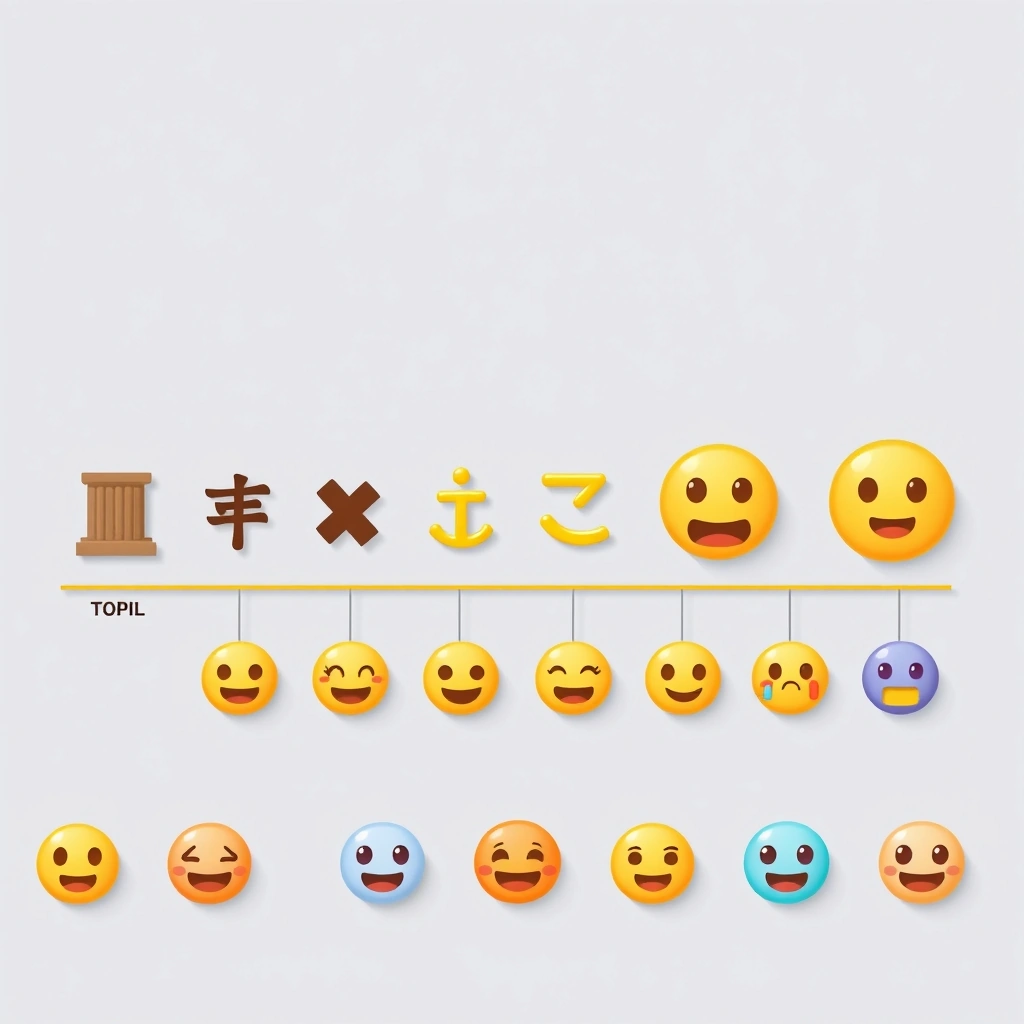
The Birth of Emojis in Japan
The true birth of emojis (絵文字, 'picture characters') as distinct graphical symbols came in the late 1990s. Shigetaka Kurita, working for NTT DoCoMo, created the first set of 176 emojis for their i-mode mobile internet platform in 1999. His goal was to make communication more expressive and convenient for users, allowing them to convey feelings like 'happy' or 'angry' with a single tap, rather than typing out lengthy descriptions. These early emojis included basic faces, weather symbols, and everyday objects, setting the precedent for the visual language that would soon sweep the globe. They quickly became an integral part of mobile messaging in Japan, defining a new era of digital interaction. People loved to copy emoji characters and paste them into their messages.
Unicode: The Universal Language of Emojis
Bringing Emojis to the World Stage
For emojis to transcend national borders and become truly universal, a common standard was needed. Enter Unicode. The Unicode Consortium is a non-profit organization that works to standardize text and characters across all computing platforms. Initially, emojis were proprietary to specific Japanese carriers, meaning an emoji sent from one phone might not display correctly on another. This fragmentation highlighted the need for universal encoding. In 2010, Unicode version 6.0 officially encoded a significant number of emojis, providing a standardized way for them to be recognized and displayed consistently across different devices and operating systems worldwide. This was a monumental step, transforming emojis from a niche Japanese phenomenon into a global communication tool. 
The Impact of Unicode Standardization
Thanks to Unicode, when you send a Grinning Face (😀) or a Thumbs Up (👍), it looks consistent whether your friend is on an iPhone, an Android, or a desktop computer. This universal compatibility is what truly unlocked the global potential of emojis. The ongoing efforts of the Unicode Consortium ensure that new emojis are regularly added, reflecting cultural shifts, technological advancements, and the diverse needs of users around the world. From the simple kaomoji to the sophisticated icons like the Sparkling Heart (💖), emojis continue to evolve. Every year, new sets of emojis are proposed and reviewed, constantly expanding our digital vocabulary. This constant evolution is why platforms like emojilar are so useful for finding and managing them.
Emojis Today: A Global Language
Today, emojis are more than just cute pictures; they are a vital part of our digital lexicon. They help convey tone, add humor, express empathy, and even replace entire sentences. From quick reactions on social media to professional communications, emojis have seamlessly integrated into nearly every aspect of our online lives. Their journey from simple text-based expressions to universally recognized graphical symbols is a testament to the human desire for expressive and efficient communication in the digital age. They truly embody the spirit of modern digital interaction, making our conversations richer and more engaging. 
📒 Related Blogs
More...Emojis: The Universal Language Breaking Down Communication Barriers
How Emojis Are Revolutionizing Branding & Marketing: A Modern Guide
The Fascinating Evolution of Emojis: From Early Kaomoji to Global Unicode
Emoji Etiquette: Mastering Professional & Casual Communication
Emoji as Emotional Buffers: Navigating Uncertainty with a Single Tap
Emoji Magic: How They Erase Doubt & Build Stronger Bonds in Every Chat!