How Emojis Became Our Secret Generational Handshake

Feb 28,2026
Remember the first time you got a text from a parent or an older relative that ended with a string of emojis like 😂🤣😍🙏? Maybe it was a heartfelt message, but the emoji choice felt… slightly off. That moment, small as it was, highlighted something bigger. It wasn't just about the message; it was about the code. The emojis we use, and how we use them, have quietly become one of the most telling signals of our generational identity online.
This isn't about right or wrong. It's about habit, context, and the unspoken rules that form within digital tribes. The way a Baby Boomer uses a thumbs-up 👍 is fundamentally different from how a Gen Zer might deploy the same symbol. For one, it's a clear sign of approval. For the other, it might be read as passive-aggressive, dismissive, or even the digital equivalent of a conversation ender. The emoji hasn't changed, but the cultural water we're all swimming in has.
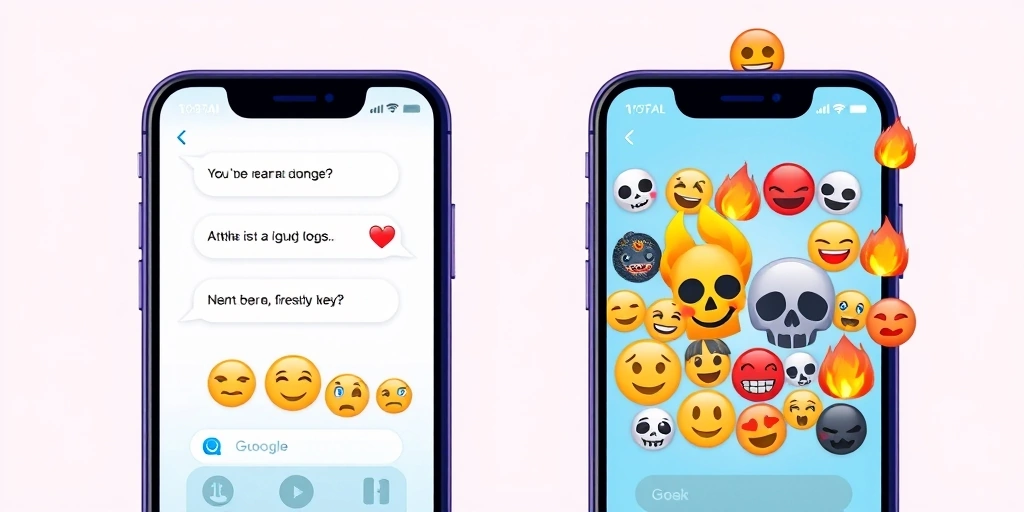
Platforms themselves act as accelerators for these divides. Think about it: Facebook, where many older generations solidified their digital social habits, has a very different emoji ecosystem than TikTok or even Instagram. The "care" reaction on Facebook, a hugging face, carries a specific, platform-native weight. On TikTok, communication is faster, more visual, and often relies on niche, trending emojis (like the skull 💀 for something hilariously funny, or the eyes 👀 for gossip) that can leave outsiders completely baffled. As we've explored before, emojis act as a digital mood ring, and each generation is reading a slightly different spectrum of light.
The Grammar of a Generation
It goes beyond picking different symbols. It's about grammar. Millennials, who came of age with AIM and early texting (remember T9 predictive text?), often use emojis as punctuation. A sentence might end with a 😊 to soften a request, or a 😬 to indicate awkwardness. There's a direct, one-to-one relationship between the emotion and the emoji.
Gen Z, however, native to a world of memes, absurdist humor, and rapid-fire context switching, often uses emojis more ironically or metaphorically. The crying-laughing face 😂 lost its crown to the skull 💀 or the sobbing face 😭 as a marker of something being extremely funny. The peach 🍑 and eggplant 🍆 evolved beyond produce. This generation treats emojis like flexible tokens in an inside joke, where meaning is derived from collective understanding, not a dictionary definition.
Meanwhile, for many Gen Xers and Boomers, emojis can serve as efficient emotional shorthand—a way to add warmth and clarity to text that might otherwise feel cold. A simple ❤️ or 🙏 carries significant, sincere weight. The overuse or ironic use of emojis can sometimes feel confusing or like a breakdown of clear communication. This creates fascinating cross-generational chats where a grandparent's sincere prayer hands 🙏 is met with a grandchild's fire emoji 🔥, both intending positivity but speaking slightly different dialects of the same visual language.
More Than Just Age: Signaling In-Groups
This signaling function is powerful. Using the "right" emoji in a group chat or a comment section instantly signals belonging. It says, "I get it. I'm part of this." Conversely, using an "outdated" or overly literal emoji can mark someone as an outsider, regardless of their actual age. A teen using a 😂 unironically in a meme-centric Discord might raise eyebrows, just as a 50-year-old mastering the use of 💀 in a tweet about a TV show can seamlessly blend in.
This evolution is constant. Emoji trends rise and fall with dizzying speed, often tied to viral videos, memes, or platform-specific features. What was cool last month might be cringe this month. Keeping up isn't about memorizing a list; it's about being immersed in the specific cultural streams where these meanings are born and negotiated. It's a live language.
So, the next time you're scrolling through comments or texting with someone from a different age group, pay attention to the emojis. That string of symbols is a tiny window into their digital upbringing, their communicative comfort zone, and the invisible community they're signaling to. It's less about a generation gap and more about different rooms in the same vast, ever-expanding house of digital communication. We're all just trying to find the right door, and sometimes, that door has a 😏 or a ✨ on it.
To dive deeper into how these visual symbols shape our online world, explore more stories in our Emoji & Culture section.
📒 Related Blogs
More...The Silent 'I'm Here': How Emojis Become Our Everyday Digital Nods
The Unspoken Comfort: How Emojis Bridge Emotional Gaps in Silence
The Future of Emojis: Predicting the Next Big Innovations in Digital Communication
The Emoji Takeover: How Tiny Icons Replaced Our Small Talk
The Unspoken Rules: How Emojis Reveal Social Expectations in Your Private Chats
Emojis in Marketing: Boosting Brand Engagement with Digital Icons