That Awkward Moment: When Your Emoji Message Gets Totally Misread

Feb 27,2026
We've all been there. You send a quick text, add what you think is the perfect emoji to set the tone, and then… silence. Or worse, you get a reply that makes it painfully clear your message landed in a totally different emotional universe than you intended. It's the modern digital wince.
Emojis are incredible tools. In a world of text, they inject personality, soften edges, and convey feelings that words alone sometimes can't capture. But that very strength—their emotional shorthand—is also their greatest weakness. Because an emoji isn't a word with a dictionary definition. It's a tiny, context-dependent piece of art, open to interpretation.
The Gap Between Sender and Receiver
Think about the classic smiling face with smiling eyes. 😊 To you, it might mean genuine warmth, a soft "thank you," or a friendly acknowledgment. To the person receiving it, especially from someone they don't know super well, it might read as passive-aggressive, overly formal, or even slightly condescending. The gap between your intent and their perception is where misunderstandings are born.
This happens because we bring our entire personal history to every emoji we see. Your cultural background, your age, your relationship with the sender, and even the platform you're using all color how you interpret that little picture. A thumbs-up might be a simple "got it" to one person and a dismissive "whatever" to another. The crying-laughing face has gone from universal hilarity to, for some, a marker of being slightly out of touch.
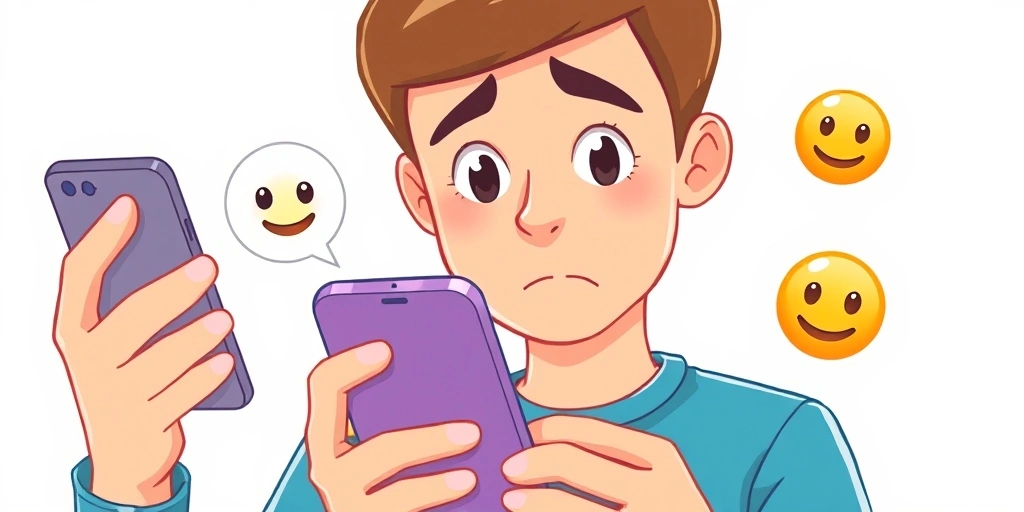
These mixed interpretations are especially common in casual conversations, where we're often typing quickly and assuming shared understanding. You might fire off a playful wink 😉 to a coworker about a minor mistake, intending it as a lighthearted "no big deal." But if they're already feeling sensitive about the error, that wink can feel like you're mocking them. The casualness of the medium tricks us into forgetting the weight our symbols can carry.
When Tone Goes Missing
Text strips away tone of voice, facial expressions, and body language. Emojis are our desperate, often flawed, attempt to put that tone back in. But what if your tone emoji is the very thing causing the confusion? You use the grimacing face 😬 to show sympathetic cringe—"Oof, that's a tough situation." Your friend reads it as you judging their situation or finding it distasteful. Suddenly, a conversation meant to offer support has created a new layer of awkwardness.
This ambiguity isn't just about negative feelings, either. Take the red heart. ❤️ For close friends and family, it's a standard sign of love. In a new romantic context, sending it might feel like a huge, premature declaration. In a casual group chat, it might be perfectly normal. Navigating this requires a constant, often subconscious, calculation of social risk.
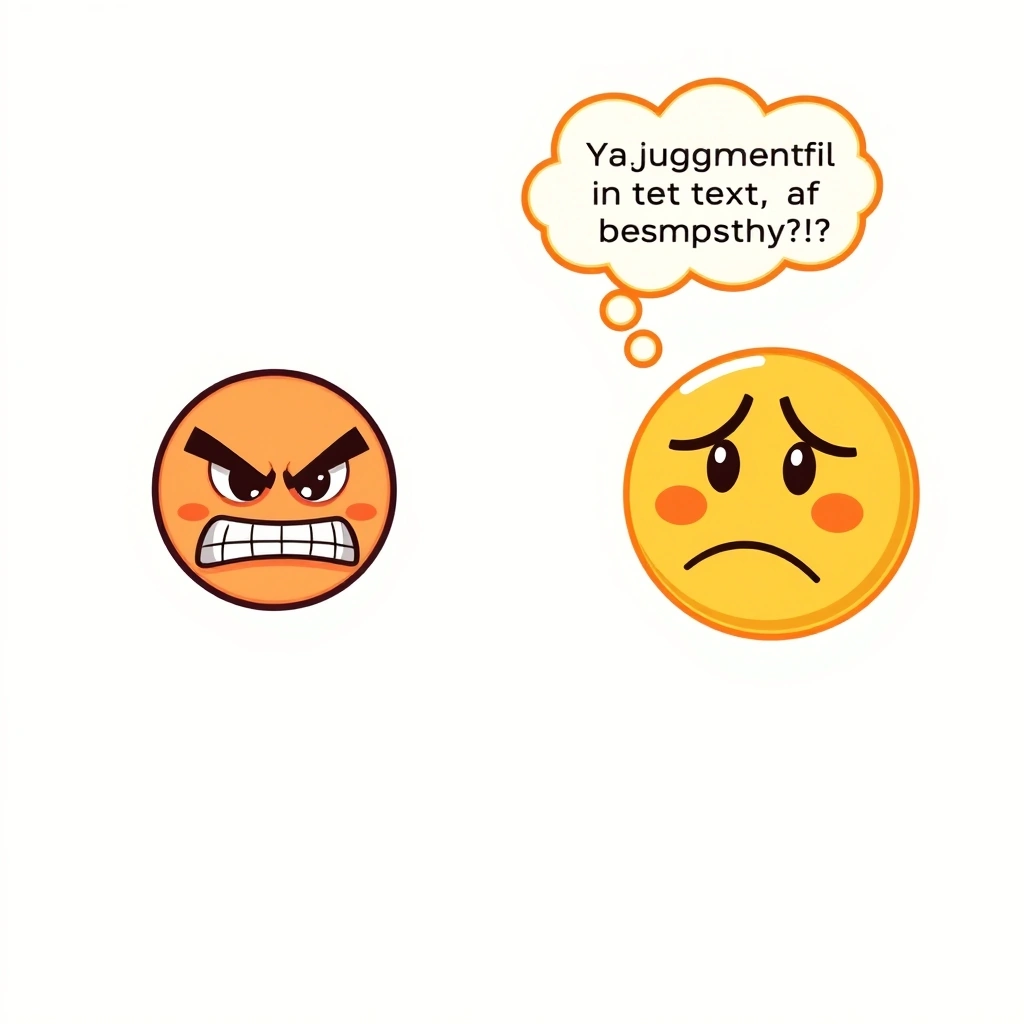
It's worth exploring more about how these small symbols can create big awkwardness over time. A series of small misreads can build into a real communication rift.
Navigating the Ambiguity
So, what can we do? We're not going to stop using emojis—they're too woven into how we connect. The key is mindful use.
First, consider the relationship. The emojis you use with your best friend are probably not the same set you use with your boss or a new acquaintance. When in doubt, especially in more formal or sensitive situations, lean towards clarity with words. A simple "That sounds frustrating, I'm sorry" is harder to misread than a solitary face with a single tear 😥.
Second, think about context and combination. A single emoji is a high-risk move for ambiguity. Sometimes, using two emojis together can help pin down the meaning. A grimace followed by a heart 😬❤️ more clearly says "I'm cringing in sympathy for you, but I care." It's not foolproof, but it helps.
Finally, don't be afraid to clarify. If you sense a weird vibe after sending a message, a quick follow-up can work wonders. "Just to be sure, my 'face screaming in fear' 😱 there was meant as 'I can't believe that happened to you!' not that I was actually scared." It feels a bit clunky, but it's far better than letting a misunderstanding fester.
At the end of the day, emoji miscommunication is a universal human experience in the digital age. It's a reminder that even our most advanced communication tools are still filtered through messy, beautiful, and sometimes confused human perception. For more on the pitfalls of emoji use, especially when intentions go awry, you can read about when friendly texts backfire.
The goal isn't perfection. It's awareness. By recognizing that my 😊 might be your 😬, we can all be a little more patient, a little more clarifying, and a little more forgiving when our pictographic intentions get lost in translation. After all, we're all just trying to be understood, one tiny, ambiguous, colorful character at a time.
📒 Related Blogs
More...The Emoji Revolution: How Pictograms Are Reshaping Our Daily Communication
More Than Just Fun: How Emojis Unravel the True Meaning in Busy Chats
How Emojis Become the Heartbeat of Viral Moments
The Quiet Comfort of Emojis in Everyday Chats
The Psychology Behind Emojis: Expressing Emotion in a Digital Age
The Secret Sauce: How Emojis Make Your Short Group Chat Messages Feel Truly Intentional