The Emoji Lifeline: How a Simple Icon Saves Us When Texts Go Quiet

Mar 16,2026
You hit send. The message is out there, floating in the digital ether between you and them. It was a simple question, maybe a bit of news, or a thought you wanted to share. Then, the wait begins. The little ‘Delivered’ or ‘Read’ receipt glows back at you, but the reply bubble stays stubbornly empty. Time stretches. That’s when the second-guessing starts.
Was my tone off? Did it sound too blunt? Too eager? Too casual for the situation? In the absence of a voice, a face, or any immediate feedback, our minds tend to fill the silence with noise. We replay our own words, analyzing them through an increasingly anxious filter.
This is the modern moment of vulnerability in our always-connected world. It’s not really about the delay—people are busy, lives are full. It’s about the ambiguity. The hard-to-judge tone of plain text left hanging.
And this is where it often happens. Not with a follow-up message asking “hello?” but with something smaller, softer. A single emoji. Sent not as a demand, but as a gentle nudge. A smiley face 😊 appended to the original thought. A thinking face 🤔 to show you’re pondering their potential reply. A simple heart ❤️ to reaffirm the warmth behind the words.
This tiny, silent act does something profound. It manages the emotional space of the conversation without adding to the verbal clutter. It’s a signal flare in the quiet. It says, “I’m still here, and my intent is still kind,” or “No pressure, just adding a smile to that.” It reclaims a bit of the tone that got lost in the translation from mind to text message.
Think of it as emotional punctuation. The period at the end of a sentence is functional, but an emoji is tonal. It colors the waiting period. A thumbs up 👍 can transform a potentially curt “Okay” into a supportive “Okay, got it, all good!” It softens the edges of digital communication that is so often stripped of nuance.
We use them almost instinctively, these little icons. They’ve become the tools we reach for to plaster over the cracks of misunderstanding that text alone can create. For more on how emojis operate in these quiet spaces, you can explore related thoughts in our emoji & situation category.
There’s a particular grace in using an emoji this way. It’s non-confrontational. It doesn’t accuse the other person of taking too long. Instead, it tends to your own side of the digital fence. It’s a way of saying, “Whatever you’re doing, whenever you reply, know that this was sent with a friendly spirit.” It pre-emptively defuses the potential for the delayed reply to be read as annoyance or disinterest on your part.
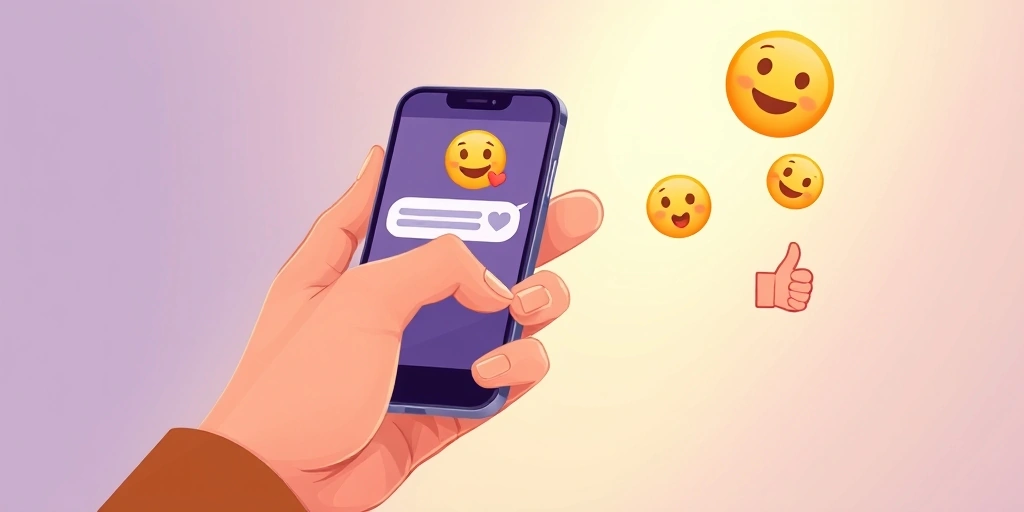
Of course, the choice of emoji matters immensely. A string of crying-laughing emojis 😂 might not fit a serious conversation. A winking face 😉 can add a playful layer, but could also introduce ambiguity if the tone wasn’t already clear. The magic is in the subtlety—the perfectly chosen icon that echoes the original sentiment you meant to convey.
This practice speaks to a deeper need in how we communicate now. We’re building relationships and maintaining connections through snippets of text, and these snippets are fragile. They lack the safety net of body language and immediate clarification. Emojis, in their small way, become that safety net. They are the digital equivalent of a soft smile held on your face as you wait for someone to finish their thought.
It’s fascinating to observe how this tiny gesture can change the entire texture of a waiting period. The silence feels less like a void and more like a pause. The unanswered message feels less like an object of anxiety and more like an ongoing, open loop. The emoji acts as a placeholder for your goodwill.
In many ways, this use of emojis is a form of emotional labor—the quiet, often unseen work we do to manage atmospheres and maintain harmony. It’s the work of ensuring the other person feels safe and understood, even across a delay. It’s a small investment in the health of the connection.
So the next time you find yourself staring at that read receipt, watching the minutes tick by, consider the power of the quiet emoji. It’s not about filling the silence with noise. It’s about coloring the silence with warmth. It’s a gentle way of tending to the space between messages, ensuring that when the reply finally does come, the conversational bridge is still intact, softened and waiting. For another perspective on navigating these digital pauses, you might find this related article on emojis as silent lifesavers an interesting read.
The message is sent. The wait is on. But with a simple icon, you’ve already said the most important thing: it’s okay, I’m here, and we’re good.
📒 Related Blogs
More...The Unspoken Beat: How Emojis Dictate the Rhythm of Your Fast-Paced Digital Conversations
Emojis in Marketing: How Brands Connect & Speak Your Language Digitally
How Emojis Evolve: The Secret Life of Our Favorite Digital Symbols
The Gentle Art of Coordination: How Emojis Soften Work Messages
The Magic of Emojis: How to Make Your Casual Chats Effortlessly Lighter
Beyond the Text: How Emojis Guide Meaning in Your Private Chats