How Emojis Evolve: The Secret Life of Our Favorite Digital Symbols

Feb 23,2026
Think about the last text you sent. Chances are, it had an emoji. That little picture did more than just decorate your message—it carried tone, emotion, and maybe even a whole layer of meaning your words alone couldn't express. But here's the fascinating thing: the emoji you used today might not mean the same thing it did five years ago, or even what it means to someone in a different online group. Emojis are living parts of our language, constantly adapting to new cultural contexts in digital spaces.
It's a quiet evolution, happening in group chats, comment sections, and social media feeds. We don't sit down and vote on new meanings; they just emerge from how we use them. A symbol designed for one purpose gets picked up by a community and repurposed, becoming a shorthand for a shared experience or feeling.
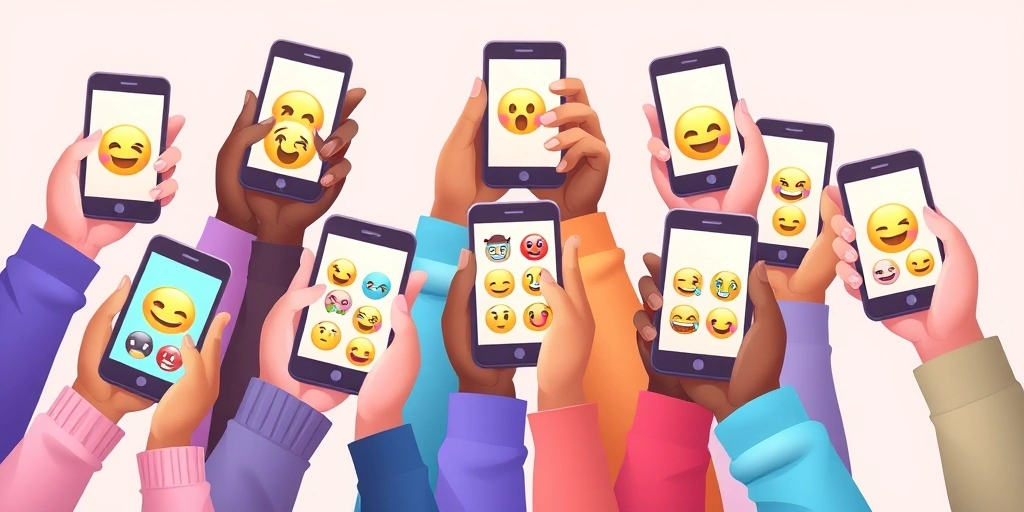
This fluidity is what makes emojis so powerful and, at times, confusing. The same eggplant or peach emoji can be utterly innocent in one context and a well-known innuendo in another. It's not that the emoji itself changed, but the culture around it did. Digital spaces, especially niche communities on platforms like TikTok, Discord, or even specific subreddits, act as incubators for these new meanings. They create their own secret languages of emojis, where a sequence of symbols can tell a whole story to those in the know.
From Universal to Personal (and Back Again)
This adaptation isn't random. It often starts with a gap—a feeling or idea that existing words or emojis don't quite capture. Maybe it's the specific vibe of "quietly overwhelmed" or the solidarity of "I see your struggle." Communities step in and assign an existing emoji to that gap. The grimacing face 😬 stops being just about discomfort and becomes a marker of sympathetic cringe. The pleading face 🥺 transforms from simple sadness to a powerful tool for expressing cute desire or earnest request.
What's even more interesting is when these personalized meanings bubble up from small groups and go mainstream. A meaning born in a fan community can spill over onto broader social media, and suddenly, everyone is using the skull emoji 💀 to say "I'm dead from laughter." The emoji's official designation is literal, but its cultural context has completely rewritten its common use. It becomes a digital time capsule, marking a specific era of internet humor.
The Role of Platforms and Generations
Our digital habitats directly shape this evolution. The emoji keyboard on your phone offers a standardized set, but how you use them depends heavily on where you're talking. The emoji culture on Twitter (or X) is different from that on Instagram, which is different from the coded language of gaming Discord servers. Each platform has its own norms, trends, and inside jokes.
Generational divides also become clear. The crying-laughing emoji 😂 might be a Gen Z marker of something being mildly funny or even ironic, while older millennials may still use it for genuine, hearty laughter. This isn't a misunderstanding; it's a natural drift. The emoji adapts to fit the communicative style and emotional vocabulary of the group using it most.
This constant adaptation is a testament to human creativity. We're wired to find meaning and connection, and when our tools are limited, we reshape them. Emojis are a perfect, flexible medium for that. They provide a common starting point—a colorful, friendly set of symbols—and then we, the users, pour our collective experiences into them.
Embracing the Change
So, what does this mean for us as everyday users? First, it calls for a bit of grace and context. Before you get frustrated that someone "used the wrong emoji," consider their digital context. They might be speaking a slightly different dialect of this visual language.
Second, it invites us to participate. You're not just using emojis; you're helping to define them. The way you and your friends use an emoji in your group chat contributes to its ongoing story. This dynamic nature is what keeps our digital conversations feeling alive and human. It prevents emojis from becoming a stale, fixed dictionary and turns them into a living, breathing part of how we relate.
The journey of an emoji from its official release to its various cultural lives is a mirror of our own digital socialization. They show us how language is never truly finished, especially in the fast-flowing streams of online interaction. To explore more about how these trends form, you can dive into other discussions on emoji culture and trends.
In the end, the adaptability of emojis is their greatest strength. It proves that our need to connect and express nuanced emotion is stronger than any preset design. Our digital symbols grow with us, making our silent screens feel a little more like home.
📒 Related Blogs
More...Emoji Etiquette: Navigating Professional Communications with Emojis
Emoji as Emotional Buffers: Navigating Uncertainty with a Single Tap
The Future of Emojis: Decoding Digital Expression's Next Frontier
Emojis in Marketing: How Brands Connect & Speak Your Language Digitally
Decode the Digital Silence: How Emojis Revolutionize Online Communication Clarity
The Secret Sauce of Smiles: How Emojis Effortlessly Elevate Playful Chats