The Emoji Rescue: How a Tiny Icon Can Defuse Social Tension

Mar 18,2026
It happens to the best of us. You type out a message, hit send, and then… a sinking feeling. Maybe it was a request that felt too direct. Maybe it was a joke that didn't quite land. The reply comes back, and you can almost feel the chill through the screen. That moment of social friction, where intention and perception collide, is where emojis often perform their quietest, most vital work.
Think about it. Pure text is a minefield of ambiguity. Without the cues of tone of voice, facial expression, or body language, our words can be interpreted in a dozen different ways. What you meant as a light-hearted nudge can be read as passive-aggressive nagging. A simple question can sound like an accusation. This is the breeding ground for those "unexpected reactions"—the defensiveness, the hurt feelings, the confusion that bubbles up in socially delicate moments.
An emoji doesn't just decorate a sentence; it frames it. It provides the emotional context that plain text desperately lacks. It’s the digital equivalent of a warm smile or a gentle shrug that says, "Hey, I come in peace."
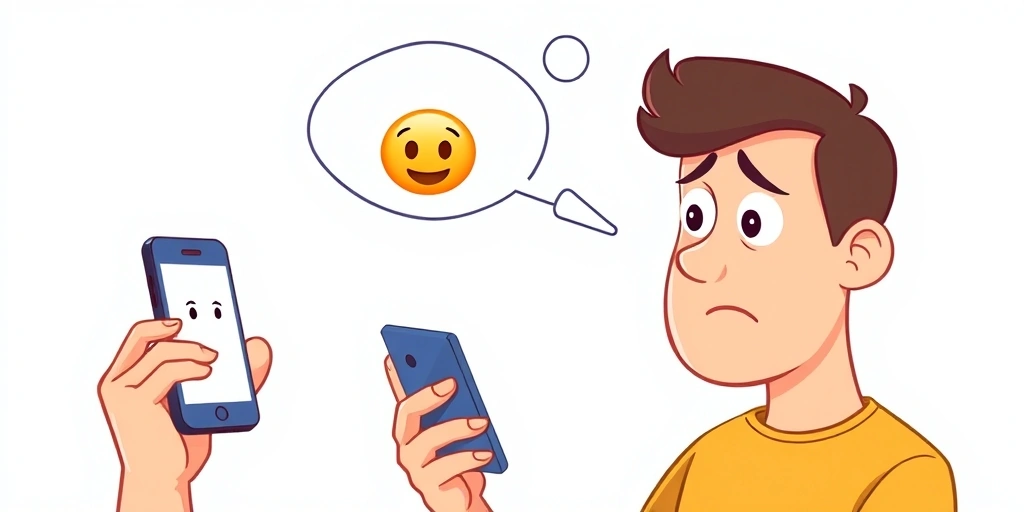
Consider the classic scenario: you need to follow up on something. "Did you get my email?" sent alone can feel like a demand, a pressure-filled check-in. But "Did you get my email? 😊" or "Just circling back on that email when you have a sec! 🙏" completely changes the energy. The emoji softens the edge. It signals patience and friendly intent, preemptively calming any potential defensive reaction from the recipient who might be busy or stressed.
Or what about giving feedback? Delivering constructive criticism over text is notoriously tricky. "The report needs more data in section three" is stark. It can feel cold and critical. But "The report is a great start! Could we add a bit more data in section three? 💡" The lightbulb emoji reframes the suggestion as collaborative ideation, not a top-down critique. It guides the reaction towards problem-solving rather than defensiveness.
This principle is especially powerful in personal relationships. You're running late to meet a friend. "Sorry, running 15 mins behind!" is fine, but it might still spark a flicker of annoyance. "Sorry, running 15 mins behind! 🏃♀️💨" adds a layer of self-deprecating humor. You're not just stating a fact; you're visually showing you're hustling, turning a minor frustration into a shared, slightly comedic moment. It proactively calms the irritation.
These tiny icons act as social buffers. They absorb the potential shock of a message that could be misread. For more on how emojis operate as a lifeline in our daily chats, you might find this exploration of emojis saving us from awkward pauses really interesting.
The "unexpected reaction" often stems from the gap between what we mean and how it's received. An emoji helps bridge that gap. It's a preemptive strike against misunderstanding. When you add a 😉, you're explicitly saying "this is teasing, not serious." When you add a 🥺, you're showing vulnerability, making a request feel softer. When you add a 🤦♂️, you're expressing shared frustration at a situation, not placing blame.
Without that visual emotional cue, the burden of interpretation falls entirely on the reader. And when we're reading quickly, often between tasks or while emotionally drained ourselves, we default to negative or neutral interpretations. Our brains, primed for social threat, can easily misread plain text as colder or more hostile than intended. The emoji short-circuits that instinct. It provides an immediate, universally understood emotional signpost.
This isn't about drenching every message in a rainbow of icons. It's about strategic, empathetic placement. It's asking yourself: "How could this be read if someone is having a bad day?" and then adding a touch of tone. That single emoji can be the difference between a conversation that flows smoothly and one that requires a lengthy, awkward clarification—"No, I didn't mean it like that!"
In the complex dance of digital communication, where nuance is so easily lost, emojis are our partners. They help us lead with the right emotional foot forward. They calm the waters before a storm of misunderstanding can even brew. They turn a potentially delicate moment into a simple, clear, and connected exchange. So next time you pause before hitting send, wondering if your words might land wrong, consider the humble emoji. It might just be the social savior your message needs.
Exploring the different ways emojis help us navigate social nuance is fascinating. You can dive deeper into more situations where emojis save the day here.
📒 Related Blogs
More...The Slow Burn: How Emojis Quietly Create Awkwardness Over Time
Unlocking Digital Emotions: The Psychology Behind Your Favorite Emojis
Emoji Fails: Hilarious Misinterpretations & Communication Blunders
The Silent Nod: How Emojis Keep Us Connected Without a Single Word
The Secret Sauce of Smiles: How Emojis Effortlessly Elevate Playful Chats
Beyond Likes: How Emojis Revolutionize Social Media Engagement & Marketing