The Great Emoji Debate: Are Emojis Enhancing or Hindering Modern Language?

Dec 09,2025
In an increasingly digital world, emojis have transcended mere novelty to become an integral part of how we communicate. From quick texts to professional emails, these small pictograms add a layer of expression that plain text often lacks. But their widespread adoption has ignited a spirited debate: are emojis truly enhancing our language, making communication richer and more nuanced, or are they subtly undermining traditional linguistic skills and hindering our ability to express ourselves fully through words?
The Rise of Emojis in Digital Communication
It’s hard to imagine digital conversations without emojis today. They’ve become a universal language, allowing us to convey mood, tone, and even complex ideas with a single tap. Before their rise, digital communication was often plagued by misinterpretations, as sarcasm or humor could easily be lost in text. Emojis stepped in to fill this gap, providing visual cues that help clarify intent and add emotional depth.
Emojis as Language Enhancers: Adding Emotion and Nuance
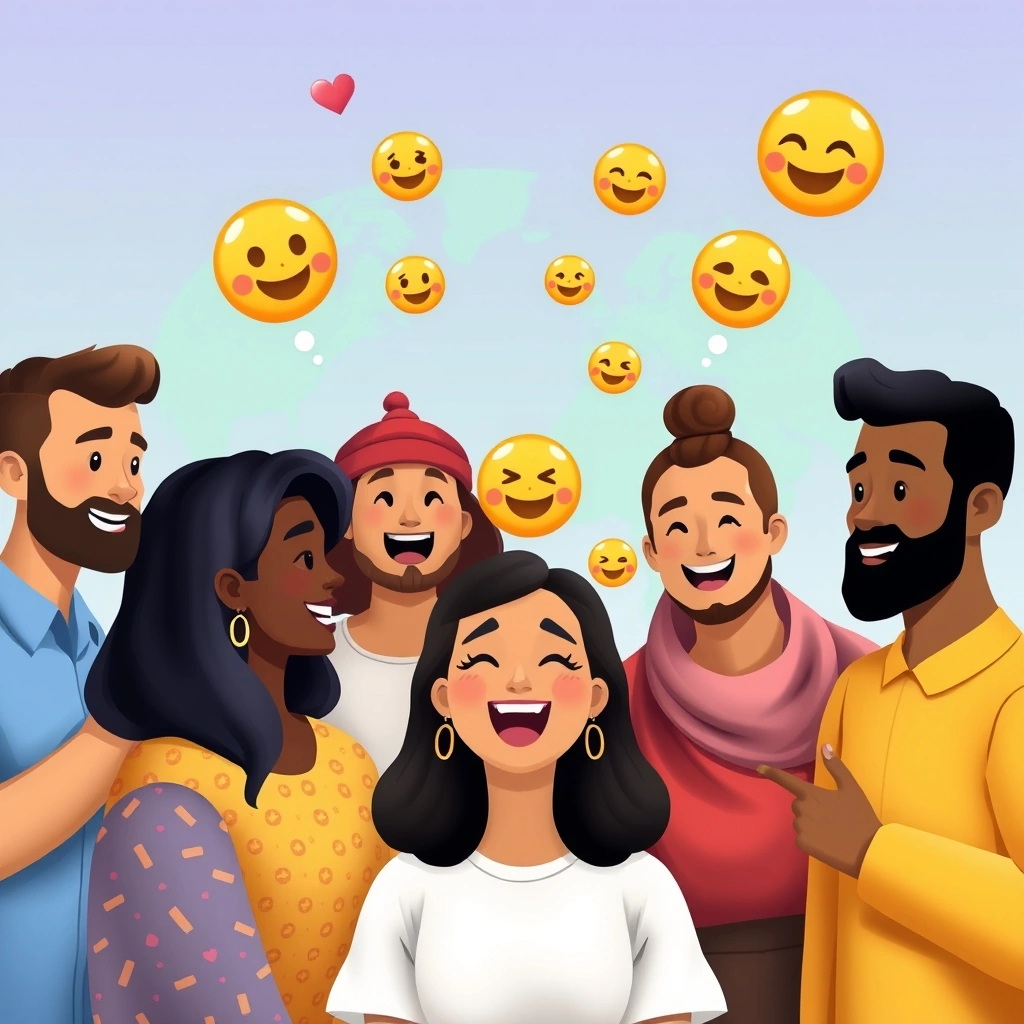
Proponents of emojis argue that they are not just enhancing, but revolutionizing language. They function as a form of non-verbal communication, akin to facial expressions or hand gestures in face-to-face interactions. Emojis can add warmth to a message, soften a critique, or amplify a joke. For instance, a simple message like “Okay” can take on entirely different meanings when paired with a Grinning Face😀 versus a Loudly Crying Face😭. They allow for a more efficient and expressive form of communication, especially in short-form digital interactions. Many users find that emojis help them convey complex emotions quickly, bridging cultural and linguistic barriers more effectively than words alone. For a comprehensive list and to easily copy emoji, visit emojilar.
The Argument for Hindrance: Diluting Traditional Language?
On the flip side, critics express concern that the pervasive use of emojis might be hindering traditional language development and expression. They argue that relying too heavily on pictograms could lead to a decline in vocabulary, grammar, and the ability to articulate thoughts and feelings through well-constructed sentences. Some worry that younger generations, growing up with emojis as a primary mode of expression, might struggle to write formally or engage in nuanced verbal communication. Is our language becoming lazier, substituting rich descriptions for simple icons?
Finding the Balance: A Tool, Not a Replacement
Ultimately, the impact of emojis on language is likely more nuanced than a simple 'good' or 'bad.' Emojis are tools, and like any tool, their effectiveness depends on how they are used. In casual, informal contexts, they are undoubtedly an enhancement, adding emotional context and efficiency. They can even make communication more inclusive for individuals with certain communication challenges. However, in formal settings or when deep, analytical thought is required, a robust command of written language remains irreplaceable. The key lies in understanding when and where to deploy them appropriately. Emojis are not replacing language; they are augmenting it, offering another layer of communication in our ever-evolving digital landscape. They represent a dynamic evolution, not an erosion, of how we interact.
📒 Related Blogs
More...When Your Emoji Backfires: The Surprising Way Tone Gets Lost in Translation
Bridging the Unspoken: How Emojis Resolve Emotional Uncertainty in Group Chats
The Unseen Clarity: How Emojis Save Our Private Conversations
How Viral Moments Shape Our Emoji Language
When Words Aren't Enough: Decoding the Unspoken Feelings Emojis Convey in Delicate Exchanges
The Quiet Comfort of Emojis: How a Tiny Icon Eases Our Awkward Pauses