The Hidden Power of Emojis in Your Daily Posts

Mar 07,2026
Think about the last post you scrolled past. What made you stop? Was it the witty caption, the stunning photo, or maybe... that little grinning face with tears of joy at the end of the sentence? We often treat emojis as digital sprinkles—a bit of fun to top off our thoughts. But in the lightning-fast world of short-form content, they're so much more. They're the silent architects of perception, shaping how our messages are received before a single word is fully processed.
When you have only a few seconds to make an impression, every element counts. An emoji isn't just decoration; it's a tone-setter, a context-giver, and an emotional shortcut all rolled into one tiny, colorful icon.
More Than Just a Pretty Face
On platforms like Instagram Stories, TikTok captions, or Twitter replies, space is limited and attention is fleeting. A wall of text can feel daunting. But a well-placed emoji acts as a visual anchor. It breaks up the monotony, adds a splash of personality, and most importantly, it tells the reader how to feel about what you've written.
Take a simple statement like "I aced that presentation." Read it flat, and it's a fact. Add a 😅 (face with sweat), and it becomes a story of nervous relief. Use a 😎 (smiling face with sunglasses), and it oozes cool confidence. The words are identical, but the emotional payload is completely different. The emoji does the heavy lifting of conveying your attitude, saving you paragraphs of explanation.
This is especially crucial because online text lacks the nonverbal cues—tone of voice, facial expression, body language—that fill our face-to-face conversations. Emojis step in to fill that void. They prevent the dreaded misinterpretation. That sarcastic comment you made? Without a 😉 or 😂, it might just land as plain rude.
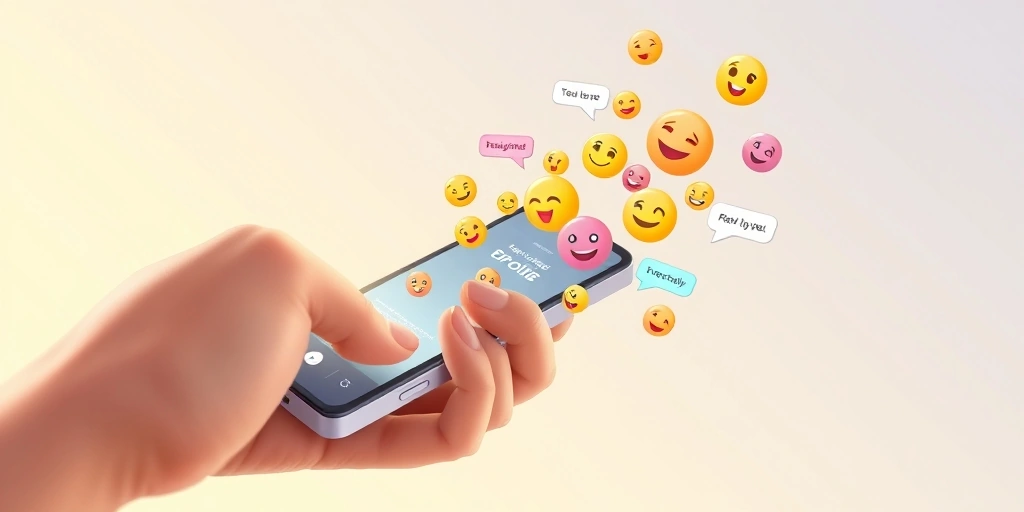
The Algorithm's Secret Decoder Ring
It's not just about human connection; it's about visibility. While the exact formulas are closely guarded secrets, it's widely understood that engagement signals—likes, comments, shares, and even time spent looking at a post—feed the social media algorithms. Emojis are engagement magnets.
Posts with emojis often feel more approachable and relatable, which encourages people to interact. A heart (❤️), a crying-laughing face (😂), or a shocked expression (😲) can act as a direct invitation for an emotional reaction. They create a sense of shared understanding and community. When people feel that connection, they're more likely to double-tap, reply, or send it to a friend, sending positive signals to the platform that your content is worth showing to more people.
You can dive deeper into how emojis drive reactions on social media in our dedicated article on the subject.
Crafting Your Digital Persona, One Icon at a Time
The emojis you consistently use become part of your online brand. They reinforce your personality. Are you the friend who always uses the silly 🤪 (zany face)? The supportive one who leans on the ✨ (sparkles) and 💖 (sparkling heart)? Or the thoughtful observer who uses the 🤔 (thinking face)?
This consistency helps your audience know what to expect from you. It builds familiarity and trust. In a chaotic feed, that recognizable emoji style can be the thing that makes someone pause on your post because it "feels like you."
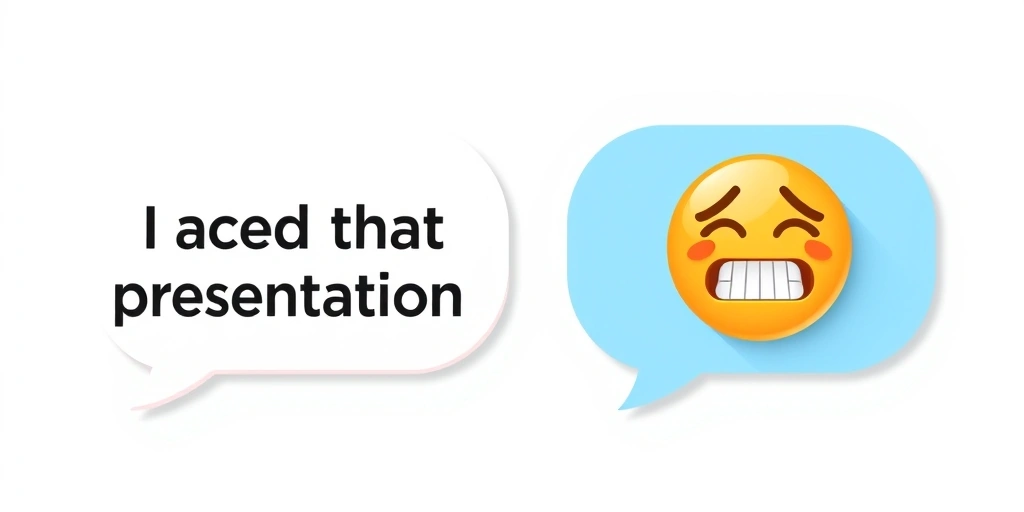
But with great power comes great responsibility. The wrong emoji can send a confusing or off-putting message. A skull (💀) might mean "this is hilarious" to one group and "this is terrible" to another. Overusing emojis can make a post look cluttered and unserious. It's about finding the balance that feels authentic to you and clear to your audience.
The Unspoken Rules of the Feed
There's a subtle, collective grammar developing around emoji use. A single red heart (❤️) often carries more sincere weight than a string of pink ones. The pleading face (🥺) has become a powerful tool for making requests feel softer and more endearing. The "see no evil" monkey (🙈) is a universal sign for "I can't believe I did that" or "don't look at this mess."
Using these shared understandings correctly makes your content feel native to the platform. It shows you're part of the conversation, not just shouting into the void. For more on fine-tuning this, explore our thoughts on the emoji keyboard as a secret tone weapon.
At the end of the day, emojis are the emotional punctuation of the digital age. They're the wink across the room, the sympathetic nod, the burst of laughter that we instinctively weave into our online dialogues. They transform our posts from mere broadcasts into conversations. So next time you're about to hit "post," take a second to look at those little icons. That one simple choice might just be the most powerful part of your message.
It makes you wonder, what does your current go-to emoji say about the persona you're putting out into the world today?
📒 Related Blogs
More...The Heartbreak of a Misread Emoji: When Digital Tone Goes Wrong
Beyond "K": How Emojis Make Quick Online Replies Warm and Understood
How a Simple Emoji Can Save Your Busy Workday
Beyond Just Words: How Emojis Supercharge Engagement in Online Communities
The Secret Language: How Emojis Shape Every Online Conversation You Have
Emoji Etiquette: Navigating the Unwritten Rules of Digital Expression & Communication