The Tiny Icons That Shape Your Feed: How Emojis Drive Reactions on Social Media

Jan 28,2026
You scroll through your feed, thumb moving faster than your thoughts. A funny video, a hot take, a quick life update. In that split second, what makes you stop, smile, and hit 'like' or even 'share'? Often, it's not the text alone. It's the little burst of color and emotion sitting right beside it: the emoji.
On platforms built for speed—like TikTok, Instagram Reels, or Twitter—you have mere seconds to make an impact. Words can be misunderstood. Tone is impossible to convey. That's where emojis step in, acting as a universal shorthand for feeling. They're the social glue of short-form content.
Why Emojis Are the Secret Sauce for Engagement
Think about the last viral meme or trend you saw. Chances are, it was peppered with 😂, 🥺, or 🤯. These aren't just decorations. They're direct signals to the algorithm and to other users. A post with relevant, emotional emojis is like a beacon, telling people, "This is relatable! This is funny! This is worth your time!"
Platforms are designed to promote content that keeps people interacting. When you use an emoji that resonates, you're not just expressing yourself—you're inviting a specific reaction. A heart-eyes emoji (😍) on a food video invites others to agree with your craving. A crying-laughing face (😂) on a fail clip creates a shared moment of humor. This simple cue dramatically increases the likelihood of someone leaving a reaction or comment, which in turn tells the platform to show the post to even more people.
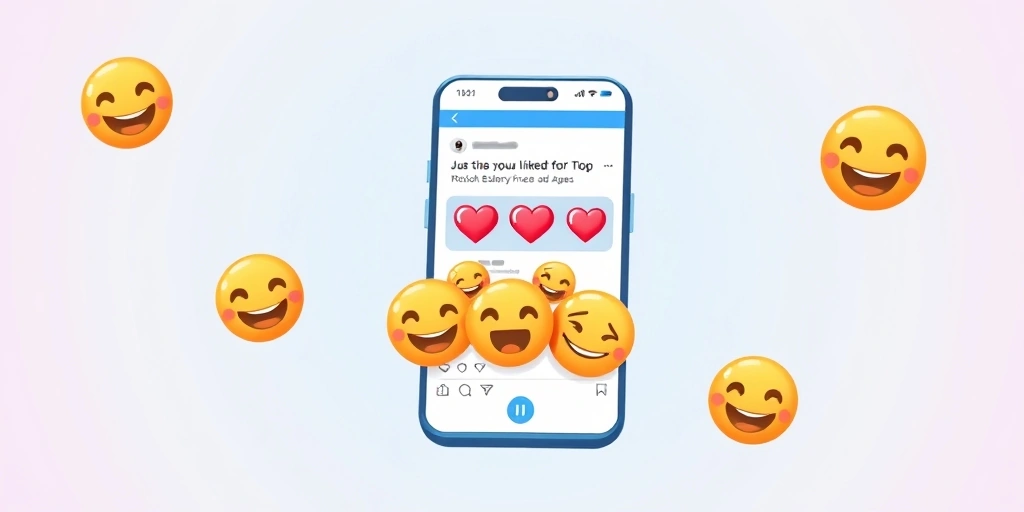
It's a feedback loop of emotion. Your emoji choice sets the tone for the entire conversation thread that follows. For a deeper dive into how emojis shape public tone online, check out this related piece on how emojis shape public tone.
From Passive Scroll to Active Connection
Short-form content is often consumed passively. We watch, we absorb, we move on. An emoji in the caption or the first comment acts as a call to action for our emotions. It transforms a viewer from an observer into a participant. When you see a creator use a 🤔 emoji on a thought-provoking question, it gives you permission to also be contemplative in the comments. When they use a 🥳, it encourages you to join the celebration.
This is especially powerful in comments. A string of 🔥 or 💀 emojis under a post creates a sense of community and shared understanding faster than paragraphs of text ever could. It's the digital equivalent of a nod or a collective gasp in a room.
Navigating the Unspoken Rules
Of course, with great power comes great responsibility. The wrong emoji can send a message spiraling in an unintended direction. Sarcasm is particularly tricky. A single 😬 or 🙃 can completely flip the meaning of a sentence, for better or worse. The context of the platform and your audience matters immensely. What works in a casual TikTok comment might not land in a more nuanced discussion on another platform.
The key is authenticity and context. Forced or excessive emoji use can feel spammy and actually reduce credibility. But a well-placed, genuine emoji can be the difference between a post that connects and one that just... exists. They have a remarkable softening power that can defuse tension and make digital communication feel more human.
So next time you're crafting a caption for a Reel or replying to a story, pause for a second. Think about the reaction you want to inspire. Are you going for laughs? Empathy? Surprise? Your choice of emoji might be the most important word you don't type.
It's fascinating to see how these small, colorful icons have become an essential part of our digital vocabulary. They fill the emotional gaps that short-form content inevitably creates, turning brief glimpses into meaningful interactions. For more insights on this evolving language, explore other articles in our emoji and social media category.
📒 Related Blogs
More...The Unexpected Tone Twists: How Emojis Can Complicate Casual Conversations
How a Simple Emoji Can Save Your Workday from Misunderstandings
How Emojis Evolve: The Secret Language of Modern Internet Culture
The Secret Language of Emojis: Decoding Uncommon Symbols and Their Meanings
Emoji Power: How They Erase Digital Doubt & Build Stronger Bonds Online