How Emojis Evolve: The Secret Language of Modern Internet Culture

Feb 06,2026
If you've ever sent a skull emoji (💀) to mean "I'm laughing so hard," or used the pleading face (🥺) to ask for a favor, you've participated in one of the most fascinating shifts in digital communication. The emojis we use today often carry meanings their original designers never intended. They've been adopted, adapted, and completely reinvented by the communities that use them.
This isn't a bug in the system; it's a feature of language itself. Just like slang words emerge on school playgrounds or in niche subcultures, emojis evolve in the wilds of the internet. A single symbol can tell a whole story, packed with context, irony, and shared understanding that exists only within a specific group.
From Design to Meme: The Journey of an Emoji
Every emoji starts with an official definition. The crying laughing face (😂) was meant to represent "face with tears of joy." But its journey didn't end there. Online, it became the universal stamp of something being genuinely funny. Then, as it was overused, it began to feel dated or even insincere to some. Now, you might see it used ironically by younger users, or replaced by the skull (💀) or the sobbing face (😭) to express an even more extreme reaction.
This lifecycle—from literal use, to popular adoption, to ironic reinterpretation—happens at internet speed. Platforms like TikTok, Twitter, and Discord are the petri dishes where these new meanings grow. A gesture or object that seems mundane in the real world can become a powerful inside joke online. For more on how these trends shape our emotional expression, check out our piece on the secret life of emojis.
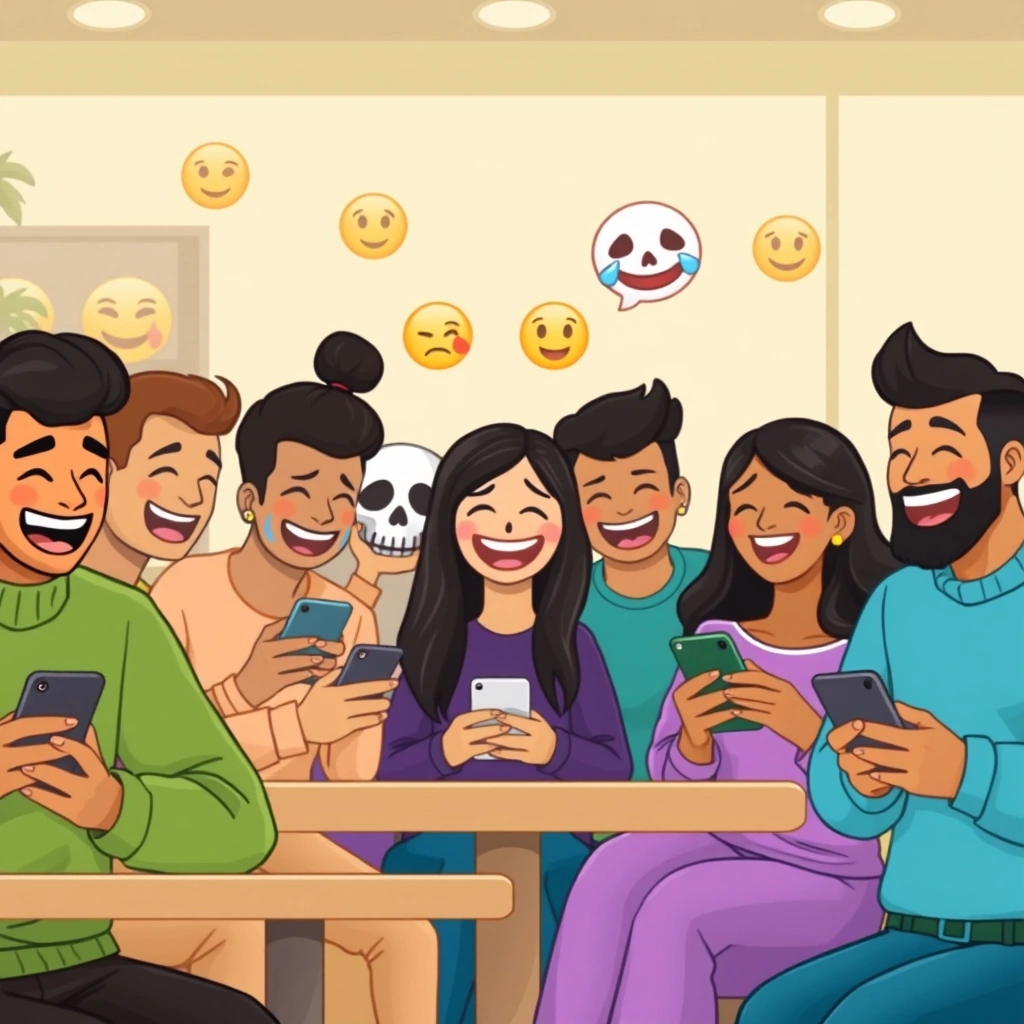
Think about the raised hands emoji (🙌). Officially, it's "person raising both hands in celebration." In practice, it can mean "praise," "thank you," "I agree 100%," or even "I'm surrendering to this amazing thing." The meaning isn't in the code; it's in the conversation happening around it.
Building Community, One Emoji at a Time
This adaptive power is what makes emojis so vital for building online communities. When a fandom adopts a specific emoji to reference their favorite character, or when gamers use a sequence to summarize a complex strategy, they're creating a shorthand that strengthens group identity. Using the "right" emoji in the "right" way signals that you belong, that you get the joke, that you're part of the tribe.
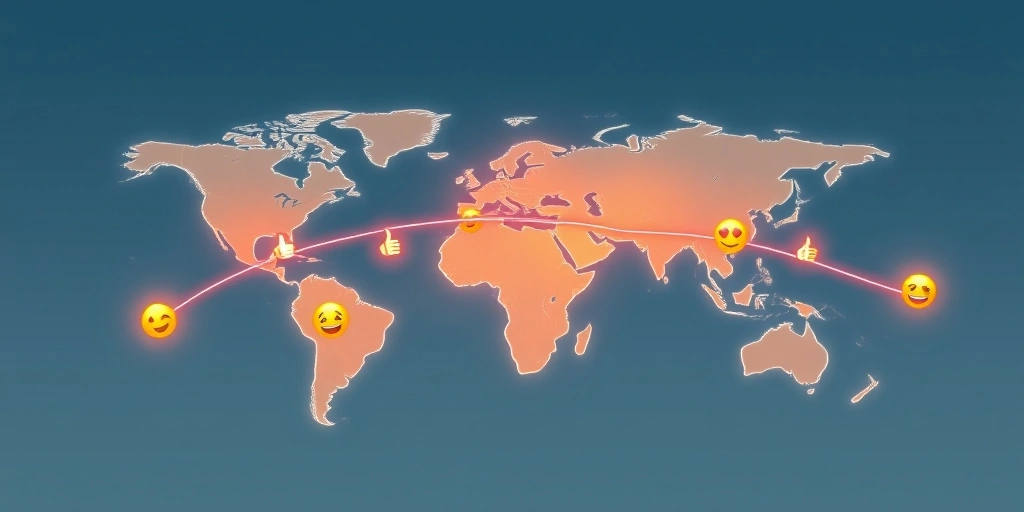
This can also lead to fascinating cross-cultural exchanges. An emoji popularized in K-pop fan spaces might migrate to general Twitter slang. A meaning born on English-speaking Reddit might get translated and take on a slight new nuance in Spanish or Japanese online circles. The emoji becomes a vessel for cultural exchange, carrying bits of context across borders.
The Delicate Balance: Clarity vs. Creativity
Of course, this constant evolution can lead to confusion. Sending a peach (🍑) to your grandma might mean something very different than sending it to a friend. The thumbs-up (👍), a universal sign of "okay" for decades, can now read as passive-aggressive or dismissive in some text-based contexts. The fire emoji (🔥) has gone from "literal fire" to "awesome" to, in some cases, "controversial or spicy take."
Navigating this requires a kind of digital empathy—reading the room, knowing your audience, and being aware that your intended meaning might not land. It's a reminder that communication, even when visual and fun, is deeply social. We're constantly negotiating meaning with each other, and emojis are at the heart of that negotiation in our digital lives. Explore more about this ongoing story in our article on how emojis tell the story of our changing world.
So, the next time you reach for an emoji, take a second to think about its journey. That little picture on your keyboard is more than a static icon; it's a living piece of culture, shaped by millions of conversations. It holds the history of internet jokes, the solidarity of fandoms, and the subtle nuances of how we try to connect without the tone of our voice. They adapt because we need them to. They change because we do.
This endless reinvention is proof that our need to express ourselves will always find a way, even within the constraints of a standardized character set. The story of emojis is, ultimately, the story of us—trying to be understood, one little symbol at a time. For more insights into this ever-evolving world, browse our collection of stories on emoji culture and trends.
📒 Related Blogs
More...Emoji Etiquette: Navigating the Unwritten Rules of Digital Expression & Communication
The Subtle Power: How Emojis Shape Professional Messages
How Emojis Are Reshaping Global Language & Culture: A Linguistic Deep Dive
The Secret Language of Emojis: Decoding Their Meanings Across Cultures
The Pulse of the Digital Age: How Emojis Mirror Our Collective Moods Online
From Emoticons to Icons: The Fascinating Evolution of Emojis and Digital Expression