The Neutral Nod: How Emojis Keep Remote Work Conversations Professional

Jan 19,2026
You know the feeling. You’ve just sent a message to your team’s Slack channel. It’s a straightforward request for an update on a project timeline. You hit ‘enter’ and immediately a tiny wave of anxiety hits. Did that sound too blunt? Too demanding? Will they think I’m annoyed? In an office, your tone of voice and body language would have carried the message. Remotely, your words sit there, naked and open to interpretation.
This is where the humble emoji performs its quiet magic. It’s not about being overly friendly or casual. It’s about providing a crucial piece of contextual glue that our text-based conversations desperately lack. A simple thumbs-up 👍 or a neutral checkmark ✅ at the end of a message doesn’t change the content, but it fundamentally changes the reception. It signals acknowledgment, closure, and a lack of hidden emotional subtext.
The Power of the Professional Buffer
Think about the most common, routine exchanges in a remote workday. “The report is ready for your review.” “Please send me the Q3 data by EOD.” “We need to move the meeting to 3 PM.” On their own, these are pure data transmissions. They get the job done, but they can feel sterile, even cold.
Adding a period at the end can, strangely, make them feel more final and severe. Leaving them without punctuation feels incomplete. But tagging a 🙏 or a quick 😊 at the end? It acts as a professional buffer. It wraps the hard data in a soft layer of human acknowledgment. The 🙏 says, “I’m making a request, and I appreciate your effort.” The 😊 says, “This is a neutral administrative note, not a criticism.”
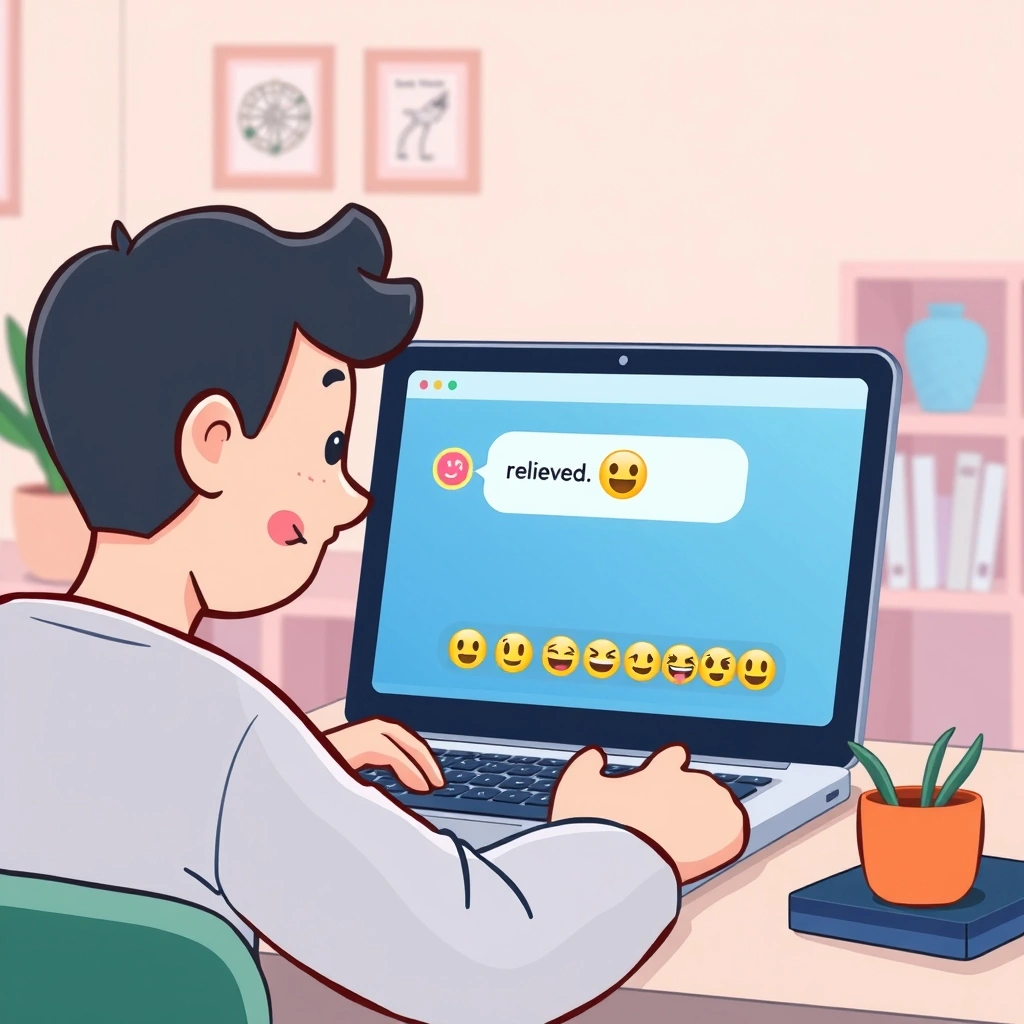
This isn’t about making work feel like a chat with friends. It’s about precision. In the absence of a smile or a nod across a desk, emojis become our tools for emotional precision, helping us maintain the intended neutral—and professionally courteous—tone. For more on balancing professionalism with a human touch, you might find our piece on how emojis keep professional messaging human interesting.
Navigating the ‘Tone Police’ Minefield
One of the biggest challenges in remote communication is accidentally becoming the ‘tone police’ or having your own messages be misinterpreted. A team member might read urgency or anger into a message where none was intended, simply because the text felt bare.
Using emojis as neutral signposts can prevent this. Replying to a question with “Not yet, but I’m on it.” could be read as defensive. “Not yet, but I’m on it! 👨💻” frames the same words as proactive and focused. The briefcase emoji 🧳 in “Let’s table this for the next meeting 🧳” clearly marks the topic as official business to be revisited, not a dismissed idea.
These small cues keep conversations moving forward on a neutral, collaborative track, preventing the need for follow-up messages like “No worries!” or “I didn’t mean it like that!” which can clutter threads and create more confusion.
When Neutrality is the Goal
There are times in work when neutrality isn’t just nice—it’s essential. Providing feedback, clarifying deadlines, or redirecting a project discussion all require a tone that is clear, unambiguous, and free from emotional charge. This is where the most ‘boring’ emojis shine.
The white check mark ✅ for acknowledgment, the memo 📝 for noting something down, the calendar 📅 for scheduling—these are the workhorses of neutral communication. They are functional and almost bureaucratic in their simplicity. They add clarity without adding personality, which is exactly what’s needed when the message itself must be the sole focus.
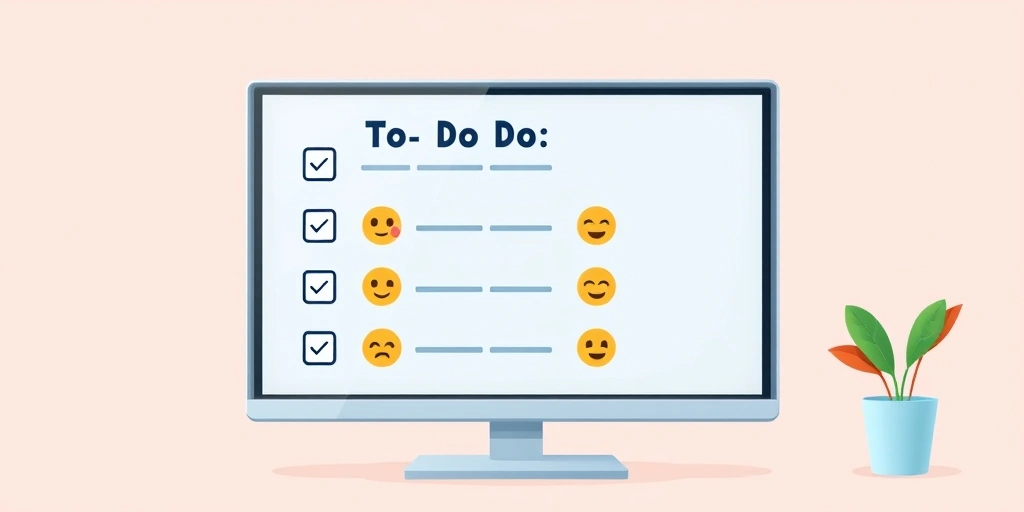
Exploring the broader category of emoji use in professional settings reveals just how nuanced this toolset has become for the modern workplace.
Crafting Your Neutral Toolkit
So, how do you build this skill? It starts with awareness. Before you send a message that is purely transactional, pause. Ask yourself: “If someone sent this to me, how would I feel?” If the answer is “unsure” or “slightly on edge,” consider a neutral emoji.
Stick to a small, reliable set for daily use. A thumbs-up, a checkmark, a calendar, a briefcase, a clock 🕐. These are universally understood in a professional context. Avoid emojis with strong or ambiguous emotions for neutral tasks (the crying-laughing face 😂 or even the thinking face 🤔 can introduce unintended subtext).
The goal is consistency. When your team starts to recognize your 👍 as your standard “received and understood” signal, communication becomes faster and frictionless. It becomes a shared, efficient shorthand.
In the end, using emojis to maintain neutrality isn’t about dumbing down communication or making it childish. It’s the opposite. It’s about elevating our digital discourse to be more considerate, precise, and ultimately, more professional. In the vast, text-heavy landscape of remote work, a single, well-chosen icon can be the anchor that keeps a conversation—and a team—perfectly level.
📒 Related Blogs
More...Beyond Smileys: Uncovering Unique & Lesser-Known Emoji Categories
The Secret Life of Emojis: Decoding Their Hidden Meanings & Cultural Impact
The Silent Peacemakers: How Emojis Diffuse Tension in Your Private Chats
The Future of Emojis: Predicting the Next Evolution in Digital Communication
The Emoji Glow-Up: How Viral Trends Reshape Meanings Overnight 🤯
The Fascinating Evolution of Emojis: From Kaomoji to Global Unicode Standards