The Quick Text Lifesaver: How Emojis Soften Your Fast-Paced Messages

Feb 27,2026
We've all been there. You're juggling a dozen things, your phone pings, and you fire off a quick reply. "Ok." "Sure." "Got it." A moment later, you might pause. Did that sound a bit… blunt? A little too direct? In the fast-paced world of everyday messaging, our brevity can sometimes come at the cost of warmth.
This is where the humble emoji becomes a true digital diplomat. It's not about being overly cutesy or writing a novel. It's about using a single, tiny character to soften the edges of a brief response, ensuring your tone lands just right.
Why Our Short Replies Need a Little Help
Text and chat are stripped of so much context. There's no body language, no vocal tone, no facial expression. When we're moving quickly, we strip our words down to the bare minimum to save time. But those minimal words are then interpreted through the lens of the reader's mood, their relationship with you, and the context of the conversation.
A plain "K" can read as annoyed agreement. A simple "No" can feel like a door slamming shut. It's not your intention, but in the vacuum of digital chat, that's often what fills the space.
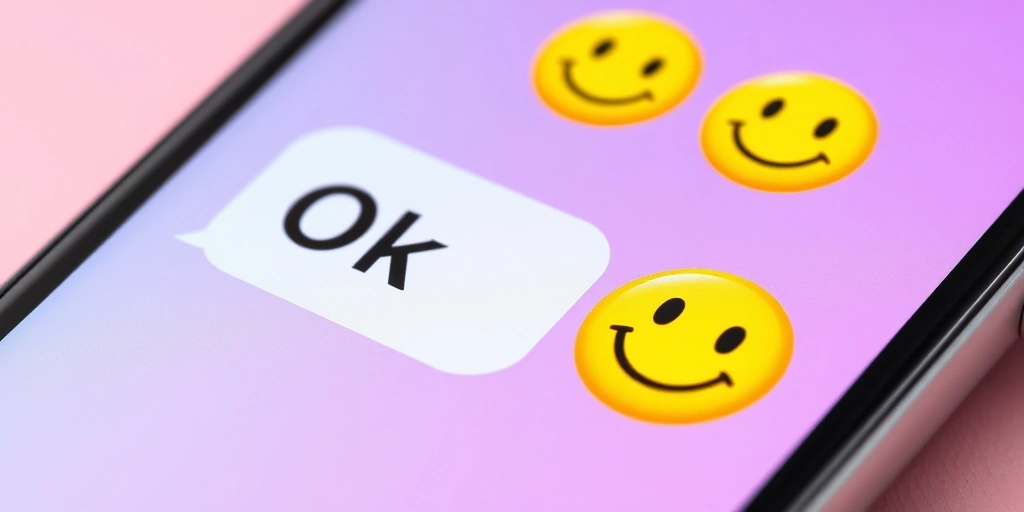
An emoji acts as a tone-setter. It's a quick visual cue that tells the other person how to interpret your words. Think of it as the digital equivalent of a smile, a nod, or a friendly shrug delivered with your short sentence.
The Magic of the Softening Emoji
Let's look at some everyday examples. Imagine a friend asks if you can meet at 7 pm.
- "Yes." vs. "Yes 🙂" or "Yes 👍"
- "Can't make it." vs. "Can't make it 😔" or "Can't make it 🙏" (to imply a sincere apology)
- "Okay." vs. "Okay 👌" or "Okay 😊"
The difference is subtle but powerful. The emoji version acknowledges the human on the other end. It says, "I'm agreeing, and I'm friendly about it," or "I'm declining, but I wish I could be there." It bridges the gap that pure text leaves wide open.
This practice is a cornerstone of keeping your online chats flowing smoothly. It prevents minor misunderstandings that can slow a conversation down or create unnecessary friction.

Choosing the Right Emoji for the Job
You don't need an encyclopedia of emoji meanings. For softening brief replies, a small, reliable toolkit works perfectly.
- The Smileys: 🙂 (slight smile), 😊 (smiling with eyes), 😅 (nervous/relieved smile). These are your go-tos for adding general positivity and approachability.
- The Gestures: 👍 (thumbs up), 👌 (okay), 🙏 (folded hands, great for thanks or apology). These add a layer of action and agreement.
- The Reactives: 😂 (tears of joy, for something funny), 😮 (surprise), 🤔 (thinking). Perfect for when your short reply is a reaction to their message.
The key is to match the energy. A "Thanks! 😂" might be confusing if they just sent you a serious document. A "No problem 🤔" might seem sarcastic. Aim for congruence between your word and your chosen symbol.
It's About Connection, Not Decoration
This isn't about making every message a colorful spectacle. It's a mindful punctuation. When you're about to send that two-word reply, take a half-second. Could this be read the wrong way? Would a single emoji make the connection clearer and kinder?
This small act shows you're considering the other person's feelings, even in a split-second exchange. It turns a transactional message into a touchpoint. In a way, these emojis are the unsung heroes of texting, doing the quiet work of maintaining social harmony.
So next time you're tapping out a fast "yep," "nope," or "on my way," consider giving it a little companion. That tiny 🙂 or 👍 isn't frivolous. It's the glue that holds the tone of our fastest conversations together, ensuring our speed doesn't sacrifice our warmth. It's how we stay human, even when we're in a hurry.
For more insights on using emojis effectively in all kinds of situations, explore our other emoji guides and how-tos.
📒 Related Blogs
More...The Quiet Power of Emojis: How They Build Confidence in Private Chats
How Your Favorite Emojis Evolve with the Internet's Latest Trends
When Words Feel Heavy: How Emojis Quietly Ease Our Nervous Moments
The Quiet Confidence of Emojis: When Words Feel Too Risky
The Unspoken Language: How Emoji Combos Master Emotional Tone in Group Chats