The Quiet Magic of Emojis: How They Smooth Out Our Everyday Chats

Mar 11,2026
Think about your most recent text conversation. It was probably about something mundane—confirming dinner plans, checking if someone got home safe, or sharing a funny thing your pet did. Nothing world-shattering, just the ordinary glue that holds our days together. In these exchanges, emojis aren't the main event; they're the supporting cast that makes the whole scene work.
They slip into our sentences almost without us noticing. A thumbs-up to confirm. A heart to soften a request. A laughing face to ensure a joke lands. Their power isn't in being loud or elaborate; it's in their quiet ability to do a very specific job: they help us avoid unnecessary explanations.
The Unspoken Context
Written words, especially in quick texts, are famously bad at conveying tone. A simple "Okay" can be read as agreeable, passive-aggressive, or downright cold, depending on the recipient's mood and the context of the day. Before emojis, we'd have to write a follow-up sentence to clarify. "Okay, sounds good!" or "Okay... if you're sure." Now, we often don't have to.
An "Okay 👍" carries a completely different, and clearer, meaning than an "Okay 😒" or an "Okay 🎉". The emoji does the heavy lifting of emotional translation in a fraction of a second. It closes the interpretive gap that pure text leaves wide open. This is why they feel so essential in daily life—they handle the subtext so we don't have to spell it out.
When a Picture Saves a Thousand Follow-Up Questions
Remember trying to coordinate meeting up with a friend in a crowded place before smartphones? It was a series of increasingly frantic calls: "I'm by the fountain!" "Which fountain? The big one or the little one with the ducks?" "The one with the stone bench!" "I see three benches!"
Emojis solve a micro-version of that problem in conversation. Saying "I'm running late!" can cause worry. Saying "I'm running late! 🏃♀️💨" adds a layer of self-deprecating humor and effort. It communicates not just the fact, but your attitude toward the fact. The receiver gets the full picture—you're late, you're hurrying, and you're a bit frazzled about it—all without you typing "sorry, the bus was late and I'm sprinting now, don't be mad."
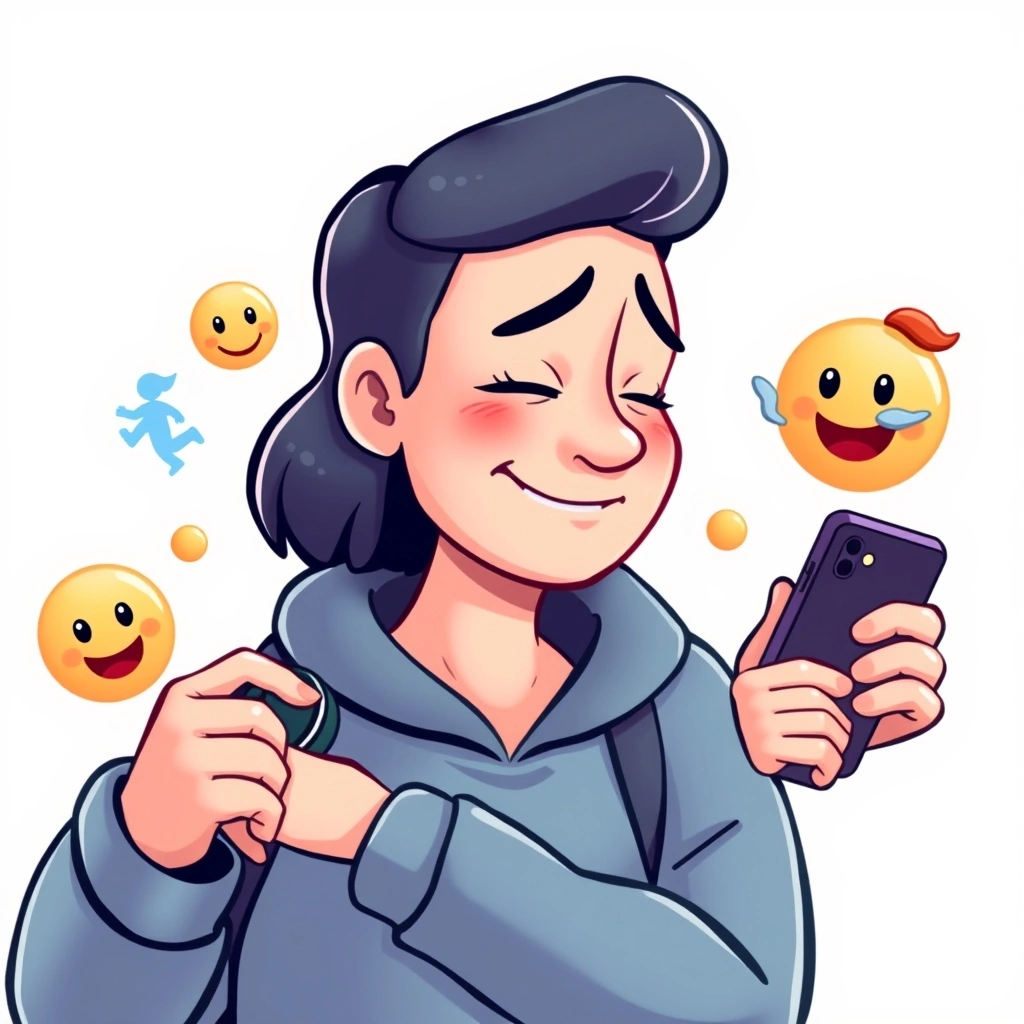
This efficiency is their superpower. They are the ultimate tool for conversational economy. In a world where we are all constantly managing multiple chat threads, this economy isn't just nice; it's necessary. It keeps the flow of everyday chats warm and friendly without demanding more mental energy than we have to give.
The Comfort of the Familiar
Part of why they avoid explanations is because they've become a shared language. We have a common, if unspoken, understanding of what a 😂 means versus a 😆. We know a ❤️ from a close friend means something different than a ❤️ from a group chat. This shared understanding creates a shortcut to intimacy and clarity.
When you send a 🥲 after sharing a slightly frustrating story, you're trusting the other person to understand the complex blend of "I'm smiling through the pain" or "This is so ridiculous it's funny." To explain that in words would break the emotional rhythm of the conversation. The emoji lets you state the emotional reality and move on, keeping the chat feeling natural and connected.
They make our digital conversations feel more human, not by replacing words, but by completing them. They add the shrug, the wink, the sigh, the eye-roll that would naturally accompany our speech. In doing so, they prevent misunderstandings that would otherwise require clunky, mood-breaking clarifications. They let the conversation breathe and flow like it would in person.
So the next time you tap that 🫶 or that 😮💨 into a message, don't overthink it. You're not just decorating your text. You're engaging in a subtle, powerful act of communication efficiency. You're saying, "I trust you'll get this," and in most ordinary days, that's exactly what happens. The message is sent, received, and understood, all without a single unnecessary word.
📒 Related Blogs
More...How Emojis Bridge Generations in Our Online Communities
How Emojis Bridge Generations in Our Ever-Changing Digital World
The Emoji Effect: How Our Digital Expressions Are Always Changing
The Instant Pulse: How Emojis Light Up Viral Trends and Platform Moments
The Unseen Hand: How Online Communities Shape Our Favorite Emojis
The Friendly Nudge: How Emojis Keep Professional Messaging Human