The Quiet Nod in the Chat: How a Simple Emoji Says 'I See You' to Family

Feb 26,2026
You know the feeling. Your phone buzzes, and it's the family group chat. It might be a photo of your nephew's messy art project, a reminder about Sunday dinner, or your mom sharing a meme that's already three years old. The conversation flows in fits and starts, a digital hearth we all gather around.
And in that flow, we've all developed a shorthand. We don't always have the time or energy to type out a full sentence. 'That's hilarious!' or 'I'll be there at 6!' can feel like too much. So instead, we send a little picture. A thumbs-up. A red heart. A crying-laughing face.
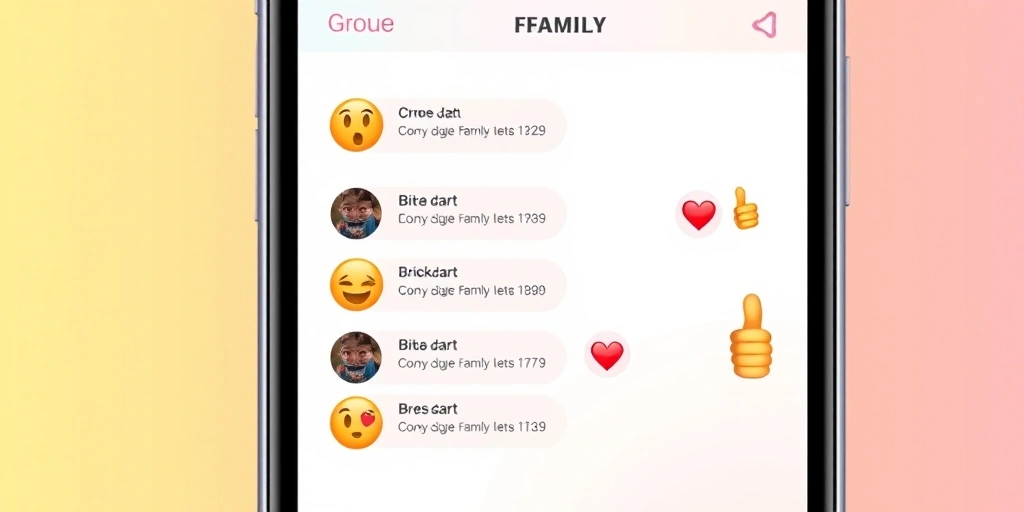
This isn't about being lazy. Far from it. It's about efficiency, sure, but it's about something deeper. It's about presence. In the chaos of daily life, that emoji is a tiny flag you plant in the conversation. It says, 'I am here. I saw this. You are not talking into a void.'
Think about the alternative. The message sits there, read by everyone, but with no response. It can feel a little lonely, even in a crowd of people you love. That single emoji breaks the silence. It's the digital equivalent of a nod across the room, a gentle 'mmhmm' to show you're listening even while you're doing the dishes.
My sister will send a photo of her kids at the park. My reply is often just a heart-eyes emoji or a series of heart emojis. It conveys more warmth and immediate affection than 'They look so cute!' ever could. It's pure, unfiltered reaction. It cuts straight to the emotional core.
There's a whole quiet language of family built into these choices. The thumbs-up from dad means 'Acknowledged and approved.' The series of heart emojis from grandma is a full embrace. The crying-laughing face from a sibling is shared history and understanding, all in one glyph.

It's a way of keeping the thread alive without the pressure of a deep, ongoing dialogue. We're all busy. We dip in and out. An emoji allows us to dip in, affirm our connection, and dip out, leaving a trace of warmth behind. It maintains the vibe, much like emojis do in friend groups, but with the unique, comforting familiarity of family.
This casual acknowledgment is a modern form of care. It's a low-effort, high-impact way of saying, 'You are on my mind, even if just for this second it took me to tap this icon.' In a world of constant notifications, choosing to acknowledge a family message specifically is a small but meaningful act.
It also softens the edges of digital communication. Text can be so cold, so open to misinterpretation. 'Okay' can feel brusque. 'Okay 👍' feels agreeable. 'See you then' is a statement. 'See you then 😊' is a promise made with a smile.
So the next time you're scrolling through the family chat and you see a message that deserves a response but you're at a loss for words, don't overthink it. Don't feel pressured to compose an essay. Just tap that heart. Send that thumbs-up. Fire off the laughing face. You're not just sending a cartoon image. You're sending a little pulse of connection. You're saying, in the simplest way possible, 'I'm here with you.' And in the daily life of a family, spread across towns or time zones, that quiet nod means everything.
It's the glue in our digital family album, the background hum of love and attention that holds us together, one tiny, colorful character at a time. For more on how these small symbols weave into our daily routines, you can always explore thoughts on emoji daily life.
📒 Related Blogs
More...The Fascinating Journey of Emojis: From ASCII Art to Global Unicode Icons
The Silent Language: How Emojis Fill the Gaps in Our Daily Texts
The Quiet Confidence of Emojis: How Tiny Icons Speak Volumes in Our Most Subtle Conversations
Emoji Fails: Hilarious Misinterpretations & Communication Blunders
The Secret Life of Emojis: How Our Digital Heartbeats Mirror a Changing World
Decoding Emoji Meanings: Common Misunderstandings & Cultural Nuances