The Quiet Shift: How Emojis Soften and Sharpen Our Group Chats Over Time

Mar 20,2026
Think about your most active group chat. The one with your closest friends, your family, or your team at work. Remember how it started? Maybe it was all business, or a flurry of excited planning. Now, think about how it feels today. The difference isn't just in what you're talking about—it's in how you're talking. And a huge part of that 'how' lives in the tiny pictures we sprinkle between our words.
We don't often plan our emoji use. We react. We feel. We tap. But if you look back, you'll see a pattern. Over weeks and months, the emojis in a group conversation act like a social thermostat, constantly making tiny adjustments to how direct, how personal, and how emotionally charged our messages feel.
The Opening Act: Testing the Waters
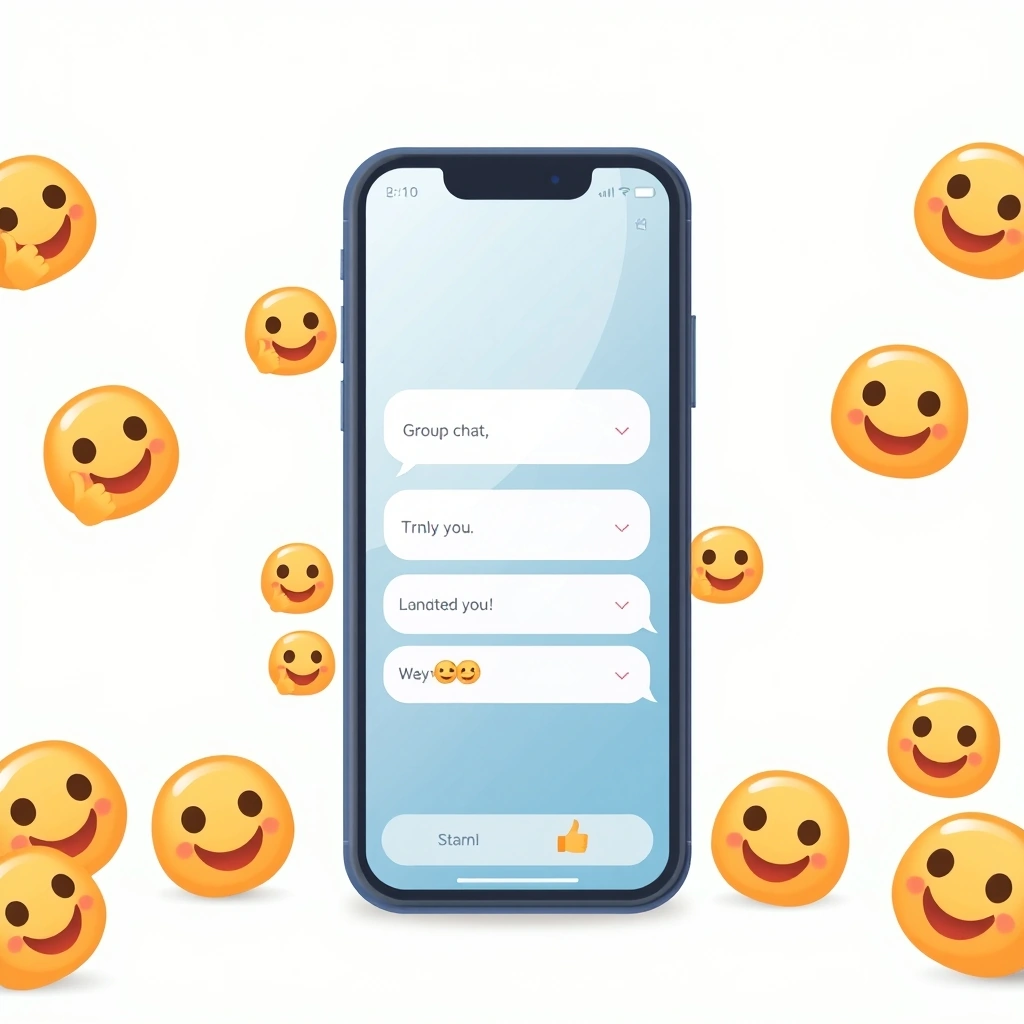
In a new group, or at the start of a big project, messages tend to be clearer, more direct, and often more neutral. Think of it as the 'informational phase.' We're establishing facts, making plans, sharing links. Emojis here are often functional—a thumbs-up to acknowledge, a checkmark to confirm, a single laughing face to gently offset a potentially blunt statement. The emoji isn't the star; it's a supporting actor helping the main message land safely. It's a way of being polite without being overly familiar.
This stage is all about reducing friction. A well-placed smiley can soften a request (“Can everyone send their reports by Friday? 🙂”). It signals benign intent. But it's also a bit distant. The emotional temperature is kept deliberately cool.
The Tipping Point: When Emojis Become the Vocabulary
Then, something shifts. It's rarely a conscious decision. Someone shares a silly personal anecdote. The group rallies around someone having a tough day. You have an inside joke that won't die. This is when emojis stop just supporting the text and start carrying meaning on their own.
A single 😬 or 🥴 can summarize a shared feeling about a stressful situation. The 100th iteration of your inside joke might just be a string of 🍕🐿️🎉 that makes everyone laugh without a single word. At this point, the messages become less about direct information transfer and more about maintaining the social fabric of the group. The emojis themselves become a shorthand, a private language. They make the conversation feel more personal, more insulated from the outside world.
This shift is beautifully explored in articles about how emojis reshape the rhythm of our chats, showing how these symbols manage the pace and emotional flow of our digital dialogue.
The Comfort Zone: Intimacy and Implied Meaning
In a mature, comfortable group chat, the directness of messages often plummets—and emojis are the reason why. You can say “I'm so overwhelmed” followed by a 🤪, and your friends know you're laughing at yourself, not asking for crisis intervention. A message that says “Well, that happened.” with a single 😑 can convey a complex story of frustration, resignation, and humor.
The message has become less direct on the surface, but more direct in its emotional truth. The emoji does the heavy lifting of clarifying tone, which allows the text to be vague, sarcastic, or understated. This is the peak of emoji-mediated communication: where what is left unsaid in words is fully articulated in symbol. It’s a sign of deep digital intimacy.
This function is crucial for keeping long-running conversations alive, acting as a gentle nudge that maintains connection even when there's not much new to say.
The Reset Button: When the Context Changes
This evolution isn't always linear. Add a new person to the chat. Start discussing a sensitive topic. The group dynamic resets, at least temporarily. You'll likely see a sudden return to more literal, explanatory text and simpler, more universal emojis. The private shorthand goes on hiatus. It's a fascinating pullback, proving that we are constantly, subconsciously using these tools to calibrate our social proximity. We're instinctively dialing down the intimacy to accommodate the new shared context.
Over time, with the new member integrated, the emoji lexicon will expand again, creating a new layer of shared meaning. The cycle continues.
What Are We Really Adjusting?
So, what's the 'directness' that's being adjusted? It's not just about being clear or vague. It's about emotional risk.
A direct message without emoji in a casual chat carries risk—risk of being seen as cold, angry, or harsh. An early-stage emoji (like a simple smile) mitigates that risk. A vague message in a close-knit group also carries risk—risk of being misunderstood. A complex, specific emoji (like a face holding back tears or a dramatic sigh) mitigates that risk by pinning down the exact emotion.
As the group's shared history and trust grow, we use emojis to take bigger emotional risks with smaller textual footprints. We can be more authentically sarcastic, vulnerable, or silly because we have a visual language to ensure we're understood. The message feels less direct on an informational level but far more direct on a human level.
This entire process highlights how central emojis are to modern digital communication. They are not frivolous. They are the essential grease in the gears of our online relationships, constantly fine-tuning the pressure and proximity in our conversations.
It makes you wonder: if our group chats are slowly writing their own emotional dictionaries through emojis, what does that mean for the future of how we understand each other? Are we developing a new kind of emotional literacy, one that lives in the space between a word and a symbol? The conversation in your phone might just be the training ground.
📒 Related Blogs
More...The Emoji Revolution: Transforming Marketing & Branding Strategies
The Subtle Power: How Emojis Shape Professional Messages
Emojis: Bridging Cultural Communication Gaps Beyond Words
The Secret Life of Emojis: How They Morph with Every Internet Trend
When Emojis Make Your Texts Feel Less Serious (And That's a Good Thing)
The Emoji Filter: How a Simple Icon Can Change Your Entire Argument