The Secret Power of Emojis: How a Simple 😊 or 😬 Changes How People See You

Feb 21,2026
Think about the last text you sent. Did you add an emoji? If you did, you weren't just making it look cute. You were engaging in a subtle, powerful form of social signaling. In the flat landscape of typed words, emojis are our tone of voice, our facial expressions, and our body language, all rolled into one tiny, colorful icon. They don't just accompany our messages; they actively shape how the person on the other end perceives us.
It happens in a split second. A message that reads "Sure" feels very different from "Sure 😊" or "Sure. 😒". That single character fills in the emotional blanks that our brains are desperately trying to complete. Without it, we're left in a state of mild uncertainty, which, in the world of casual chat, can lead to misunderstandings, perceived coldness, or even anxiety.
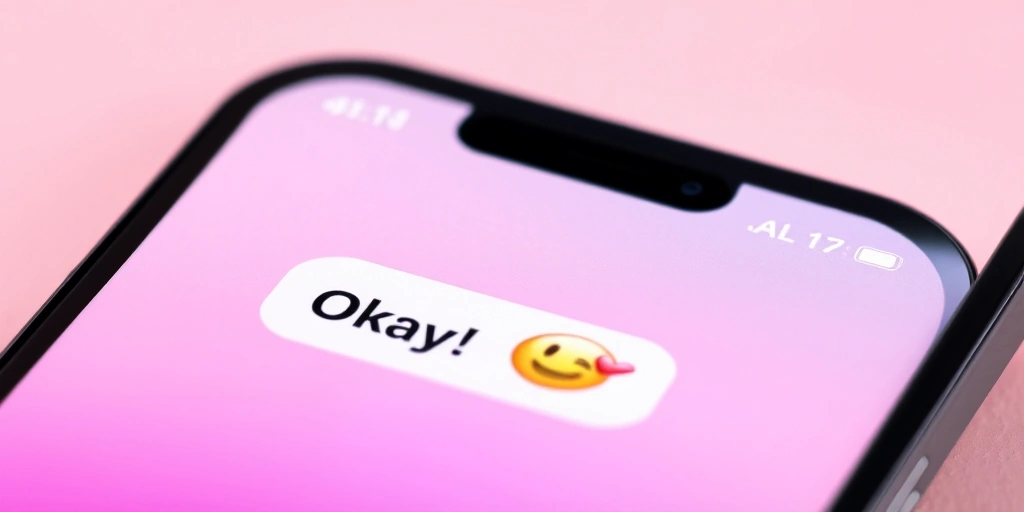
This isn't just a feeling; it's rooted in how our brains process communication. We are hardwired to seek out social and emotional cues. In face-to-face conversation, we rely on a symphony of signals—a smile, a furrowed brow, a sarcastic tone. In digital text, that symphony is reduced to a single instrument: the words. Emojis step in as the conductor, providing the crucial emotional context that tells our brain how to interpret the melody.
Building Bridges (or Walls) with a Single Icon
The influence of emojis on social perception starts with first impressions. When you message someone new—a potential friend, a date, a new coworker—the emojis you use (or don't use) create an immediate profile. Consistent use of friendly, positive emojis like 😄, 👍, or ❤️ paints you as approachable, warm, and engaged. It signals cooperation and a willingness to connect.
On the flip side, overusing sarcastic or negative emojis (like 😒, 🙄, or 👀 in certain contexts) can quickly frame you as cynical, dismissive, or hard to please. Even the absence of emojis sends a signal. In a casual, friendly chat, a complete lack of emojis can be perceived as overly formal, disinterested, or even annoyed. It creates a perceived emotional distance.
This dance of perception is fascinatingly explored in articles like The Hidden Power of Emojis, which delves into how these icons form the bedrock of our digital relationships.
The Trust Factor and Perceived Sincerity
Beyond first impressions, emojis play a critical role in building and maintaining trust. Consider a friend sharing bad news. You reply with "I'm so sorry." Now, add a 😔 or a 🫂. The emoji doesn't change the words, but it profoundly changes the perceived sincerity of your empathy. It shows you've emotionally registered their pain. It makes your support feel more genuine and less like a robotic, obligatory response.
In group chats, the person who reacts with a 😂 to a joke or a 🎉 to good news is often perceived as more socially attuned and supportive. They're actively participating in the group's emotional rhythm. This builds social capital and fosters a sense of community. Conversely, the silent observer who never reacts with an emoji might slowly fade into the background, perceived as less involved.
Navigating the Pitfalls: When Emojis Muddle the Message
Of course, this power comes with complexity. The same emoji can be interpreted in wildly different ways across generations, cultures, and even friend groups. A 😬 from a Gen Z user might signal awkwardness or second-hand embarrassment in a relatable, funny way. To a Boomer, it might read as genuine distress or pain. A 💀 might mean "this is hilarious" to one person and seem alarmingly literal to another.
This is where social perception gets tricky. Using an emoji outside its understood context in your social circle can make you seem out of touch or confuse your intent. The key is observation and mirroring. Pay attention to the "emoji dialect" of the people you're chatting with. It's a form of social learning that helps you align your signals with the group's norms, ensuring your intended perception matches the received one.
Understanding this secret language is crucial, as discussed in The Secret Language of Emojis. It's less about memorizing dictionaries and more about understanding the emotional shorthand of your community.
The Unspoken Rules of Emoji Etiquette
So, how do we wield this power thoughtfully? It boils down to context and consistency. A flood of emojis in a professional Slack channel might undermine your credibility, while a single, well-placed ✅ or 👋 can be perfectly appropriate. In a heartfelt, serious conversation, a barrage of 😍 and 🥰 might come across as dismissive or failing to read the room.
The most effective use of emojis for positive social perception is intentional and additive. Use them to clarify tone, to amplify genuine emotion, and to reinforce connection. They are the digital equivalent of a warm smile during a handshake or a sympathetic nod while listening. They are the glue that holds the subtext of our digital conversations together.
At the end of the day, emojis are a tool for human connection in a medium that can feel inherently disconnected. By choosing them with a little awareness, we're not just decorating our texts—we're actively crafting how we show up in the digital lives of the people we care about. We're telling them, "I'm here, I'm listening, and I feel this too." And that perception, more than any perfectly crafted sentence, is what builds real relationships, one tiny icon at a time.
For more insights into how these small symbols impact our minds and interactions, explore our collection of articles on emoji psychology.
📒 Related Blogs
More...Level Up Your Chats: How Emojis Turn Conversations into a Fun Game!
Beyond Text: How Businesses Are Revolutionizing Marketing with Emojis
Are Emojis Reshaping How We Communicate? A Comprehensive Look
The Emoji Status Check: How a Simple 😅 or 👍 Can Save Your Workday
The Secret Sauce: How Emojis Make Your Daily Check-Ins Warm & Effortless
Bridging the Unspoken: How Emojis Resolve Emotional Uncertainty in Group Chats