The Hidden Power of Emojis: How Tiny Icons Shape Our Digital Relationships

Feb 20,2026
Think about the last text you sent. Did you add a smiley face? A heart? Maybe a thinking emoji? We do it almost without thinking, tapping that little icon to round off a sentence or set a tone. But have you ever stopped to consider just how much weight that single character carries? It’s more than just decoration. In the fast-paced world of digital chats, emojis are powerful psychological tools. They act as mental shortcuts, instantly shaping how we perceive a message and the person who sent it.
When we talk face-to-face, we have a whole symphony of non-verbal cues: a raised eyebrow, a warm smile, a sarcastic tone. These cues provide context and emotional color. In a text message, all of that richness is stripped away. We’re left with plain, often ambiguous, black-and-white words. This is where emojis step in. They are the digital body language we’ve collectively invented to fill that void. A simple wink 😉 can turn a potentially harsh statement into a playful jab. A red heart ❤️ can transform a casual “thanks” into a gesture of deep affection.
The Brain's Instant Translator
Our brains are wired for efficiency. We use heuristics—mental shortcuts—to process information quickly without getting bogged down in analysis. Emojis are a perfect example of a social heuristic. When we see a grinning face 😊 at the end of a sentence, our brain doesn't need to slowly parse the sender's intent. It instantly applies the “this is friendly and positive” filter to the entire message. This shortcut speeds up understanding and reduces the cognitive load of digital conversation. It’s why a message with an emoji often feels clearer and less stressful to interpret than one without.
This process is fascinatingly explored in articles like The Mind's Shortcut: How Emojis Speed Up Our Digital Understanding, which delves into the cognitive science behind these tiny icons.
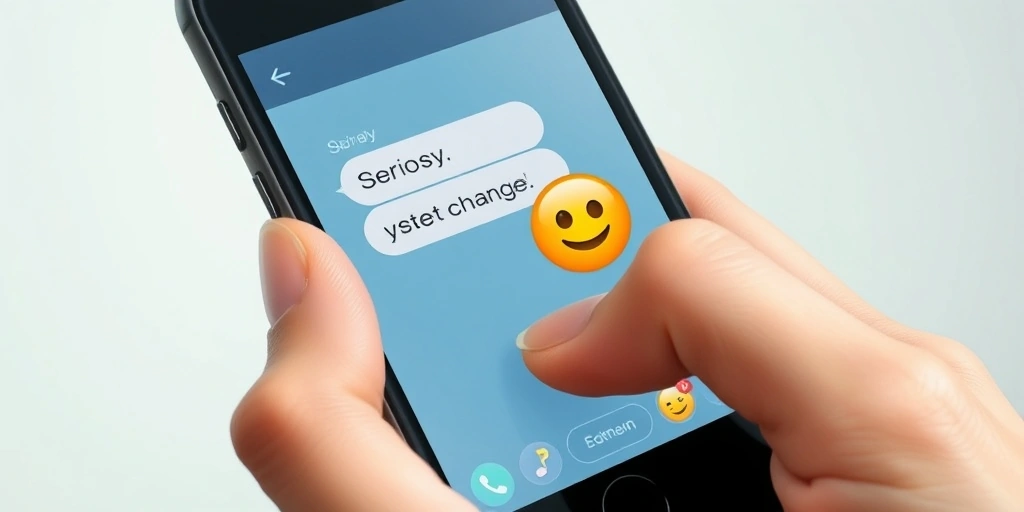
But this power comes with subtlety. The effect isn't always loud and obvious. It’s in the slight shift in perception. Imagine your boss messages you: “We need to talk.” Now imagine that same message followed by a smiling face: “We need to talk 😊.” The emotional landscape of those two messages is completely different, even though the words are identical. The emoji provides a crucial emotional context that the words alone lack. It guides your brain toward a specific, and hopefully less anxious, interpretation.
Building Bridges and Burning Them
This subtle guidance directly impacts our relationships. Consistently using positive, warm emojis can build a sense of rapport and trust. It signals approachability and emotional availability. On the other hand, the absence of expected emojis, or the use of ambiguous or negative ones, can create distance and misunderstanding. Sending a plain “Okay” in response to exciting news can feel like a dismissal, whereas “Okay! 🎉” feels celebratory and engaged.
The choice of emoji also builds a shared language within relationships or groups. A couple might have “their” emoji, a symbol that carries private meaning. Friends might use a specific meme-inspired emoji as an inside joke. This creates a layer of intimacy and belonging that pure text struggles to achieve. For more on how emojis forge these emotional pathways, The Emotional Shortcut: How Emojis Rewire Your Brain's Digital Conversations offers a great deep dive.
The Double-Edged Sword of Assumption
Of course, relying on these mental shortcuts isn't without risk. The biggest pitfall is assumption. We assume our interpretation of an emoji is universal. But emoji meaning can be highly personal, generational, and culturally specific. The “folded hands” emoji 🙏, for example, is used by some to mean “please” or “thank you,” and by others to signify “prayer.” The “smirking face” 😏 can imply playful mischief or something more smug and condescending, depending on the reader.
When our assumption about an emoji’s meaning clashes with the sender’s intent, miscommunication blooms. A message meant as light teasing can be read as genuine malice if the accompanying emoji is misinterpreted. This is why, even with our handy visual shortcuts, clear communication sometimes requires us to step back and use our words. The emoji provides the color, but the words still need to paint the basic picture.
So, the next time you go to tap that little icon, pause for a half-second. Think of it not as a frivolous add-on, but as a deliberate brushstroke on the canvas of your conversation. You’re not just sending a symbol; you’re subtly guiding perception, building connection, and leveraging one of the most fascinating psychological tools of the digital age. Used mindfully, these tiny pictograms help us bridge the emotional gap that our screens create, making our digital world feel a little more human, one 😊 at a time. For more insights into the fascinating intersection of symbols and psychology, check out other posts in our Emoji & Psychology category.
📒 Related Blogs
More...How Emojis Tell the Story of Our Changing Digital World
Emoji Fails: When Your Public Reply Gets Lost in Translation
How a Simple Emoji Can Save Your Team From a Major Slack Misunderstanding
The Psychology Behind Emojis: Why We Love to Tap and Send Them