The Secret Power of Emojis: Why Your Posts Get More Likes, Shares, and Comments

Feb 17,2026
You scroll through your feed, thumb moving almost on autopilot. A wall of text blurs by. Then, something catches your eye. It’s not a flashy video or a shocking headline. It’s a simple post, maybe about someone’s morning coffee, but it has that little smiling face with hearts for eyes. You don't just scroll past. You pause. You smile. You hit ‘like.’ Maybe you even share it.
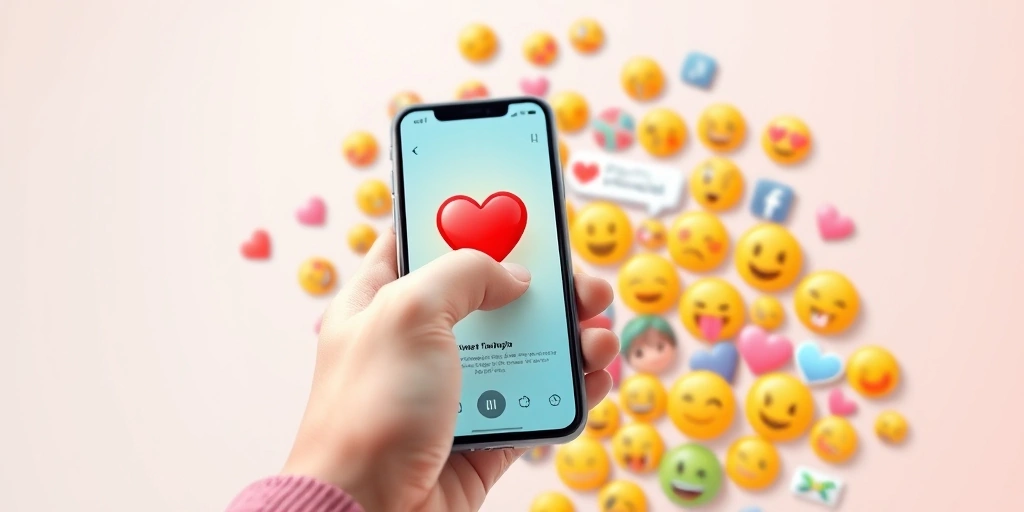
This isn’t a coincidence. It’s the quiet, undeniable power of emojis at work. In the fast-paced world of shared posts, where attention is the most valuable currency, these tiny pictograms are more than decoration. They are engagement magnets, emotional shortcuts, and social glue all rolled into one.
The Emotional Shortcut in a Noisy World
Think about the last text you sent. Chances are, it contained an emoji. We use them to soften a request (“Can you grab milk? 🥛”), to express sarcasm (“Great meeting... 😒”), or to show overwhelming joy (“I got the job!!! 🎉”). They add a layer of human emotion that plain text often lacks.
This function becomes supercharged on public, shared posts. When you share an article, a thought, or a photo, you’re essentially broadcasting a piece of yourself. An emoji acts as a framing device. It tells everyone how you feel about what you’re sharing. A laughing face says, “This is funny, join me in the joke.” A thoughtful one says, “This made me ponder.” A red heart says, “This matters deeply to me.”
That signal is incredibly powerful for the person scrolling. It provides immediate emotional context, lowering the barrier to engagement. They don’t have to work to interpret your tone; it’s served right up with a visual cue. This instant clarity invites connection.
Beyond the Like: Sparking Real Conversations
Engagement isn’t just about likes. It’s about comments, shares, and saving posts. Emojis are uniquely positioned to drive these deeper interactions. A post with a strong, relatable emoji doesn’t just ask for a passive like; it often prompts a story.
For example, a post about a stressful workday ending with a faceplant emoji 🤦♂️ isn’t just complaining. It’s an open invitation for empathy. The comments will likely fill with “Same! 😩” and “Me every Friday 🙌” and people sharing their own similar stories. The emoji created a shared, understood experience that words alone might not have.
This is how messages spread and communities form around content. It turns a monologue into a dialogue. For more on how emojis shape community talk, you might find this look at emojis as conversation moderators really interesting.
The Algorithm’s Secret Decoder Ring
Let’s talk about the not-so-secret secret: social media algorithms love engagement. They are designed to show people content that keeps them on the platform, interacting. Posts that generate quick reactions, comments, and shares get prioritized.
Emojis are a direct trigger for this. A post with emojis is simply more likely to get that initial, quick reaction (the “haha” or “love”) that signals to the algorithm, “People are engaging with this! Show it to more people!” It’s a virtuous cycle: more visibility leads to more potential engagement, which leads to even more visibility.
This isn’t about gaming the system with a hundred random emojis (which can look spammy). It’s about using one or two authentic ones that resonate. That authenticity is key. People can sense when an emoji is forced versus when it’s a genuine expression of feeling.
Sharing is Caring (and Emojis Show You Care)
When you decide to share someone else’s post, why do you do it? Usually, it’s because it resonated with you. Adding an emoji to your re-share is like adding your own signature. It personalizes the content and tells your network why you’re passing it along.
“Check out this article!” is fine. “Check out this article! 👀🔥” carries a completely different energy. It says you found it eye-opening and exciting. That personal endorsement, wrapped in an emoji, makes your friends more likely to click, because they trust your emotional reaction. You’ve become a curator, and the emoji is your curation tool.
The psychology behind this reaction is fascinating. If you want to dive deeper into the secret language of emojis in shared posts, that article breaks it down beautifully.
For a broader look at this whole world, our emoji and social media blog category is always being updated with new insights.
The Unwritten Rules of Emoji Engagement
So, how do you use this power thoughtfully? First, match the emoji to your genuine emotion. If you’re sharing sad news, a crying face is appropriate; a winking one is not. Second, consider your audience. The same emoji can mean different things to different generations or cultures. What’s a friendly gesture to you might be read differently by someone else.
Finally, don’t overdo it. A string of emojis can be fun and expressive, but it can also become visual noise that dilutes your message. One perfect emoji is often more powerful than ten random ones.
At the end of the day, emojis work because we are human. We crave connection, nuance, and emotional truth. In the digital space, where body language and tone of voice are absent, these little characters fill the gap. They make our shared posts feel less like broadcasts and more like conversations. They help us say, “I see you,” “I feel that too,” and “This made me smile,” without typing a single extra word. And in a world that can feel increasingly disconnected, that simple act of shared feeling is the most powerful engagement of all.
📒 Related Blogs
More...The Emoji Enigma: How Those Little Icons Accidentally Confuse Our Casual Chats
Mastering Emoji Etiquette: Your Guide to Using Emojis Appropriately
The Emoji Effect: How Little Icons Soften, Sharpen, and Steer Your Casual Chats
Emoji Etiquette: Mastering the Unwritten Rules of Digital Communication
Beyond Text: How Businesses Are Revolutionizing Marketing with Emojis
The Secret Language of Reactions: How Emojis Shape Opinions Online