The Sigh in Your Pocket: When Emojis Carry Our Disappointment

Mar 14,2026
You stare at the screen, the notification glowing. It’s the message you were hoping for, but not the one you wanted. The plans are canceled. The effort wasn’t made. The excitement you felt just a moment ago deflates, leaving a hollow, heavy feeling in your chest. Your fingers hover over the keyboard. What do you say? ‘It’s fine’ feels like a lie. A long paragraph about why you’re hurt feels too vulnerable, too dramatic for a Tuesday afternoon. So, you don’t type either. Instead, you scroll, find it, and tap: 😔.

This tiny, pixelated sigh does more work than a dozen words ever could. It communicates the emotion directly, bypassing the messy business of articulation. It says, “I’m disappointed,” without the accusatory edge of “You disappointed me.” It holds the feeling at arm’s length, allowing you to acknowledge it without being consumed by it. In the delicate ecosystem of digital conversation, where tone is invisible and intent is guessed, the disappointed face emoji becomes a vital pressure valve.
We use it when words feel risky. Risking a misunderstanding, risking an argument, or simply risking the exposure of how much we actually cared. Typing out “I’m really sad you forgot” gives the other person a concrete sentence to argue against or dismiss. Sending a 😟 or a 😥 is softer. It’s an emotional weather report, not a formal complaint. It allows the other person to respond with care—“Oh no, what’s wrong?”—opening a door for connection, rather than slamming it shut with defensiveness.
This is part of the quiet, emotional labor of emojis. They don’t just add flair; they perform delicate social surgery. They let us be honest about our feelings while maintaining a layer of digital politeness. The grimace 😬 after a slightly insensitive joke. The weary 😮💨 after a long, frustrating story. The pleading 🥺 face when we’re asking for a favor we know is big. Each one manages a complex social moment with a single glyph.
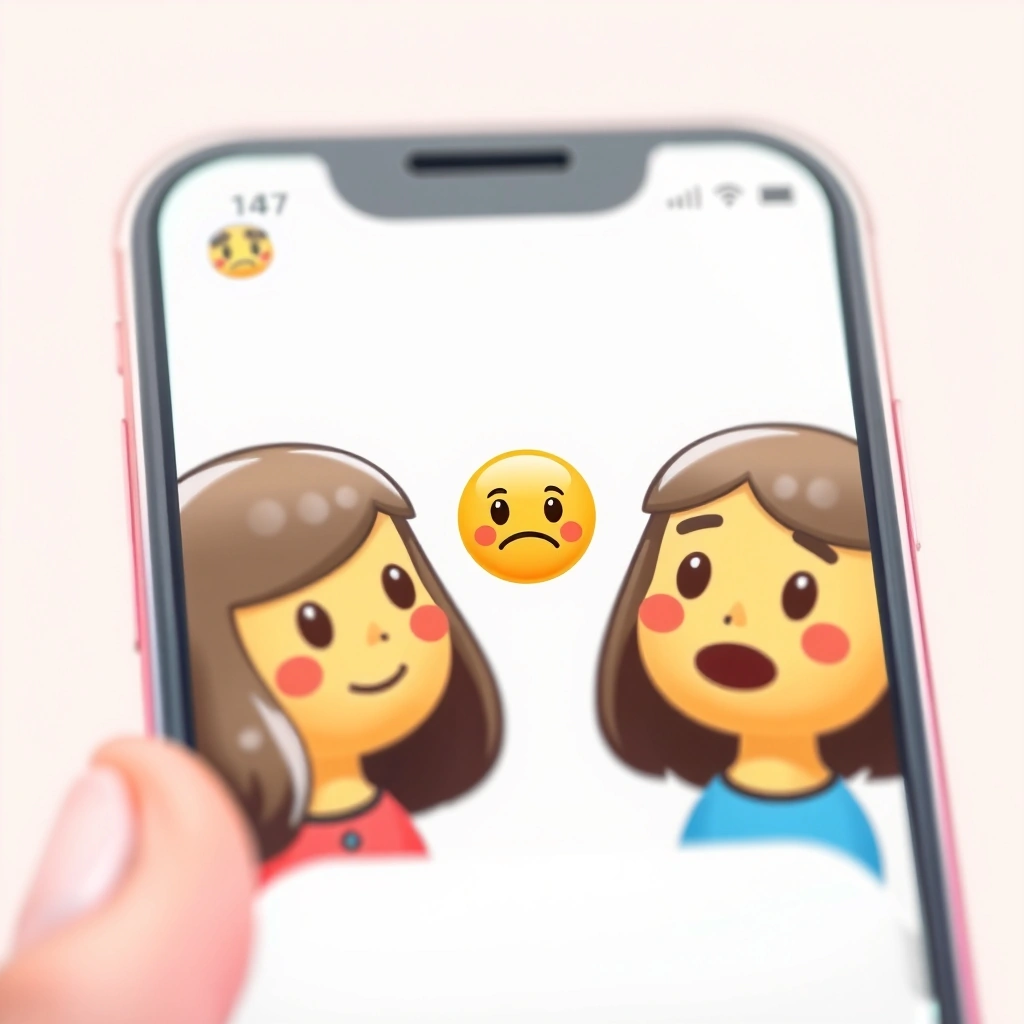
Think about the alternative. The blank, text-only response. “Okay.” “Alright.” “Sure.” These are the true hallmarks of digital disappointment, often colder and more confusing than any emoji. The emoji, in contrast, is emotionally literate. It confirms the shared understanding that something is amiss, without requiring a full-scale diplomatic summit to address it. It’s a way of saying, “I’m registering this feeling, and I’m trusting you to register it, too.”
This signaling is crucial in non-confrontational cultures or in relationships still finding their footing. It’s a low-stakes way to test the emotional waters. You can send a 🫤 and see if the other person notices the shift in the current. Their response tells you everything: Do they double down? Do they apologize? Do they change the subject? The emoji becomes a tool for gathering information about the other person’s empathy and investment, all while keeping your own vulnerability somewhat guarded.
Of course, it’s not a perfect system. Emojis can be misinterpreted. Is that 😔 sad-disappointed or tired-disappointed? The ambiguity is both a feature and a bug. But often, that’s precisely the point. When our feelings are complex and still forming—a swirl of letdown, understanding, and resignation—a single, nuanced word might not capture it. An emoji holds that ambiguity. It’s a container for the not-yet-verbalized.
This function is a close cousin to how we use emojis to hold our excitement when we’re not sure what to say. In both cases, the emotion is too big or too delicate for the stark medium of plain text. The emoji builds a bridge between the internal feeling and the external message.
So the next time you feel that familiar sink of disappointment in a chat window, and your fingers pause, recognize what’s happening. You’re not being passive-aggressive by choosing an emoji over a essay. You’re engaging in a modern form of emotional intelligence. You’re choosing a symbol that honors your genuine feeling while protecting the connection from the potential shrapnel of poorly chosen words. You’re letting a little digital icon carry the weight, so the relationship doesn’t have to. And sometimes, that quiet, disappointed face is the kindest, clearest thing you can send.
📒 Related Blogs
More...The Secret Shortcut: How Emojis Help Our Brains Communicate Faster
The Secret Ingredient to Playful Chats: How Emojis Spark Instant Reactions
When Emojis Miss the Mark: How Our Favorite Icons Can Confuse Online Chats
When Emojis Backfire: The Hidden Misunderstandings in Your Texts
The Friendly Nudge: How Emojis Keep Professional Messaging Human
Unearthing Hidden Gems: Discovering Niche and Underused Emojis for Unique Expression