The Heart-Pounding Pause: How Emojis Hold Our Excitement When We're Not Sure What to Say

Mar 02,2026
You stare at your phone screen, the message just delivered. It’s the news you’ve been waiting for—the job offer, the test results, the ‘yes’ you’ve been hoping to hear. A wave of pure, unadulterated excitement crashes over you. Your fingers hover over the keyboard, ready to type out a reply that matches the intensity of the moment. But then… you pause.
What do you say? A simple ‘Great!’ feels woefully inadequate. A long, gushing paragraph might be too much, too soon. The person on the other end might not share your exact level of enthusiasm, or the situation might be more complex than it seems. In that socially sensitive space—between feeling everything and knowing how to express it—is where emojis often step in to do the heavy lifting.
They capture the excitement without forcing us to define its edges.
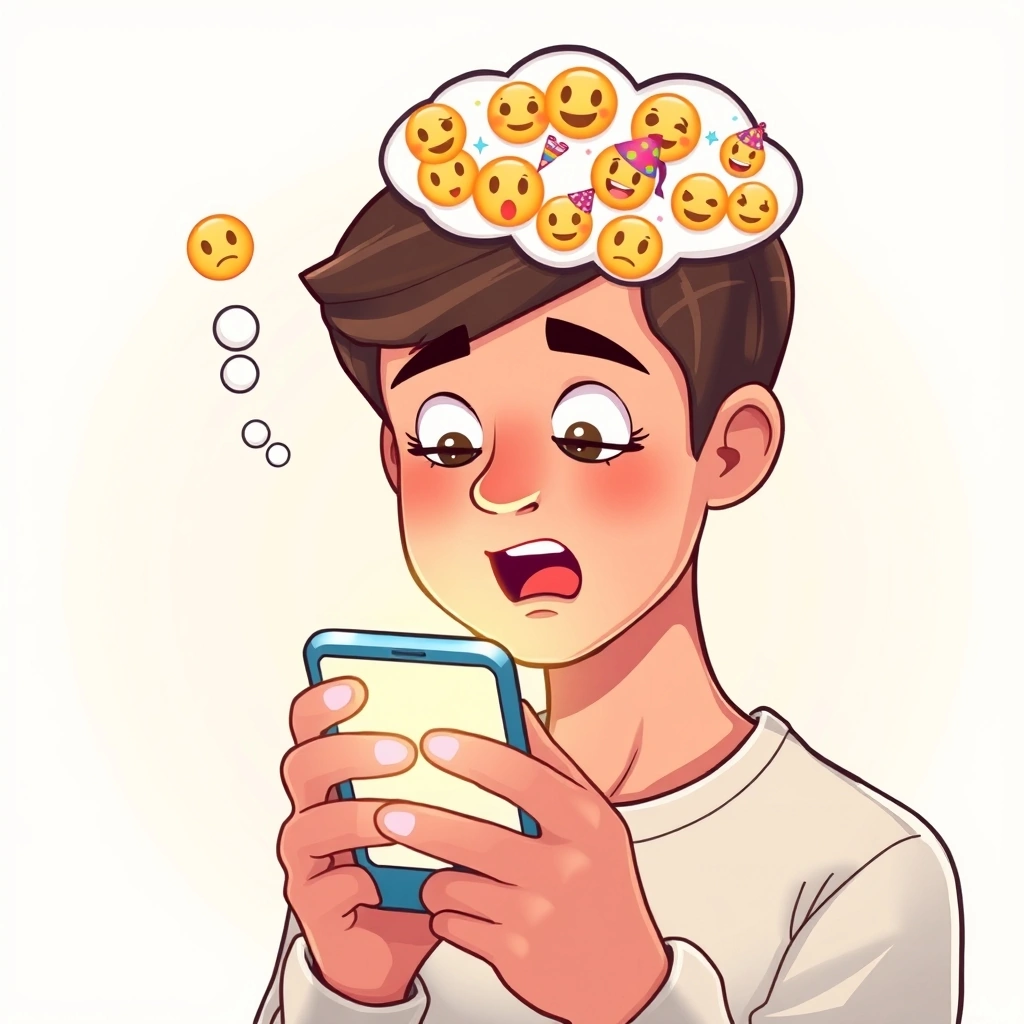
Think about it. A friend texts you a photo of a positive pregnancy test. It’s huge, life-changing news, but it’s also incredibly personal and early. You’re thrilled for them, but you also sense the vulnerability. Typing “OMG CONGRATULATIONS!!!!” in all caps might feel overwhelming. Instead, you send back a string: 😲 🥹 🎉 ❤️. In that sequence, you’ve managed to convey shock, tender happiness, celebration, and love—all without a single word that could be misinterpreted. The emojis hold the space for the excitement, allowing it to be shared safely.
This isn't just about big news. It happens in the small, daily moments of social navigation, too. Your colleague messages the team chat with a last-minute win they pulled off. You’re genuinely impressed and want to show support, but writing a lengthy commendation in the group thread might come across as sucking up. A well-placed 🚀 or 👏 in the chat says, “I see you, that’s awesome,” without making a production out of it. It’s excitement, filtered through a lens of social awareness.
Emojis act as emotional placeholders. They say, “I am feeling a big thing here, and this symbol is the container for it until I, or we, find the right words.” They allow us to participate in the emotional current of a conversation without having to dive headfirst into the deep end. For more on how emojis function when language fails us, you might find this exploration of emoji and emotion really interesting.
The Safety of Symbolic Expression
Why do we reach for the grinning face with sweat 😅 or the star-struck eyes 🤩 in these tense, exciting moments? Because they are inherently ambiguous in the best way. An emoji is an invitation to a feeling, not a definitive statement. It lets the receiver project their own understanding onto it. That ‘wow’ face you sent could mean you’re amazed, surprised, or even cautiously optimistic—the sender gets to decide the precise flavor.
This ambiguity is a superpower in socially sensitive terrain. It prevents us from over-committing to a tone that might not land correctly. If you’re excited about a friend’s new relationship but have been burned by their past ones, a simple ❤️🔥 (heart on fire) carries your hope for them while subtly acknowledging the intensity. It’s more nuanced than “I’m so happy for you!” which could feel dismissive of past complexities.
When Excitement is Intertwined with Other Feelings
Rarely does pure excitement exist in a vacuum. It’s often braided with anxiety, relief, or even a touch of fear. Emojis are uniquely equipped to handle these layered emotions. Consider the “see-no-evil monkey” 🙈. Someone might use it after admitting they did something bold or silly. The emoji communicates, “I’m excited I did it, but also a bit embarrassed—don’t look at me too closely!” It captures the excitement while simultaneously asking for a little social grace.
Similarly, the plea of 🥺 (pleading face) or the nervous 😬 (grimacing face) often accompanies exciting asks or announcements. “I got us tickets to the concert… hope that’s okay? 😬” The excitement is there, but it’s tempered by a social check-in, softening the potential imposition. This dance is something we explore in another piece, looking at how emojis express more vulnerable feelings.
In a world where digital communication strips away tone of voice and body language, emojis restore a crucial layer of emotional context. They are the digital equivalent of the sharp intake of breath, the wide eyes, the hesitant smile that appears before we speak. They are the evidence that our emotions arrive faster than our socially-calculated responses.
So the next time you feel that familiar heart-pounding pause—that surge of excitement looking for a safe exit—don’t fight it. Let your thumb scroll through the emoji keyboard. That flashing party popper 🎉, the soaring rocket 🚀, or even the quietly hopeful sparkles ✨ might just be the perfect, sensitive vessel for the joy you’re trying to share. They capture the feeling in its raw, immediate state, before our inner editor has a chance to water it down. And sometimes, that first, unfiltered emotional reaction is the most authentic thing we can offer.
📒 Related Blogs
More...The Ever-Shifting Emoji Code: How Online Trends Reshape Digital Language
The Invisible Hand: How Emojis Steer Understanding in Online Communities
The Secret Language of Emojis: How a Tiny Smiley Face Changes Everything You Read
The Professional Emoji Paradox: When Your Friendly Text Backfires
The Magic of Emojis: How a Single Symbol Can Complete Your Quick Reply
When Emojis Get Lost in Translation: The Unseen Cost of Digital Misunderstanding