The Silent Sponge: How Emojis Absorb Our Emotional Stress

Feb 25,2026
You know that moment. Your thumb hovers over the send button. The message is typed out, but it feels too heavy, too raw, or just not quite right. So, you do what millions of us do every day. You backspace. You hesitate. And then, almost instinctively, you reach for an emoji. Or three. Or a whole string of them.
It’s not just decoration. It’s not just fun. In that split second of hesitation, something profound is happening. The emoji isn't just expressing an emotion; it's absorbing the emotional stress of the moment for you.
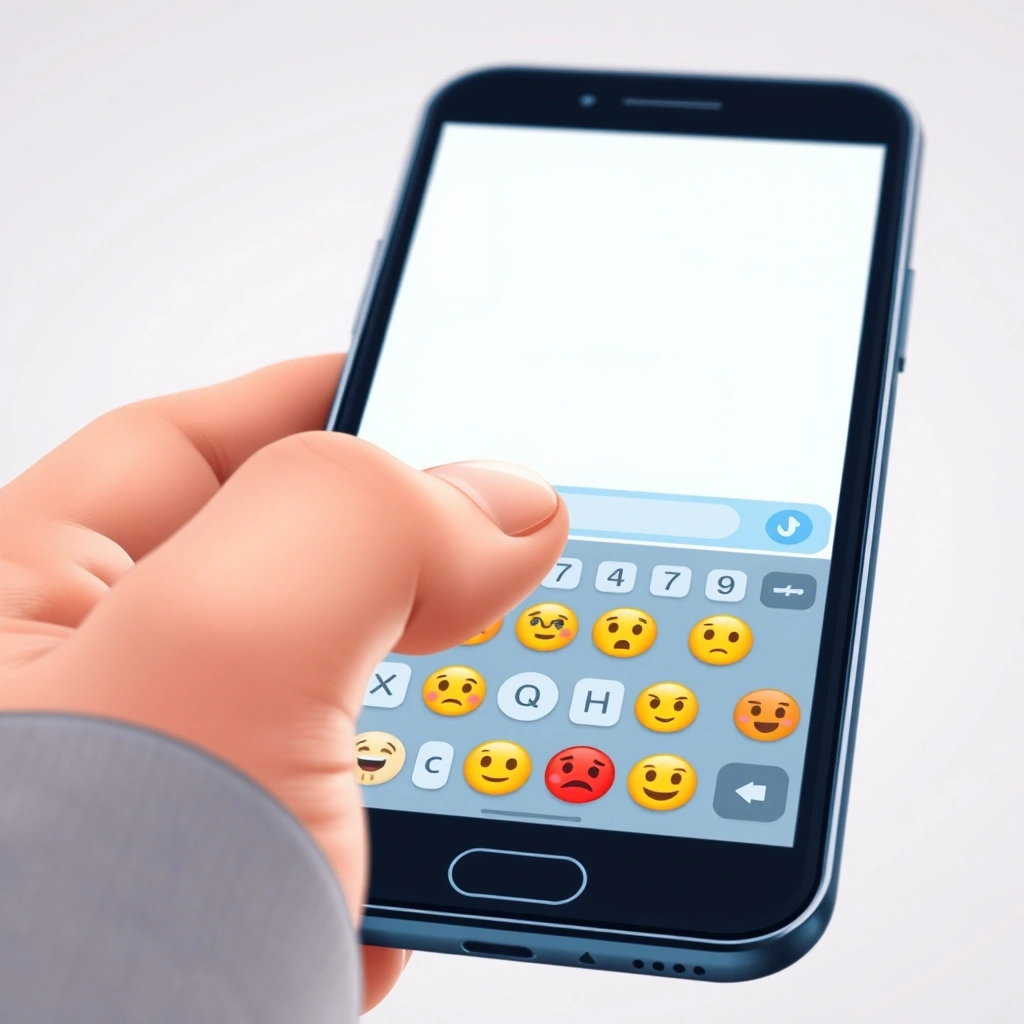
Think about the last time you had to deliver difficult news. Maybe it was a "sorry I'm running late" to a friend you've kept waiting, or a gentle let-down to someone. The words "I'm so sorry" sit there, feeling inadequate. Adding that pleading face, or the grimacing one, does something. It takes the sharp edge off the apology. It absorbs some of the tension you feel about being the cause of disappointment. The emoji carries the awkwardness so you don't have to.
This is especially true in situations where words are too much. When a friend shares a deep loss, what can you possibly say? "I'm here for you" is true, but it can feel hollow typed out. A simple heart, a folded hands emoji, or a crying face often says it better. Why? Because it doesn't try to explain or fix. It simply holds the emotion. It absorbs the immense pressure we feel to say the perfect, comforting thing, and instead offers a vessel for shared feeling. It’s a form of emotional weight-bearing we rarely acknowledge.
The Buffer in the Bubble
Text messages exist in a bubble, devoid of tone, facial expression, and body language. This vacuum is where emotional stress thrives. A simple "okay" can be read as passive-aggressive. A "fine" can sound furious. Our brains, wired for social connection, scramble to fill in the gaps, often with anxiety.
Emojis rush in to fill that void. They are the tone-of-voice we can't convey. That winking face after a teasing comment? It absorbs the potential stress of being misunderstood as mean. The laughing-crying emoji after a self-deprecating joke? It soaks up the vulnerability, assuring the reader you're not actually drowning in sadness. It’s a safety net for our social interactions.
We use them as emotional airbags. Before the impact of a blunt message hits the other person, the emoji deploys, cushioning the blow. "We need to talk 😬" carries a completely different, less terrifying, weight than "We need to talk." The grimace absorbs the dread—both yours and the receiver's.
The Unspoken Hesitation
This absorption often happens in our moments of hesitation. That pause before sending is you, feeling the emotional weight of the message. The act of selecting an emoji is the process of offloading some of that weight. You're transferring a bit of the stress—the worry, the excitement, the sarcasm, the love—into a tiny digital pictograph.
It’s why we sometimes send emojis instead of words. A single red heart in reply to a long, heartfelt text. It’s not lazy. It’s emotionally efficient. The heart contains the gratitude, the love, the "I feel the same way" that feels too big to articulate. It absorbs the overflow of emotion. Similarly, the fire emoji or the party popper can capture a burst of excitement that words would dilute.
This silent trade-off is a cornerstone of modern digital intimacy. We learn to read not just the emoji, but the choice of emoji in context. The difference between a smiling face with smiling eyes and a grinning face with sweat tells a story about the sender's emotional state—the latter often absorbing nervous energy or mild panic.
So next time you find yourself scrolling through the emoji keyboard, hovering over choices, think about what you're really doing. You're not just accessorizing your text. You're engaging in a subtle, vital form of emotional management. You're finding a small, silent partner to help carry the load of human connection across the digital divide. You’re letting that little icon do some of the heavy lifting for your heart.
It’s a quiet, beautiful thing. Our conversations are full of these microscopic acts of emotional labor, where a single character can diffuse tension, express solidarity, or soften a blow. They are the unsung heroes of our daily chats, the sponges soaking up the complexities we can't always name. To explore more about this connection, you can dive into other thoughts on emoji and emotion.
📒 Related Blogs
More...Beyond Words: How Emojis Master the Art of Short and Sweet Daily Chats
The Secret Language of Emojis: Decoding Their Meanings Across Cultures
The Instant Feeling: How Emojis Spark Our Gut Reactions
Beyond Words: How Emojis Transform Casual Chats into Playful Adventures!
The Quiet Magic of Emojis in Everyday Check-Ins
The Little Smiles That Make a Big Difference: Emojis and Casual Fun