The Unseen Power of Emojis in Viral Social Media Storms

Mar 14,2026
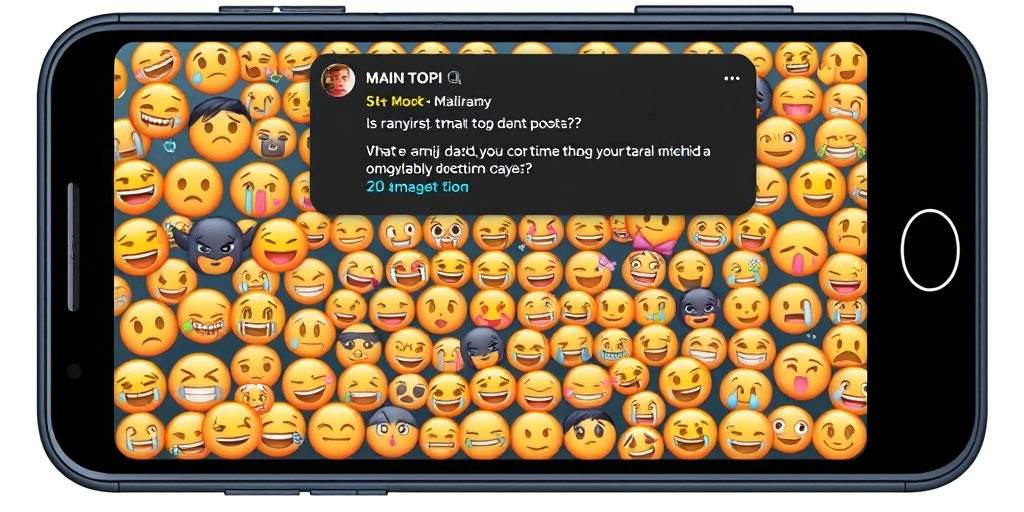
Scrolling through a trending topic on any social platform, you’ll notice a pattern. It’s not just the words that tell the story; it’s the sea of tiny, colorful icons that follow them. A news post might be met with a wall of angry faces. A heartfelt story might drown in a flood of red hearts. These reactions aren't just decorative. They are active, participatory elements of the discourse itself.
When a discussion goes viral, it often loses nuance. Complex issues get flattened into soundbites, and opposing views harden into battle lines. In this environment, emojis become a form of shorthand, a way for thousands—sometimes millions—of people to register their stance instantly. They are the crowd's roar, the collective gasp, the unified sigh, all rendered in pixel form.
The Amplifier and the Muffler
Consider a controversial statement from a public figure. The initial replies are text-based, arguing points. But then, someone replies with a single, perfectly chosen emoji. It might be the crying-laughing face, implying the statement is too absurd to be taken seriously. It could be the thinking face, suggesting doubt or a need for deeper reflection. This single symbol can act as a catalyst, steering the reaction of thousands of subsequent users. It provides an emotional template. People see that emoji and think, "Yes, that’s exactly how I feel," and they add their own. The emoji doesn't just reflect the reaction; it begins to organize it.
Conversely, emojis can also defuse. In a heated thread where comments are getting personal, a well-placed white flag or praying hands emoji can introduce a moment of pause. It’s a non-confrontational way to acknowledge tension and suggest de-escalation. It changes the emotional weather of the conversation, if only for a moment. This subtle power to calm storms is fascinating, as explored in discussions on how emojis can defuse arguments.
This influence is most visible in the "ratio." Being "ratioed" on platforms like Twitter (now X) often means your reply has significantly more likes than the original post, a sign of public disagreement. But the modern ratio is frequently delivered not just with likes, but with a specific emoji reply—the skull, the eyes, the clown face. The emoji becomes the verdict. It’s a communal judgment passed not with words, but with a symbol everyone understands. The original poster isn't just outnumbered; they are branded with an emotional icon.
Beyond Likes: Emojis as Nuanced Feedback
The traditional "like" button is a blunt instrument. It conveys approval, but little else. Emoji reactions, offered by most platforms now, provide a gradient of feeling. A news story about a sad event might receive predominantly sad or angry face reactions, giving the publisher far more nuanced feedback than a simple like count ever could. In viral discussions, this creates a visible emotional barometer. You can literally see the collective mood shift as a story develops, with one emoji reaction rising to the top of the pack, telling you what the crowd feels is the dominant emotion attached to this fragment of the news cycle.
This system creates a new layer of social proof. Before even reading a viral tweet, a user might see it has 50K "care" face reactions. That pre-sets an emotional expectation. It signals that the content is likely touching or empathetic. The emoji data itself becomes part of the message, framing how new viewers will interpret the text. It’s a form of meta-communication happening right on the surface.
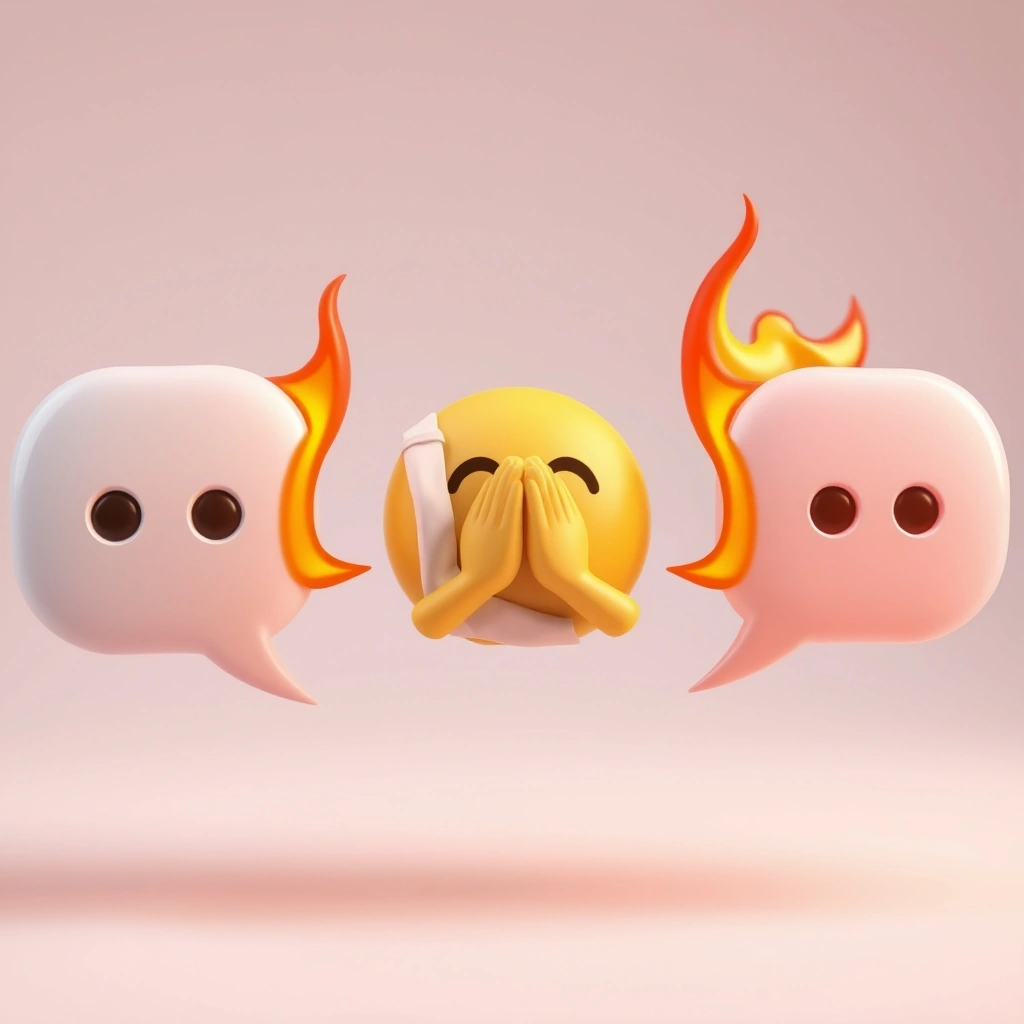
Of course, this power is a double-edged sword. The same mechanism that allows for nuanced support can be weaponized for coordinated harassment. A mob can descend on a person, bombarding their post with a specific emoji meant to mock or belittle. The emoji becomes a tool of aggression, its usual meaning twisted by context and volume. The playful clown face becomes a mark of ridicule. The prayer hands become an insult. The influence here is dark, demonstrating how these symbols absorb the intent of the crowd.
The evolution is ongoing. New emojis are adopted into the viral lexicon every year, their meanings shaped by global events and online subcultures. What starts as a simple image on a phone becomes a vital piece of social vocabulary, capable of condensing complex collective feelings into a single tap. They are the punctuation marks for the digital age, but they do more than end a sentence—they define its emotional resonance for the entire crowd.
For more insights into how these tiny graphics shape our digital interactions, the broader conversation continues over at our look into emoji and social media.
It leaves you wondering what the next viral moment will be, and which little symbol we'll all collectively choose to define it.
📒 Related Blogs
More...How Emojis Create the Unspoken Rhythm of Our Digital Chats
The Secret Shortcut: How Emojis Hack Your Brain in Everyday Texts
The Secret Sauce of Smiles: How Emojis Effortlessly Elevate Playful Chats
How Emojis Evolve: The Secret Language of Modern Internet Culture
The Secret Power of Emojis: How a Simple 😊 or 😬 Changes How People See You
More Than Just Faces: How Emojis Are Rewriting the Rules of Online Connection