The Secret Shortcut: How Emojis Hack Your Brain in Everyday Texts

Feb 26,2026
The Instant Emotional Translator
Think about the last ambiguous text you received. Maybe it was a simple "Okay" from a friend or a "We need to talk" from a partner. Your brain likely went into overdrive, parsing every possible meaning, every nuance of tone that was missing. Now, imagine that same message with a single emoji attached. "Okay 😊" feels warm and agreeable. "We need to talk 😬" suddenly carries a weight of nervous anticipation. What just happened? In a split second, that tiny digital icon provided a cognitive shortcut, bypassing pages of analysis and delivering an immediate emotional context.
This isn't just about being cute or trendy. It's a fundamental function of how our brains are wired. We are social creatures who rely heavily on nonverbal cues—facial expressions, tone of voice, body language—to understand each other. In the stripped-down, text-only world of digital messaging, a massive chunk of that information goes missing. Emojis step into that void. They don't just add emotion; they act as a high-speed processor for it, telling our subconscious mind exactly how to interpret the words that follow.
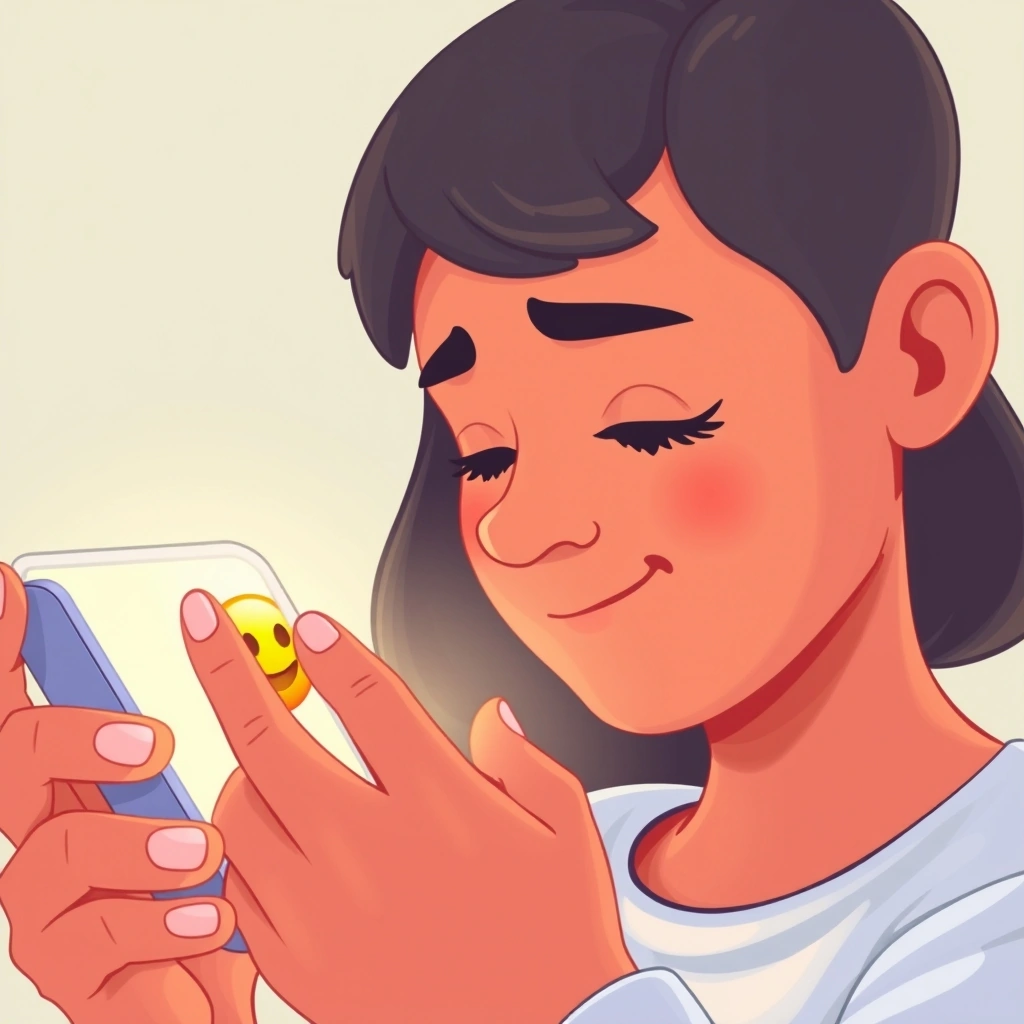
Bypassing the Analytical Mind
The power of an emoji lies in its ability to speak directly to our emotional centers. When you read words, your brain's language processing centers light up. You decode symbols (letters) into sounds, words, and then meaning. It's a relatively slow, analytical process. An emoji, however, is processed more like a face. Studies in neuroscience suggest that when we see a smiley face emoji, the same areas of the brain activate as when we see a real human smile. The cognitive load is dramatically reduced.
Instead of slowly figuring out if "Thanks a lot" is genuine or sarcastic, a 😊 or a 😒 provides the answer instantly. This shortcut is crucial in our fast-paced digital lives. It prevents misunderstandings, builds rapport, and maintains the flow of conversation without the constant need for clarification. It's why a well-placed emoji can defuse tension or amplify joy with almost zero effort from the sender. The receiver's brain does all the heavy lifting, and it's happy to do so because it's getting the social information it craves. For more on how these tiny symbols shape perception, you might find this exploration of their hidden power quite revealing.
More Than Decoration: A Subconscious Anchor
This shortcutting goes beyond just clarifying tone in a single message. Emojis act as subconscious anchors that frame entire conversations and even relationships. Consider a group chat where one person consistently uses uplifting emojis like 🌟 or ✨. Over time, their messages might be subconsciously categorized by the group as more positive and supportive, regardless of the actual content. The emoji creates a halo effect.
Similarly, the absence of emojis can be just as powerful. A message string that is purely textual, especially in a context where emojis are common, can feel cold, formal, or even hostile. Our brains, missing the expected emotional shortcut, may default to a negative or anxious interpretation. We're left to analyze the plain text, and without the guiding cue, we often assume the worst. This is a key part of the unseen power of emojis—they steer our emotional responses without us even realizing it.
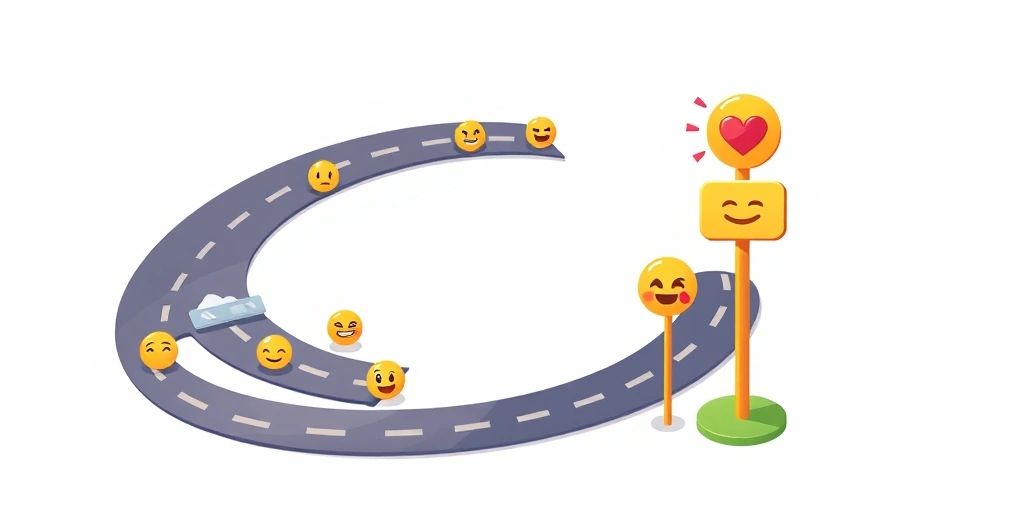
The Universal (and Not-So-Universal) Language
Part of what makes this shortcut so effective is emojis' aspiration to universality. A crying face 😢 conveys sadness across cultures in a way the word "sad" might not, due to language barriers or personal connotations. They tap into a shared, primal understanding of expression. However, it's important to remember they aren't perfect. Generational, cultural, and personal differences in emoji interpretation exist. A 👍 might mean "good job" to one person and feel passive-aggressive to another. The peach 🍑 is a classic example of divergent meanings!
Yet, even these misunderstandings prove the point. When an emoji is misinterpreted, it causes a stronger emotional reaction than a misinterpreted word often would. Why? Because we trusted the shortcut. We felt we instantly understood the emotional subtext, and finding out we were wrong creates a kind of cognitive dissonance. It shows just how deeply we rely on these symbols to do the emotional labor in our conversations.
Using Your New Awareness
Understanding emojis as cognitive shortcuts changes how we can use them intentionally. It's not about peppering every sentence with icons, but about strategic emotional signaling. Want to ensure your joke lands? A 😉 can shortcut any potential offense. Need to soften a critique? A 🥺 or a 🤔 can frame it as thoughtful rather than harsh. Expressing genuine gratitude? A simple ❤️ can carry more weight than a dozen elaborate words.
They are, in essence, the punctuation marks of the 21st century—but for feeling instead of grammar. Just as a period ends a sentence, a 😄 can end a sentence on a note of joy. They help us be more efficient, more empathetic, and more connected communicators in a medium that is inherently lacking in human warmth. By recognizing their role as our brain's favorite shortcut, we can navigate our digital relationships with a little more grace and a lot more understanding. The psychology behind this is fascinating, and you can dive deeper into the topic in our emoji psychology category.
So the next time you tap that smiley face or heart, remember: you're not just decorating your text. You're installing a tiny, powerful emotional processor, giving your friend's brain the shortcut it needs to truly hear you.
📒 Related Blogs
More...The Unwritten Rules: How Emojis Shape New Meanings in Online Communities
The Psychology Behind Emojis: Expressing Emotion in a Digital Age
Emoji Magic: How They Erase Doubt & Build Stronger Bonds in Every Chat!
How Emojis Evolve: The Secret Language Shaping Our Digital Generations
The Secret Ingredient to Playful Chats: How Emojis Turn Talk Into a Game
Mastering Emoji Etiquette: Use Emojis Effectively in Digital Communication