The Unseen Trap: How Emojis Accidentally Complicate Your Tone

Mar 20,2026
You know the feeling. You send a quick, casual message to a friend or coworker. You add an emoji to soften the tone, to show you’re being lighthearted. Then you wait. And the reply you get back feels… off. A little cold, a little defensive. You re-read your own message. It seemed so harmless. What went wrong?
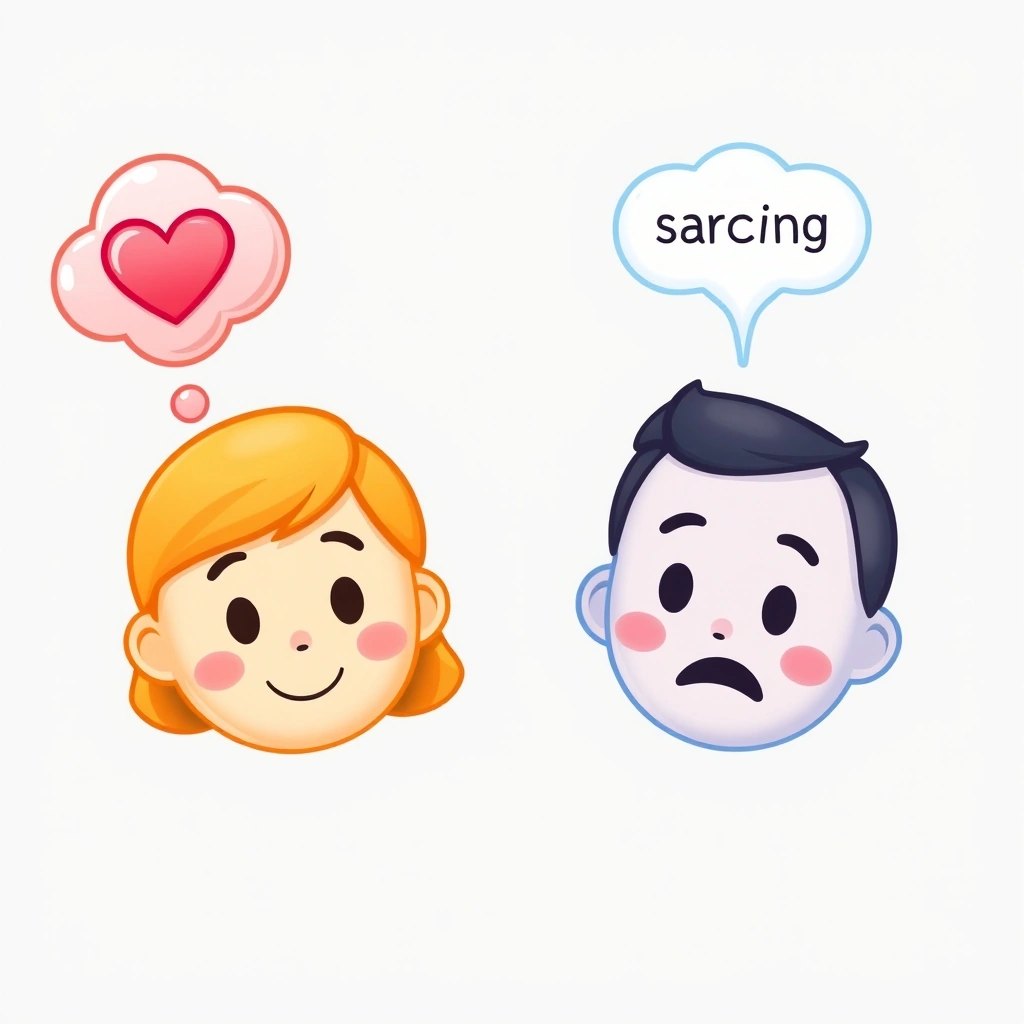
More often than not, the culprit is that tiny, colorful character you tacked on with the best of intentions. Without meaning to, we use emojis to clarify our tone, but they often end up complicating it instead. They add a layer of emotional subtext that the plain words didn’t carry, and that subtext can be wildly misinterpreted.
The Gap Between Sender and Receiver
The core of the problem is a simple gap in perception. When you send the smiling face with sweat 😅 after a slightly critical comment (“Maybe double-check that report? 😅”), you’re trying to signal, “No big deal, don’t stress!” But on the receiving end, that same emoji can read as, “I’m annoyed but trying to be polite about it,” or even, “This is so obviously wrong it’s laughable.” The emoji doesn’t neutralize the critique; it can accidentally amplify the awkwardness.
This isn't about using the “wrong” emoji in a formal sense. It’s about the invisible context we all carry. Your relationship with the person, the topic of conversation, and even your mutual texting history all color how an emoji is decoded. A wink 😉 between close friends means mischief. A wink in a work chat about a missed deadline can seem sarcastic or unprofessional.

We fall into this trap because emojis feel intuitive. They’re a visual shorthand for emotion. But emotions are complex, and a single symbol is a blunt instrument. Think of the folded hands 🙏. Is it “please,” “thank you,” “prayer,” or “high five”? In a tense conversation, sending “I really need this by 5 🙏” could be seen as a sincere plea or a passive-aggressive demand, depending on what the receiver is already feeling.
When “Fine” Isn’t Fine
Some of the most common tripwires are the emojis we use to mask our true feelings. Sending “I’m fine 🙂” with a standard smiley face has become a classic indicator that someone is, in fact, not fine at all. The flatness of the symbol contradicts the word. It creates a dissonance that the receiver is forced to interpret: “Are they actually upset? Should I ask? Or are they just busy?” The emoji intended to end the conversation actually opens up a new layer of anxiety.
Similarly, the crying-laughing face 😂 has evolved. It can genuinely mean something is hilarious. But it’s also frequently used to cushion something awkward, self-deprecating, or even mildly offensive. “I just spilled coffee all over my laptop 😂” uses the emoji to signal, “This is a disaster, but I’m trying to laugh so I don’t cry.” The complexity packed into that one emoji is immense.
For more on navigating these tricky emotional cues, our guide on emoji etiquette in everyday chats explores this in detail.
Why Casual Conversations Are Most at Risk
It might seem like high-stakes professional emails would be the danger zone, but ironically, it’s our most casual, off-the-cuff conversations where these misunderstandings thrive. In formal writing, we choose our words carefully. In a quick text thread, we’re on autopilot. We throw in an emoji as a reflex, not a considered choice.
This is where ambiguity breeds. A simple “Okay 👌” in response to plans can feel like enthusiastic agreement or lukewarm acceptance. A “Thanks! 😊” after a favor can feel warm and genuine or dismissive and hurried. Without the full spectrum of human voice and face, that little image has to do all the emotional heavy lifting, and it often buckles under the pressure.
The very speed and ease of digital conversation work against us. We don’t have the seconds-long pause to see a friend’s face fall or light up. We just have the symbols we sent, floating in the digital void, waiting to be interpreted through someone else’s emotional lens.
Navigating the Minefield (Without Overthinking It)
So, do we have to analyze every emoji like a secret code? Not at all. That would defeat the purpose of casual chat. But a little awareness goes a long way.
First, consider the baseline. If you’re joking with a friend who knows your humor, a teasing emoji is safe. If you’re giving feedback to a new colleague, maybe lean toward clearer words instead of relying on a symbol to soften the blow. When in doubt, a simple period can be more neutral than a potentially loaded emoji.
Second, read your message aloud without the emoji. How does it sound? Then add the emoji back in. Does it change the feeling? If the emoji is adding a sentiment—sarcasm, exasperation, over-the-top joy—that wasn’t in your original intent, you might be complicating your tone.
Finally, remember that repair is always possible. If you sense a misunderstanding, a quick follow-up (“Just to clarify, I meant that lightheartedly!”) can clear the air instantly. It shows you’re attentive to the nuance, which is really what good communication is all about.
Emojis are a wonderful tool for connection, but they are not a perfect science. They are little emotional wildcards. By recognizing that our intended tone and our received tone can diverge unexpectedly, we can use them more mindfully. The goal isn’t to stop using them, but to understand that sometimes, in our quest to be clear, we accidentally add a whole new layer of complexity to the simple art of conversation. For more examples of how these mix-ups happen, see our piece on the unseen pitfalls of casual chat.
At the end of the day, it’s a reminder that behind every screen is a person, trying their best to be understood. A little grace—and maybe one fewer emoji—can go a long way.
📒 Related Blogs
More...Oops! Did Your Emoji Just Say Something You Didn't Mean?
The Unspoken Magic of Emojis: How Tiny Icons Make Our Digital Chats Feel Lighter
The Unsung Heroes of Your Chats: How Emojis Keep Digital Conversations Flowing Smoothly
The Fascinating Evolution of Emojis: From Early Pixels to Rich Expressions
The Viral Heartbeat: How Emojis Fuel the Spread of Reactions Online
Why Emoji Combinations Are the Ultimate Conversation Hack in Casual Chats