When Emojis Muddle Your Message: The Unseen Pitfalls of Casual Chat

Mar 20,2026
You know the feeling. You send a perfectly normal message, add what you think is a perfectly normal emoji, and then… silence. Or worse, a reply that feels just a little off. That tiny pit in your stomach forms. Did they misunderstand? Was the laughing face too much? Was the thumbs-up too cold?
We reach for emojis to do the heavy lifting in our digital conversations. They’re our tone of voice, our body language, our wink across the room. But sometimes, instead of clarifying our intent, they end up smudging it. The very symbols we use to connect can become the source of a quiet, low-grade confusion.
The Gap Between Sender and Receiver
Think about the simple smiley face. For you, it might be a genuine sign of warmth or agreement. For the person on the other end, especially in a slightly tense conversation, it might read as passive-aggressive or dismissive. There’s no shared context for that little yellow circle—just two people projecting their own feelings onto it.
This gap is where the blur happens. Your casual, off-the-cuff emoji choice is filtered through the other person’s mood, your relationship history, and the unspoken subtext of the chat. What you meant as playful teasing with a winking face can be interpreted as sarcasm. A thoughtful pause punctuated by a single red heart can feel overwhelmingly intense.
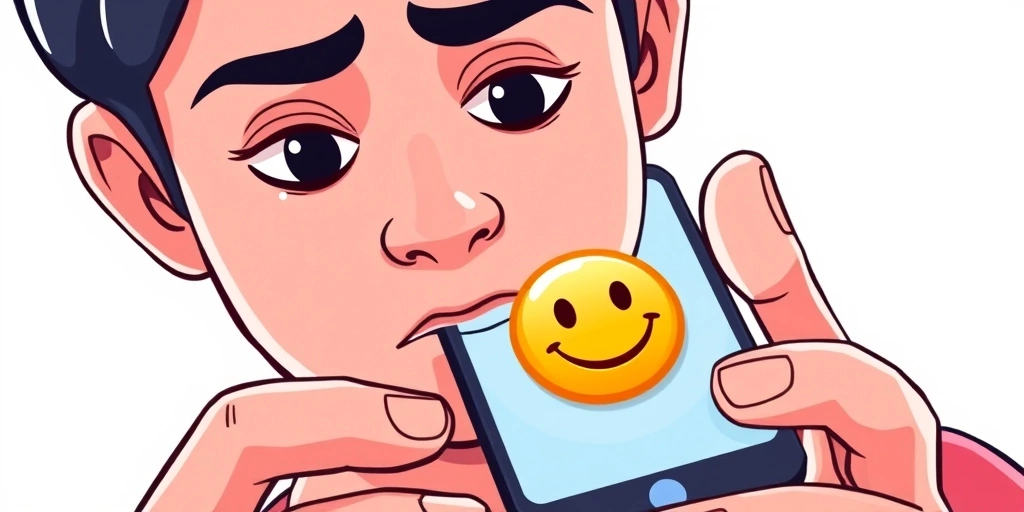
It’s not about using the “wrong” emoji. It’s that in the fluid, fast-paced world of casual messaging, there is no universally right one. The meaning isn’t fixed; it drifts. You can read more about this phenomenon of shifting meanings in The Emoji Drift.
When Casual Becomes Complicated
The blurring is most potent in exactly the situations where we feel safest: casual chats with friends, family, or colleagues. Because the stakes feel low, we’re less careful. We throw in emojis on instinct. But these are also the relationships where nuance matters most. A misunderstood emoji with a close friend can lead to a longer, more tangled “Wait, what did you mean by that?” conversation than a formal email ever would.
Consider the group chat. You’re planning a night out. Someone suggests a restaurant that you’re not keen on. You reply “Sure 😬”. Is that an “I’m reluctantly agreeing”? An “I’m nervous about this choice”? Or an “This is going to be a hilarious disaster”? The group might split into three different interpretations, and the plan—and the vibe—gets murky.
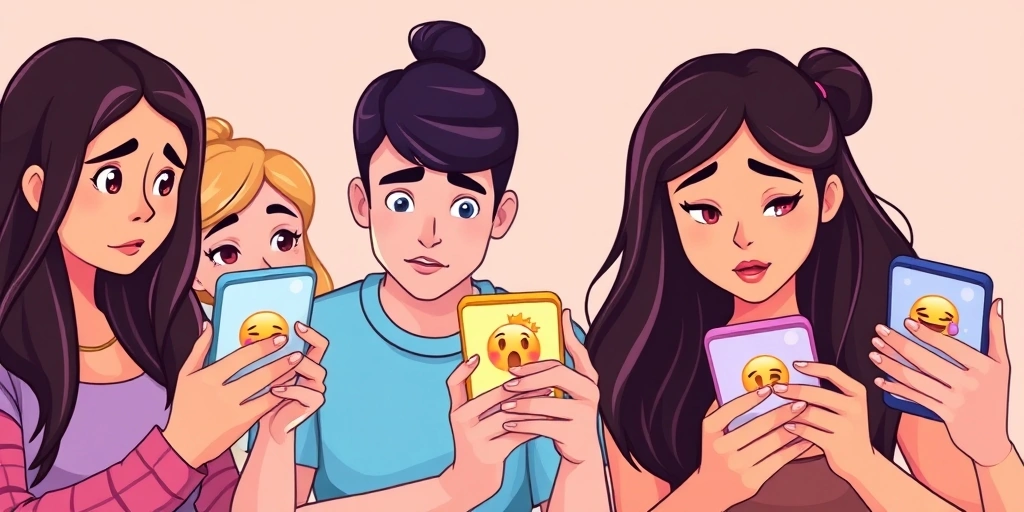
These moments are rarely dramatic. They don’t cause fights (usually). Instead, they create a subtle fog. The other person might just feel a slight disconnect, a sense that your message didn’t quite land as intended. They might brush it off, or they might quietly recalibrate how they read your texts from now on. The conversation continues, but with a tiny, almost invisible crack in its foundation.
Living With the Blur
So, do we stop using emojis? Of course not. They’re a fundamental part of how we express ourselves now. The goal isn’t to achieve perfect, unambiguous communication—that’s impossible, even face-to-face. The awareness is what matters.
Maybe it’s pausing for half a second before hitting send on that smirk face in a serious conversation. Maybe it’s following up a potentially ambiguous symbol with a few clarifying words (“That idea is wild… in a good way! 😄”). Or maybe it’s just accepting that sometimes, our digital tone will get lost in translation, and that’s okay. It’s part of the messy, human reality of talking through screens.
The awkwardness itself is a kind of communication. It reminds us that there’s a real person on the other side, parsing our pixels with their own hopes and insecurities. For more reflections on how these tiny symbols twist our conversations, explore our collection of thoughts on emoji mistakes and misuse.
In the end, emojis are like spices. The right one can make the meal. The wrong one—or even the right one used too liberally—can change the entire flavor in ways you didn’t intend. We keep cooking, we keep tasting, and sometimes, we just have to laugh when the dish turns out a little stranger than we planned.
📒 Related Blogs
More...Emoji Etiquette: Mastering the Unspoken Rules of Digital Communication
Unlock Clarity: How Emojis Transform Quick Chats from Confusing to Crystal Clear
Beyond the Smiley: How Emojis Quietly Shape How We See Each Other
Beyond the Text: How Emojis Shape What We Really Think
The Secret Language of Our Screens: How Emojis Mirror Cultural Moods Online
The Unseen Clarity: How Emojis Save Our Private Conversations