The Unspoken Language: How Emojis Set the Tone in Our Online Conversations

Feb 26,2026
Scrolling through any social media feed, you see it everywhere. A serious news article shared with a thinking face. A celebratory post punctuated by a string of party poppers. A critical comment softened, just slightly, by a winking face. These tiny symbols are more than decoration; they are the silent architects of tone in our public conversations.
In text, we lack the vocal inflections, the facial expressions, and the body language that give our spoken words meaning. A sentence like "Great job" can be read as sincere, sarcastic, or passive-aggressive depending on the reader's mood and context. This is where the emoji steps in, not to replace words, but to color them. It provides the emotional metadata that our digital conversations so desperately need.
The Public Stage of Social Media
This function becomes even more critical in public forums. On platforms like Twitter (now X), Instagram comment sections, or public Facebook posts, we are often speaking to an audience, not just an individual. The stakes for misunderstanding are higher. An emoji can signal to the broader group how a statement is intended, guiding the collective interpretation.
For instance, a hot take on a political issue might be followed by a shrug or a neutral face emoji. This doesn't change the opinion, but it subtly communicates a tone of casual observation rather than aggressive debate. It can lower defenses and invite discussion instead of immediate conflict. Conversely, a flame or angry face can amplify a critical statement, rallying like-minded sentiment. You can see more about how these symbols drive social reactions in our piece on how emojis shape public opinion.
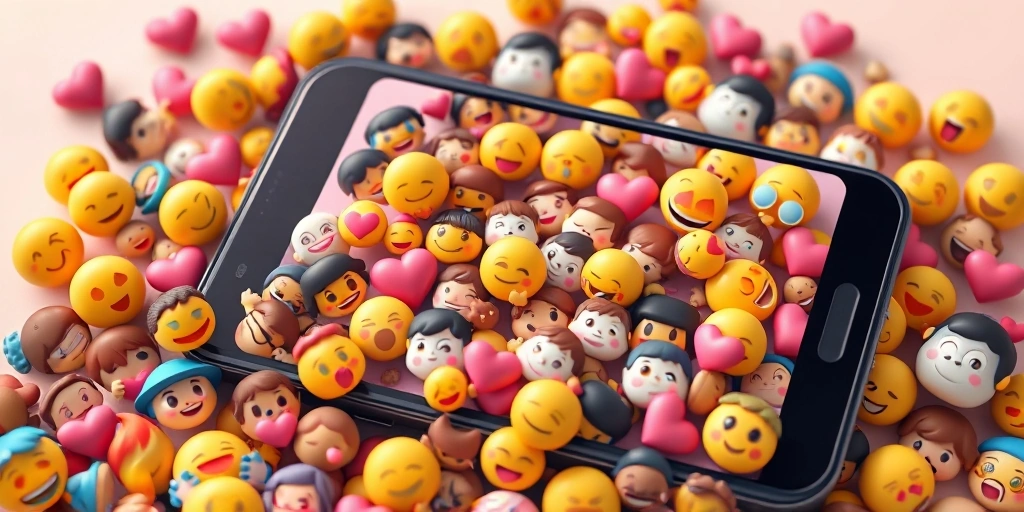
Think about brand accounts or public figures. Their social media managers are masters of this. Announcing a product delay with a sad face and a pleading hands emoji is a strategic choice. It acknowledges customer frustration and projects humility, attempting to steer the public conversation toward empathy rather than anger. The emoji is a crucial tool in reputation management, a small visual cue that does heavy emotional lifting.
Nuance in a Noisy Space
Beyond managing reactions, emojis create nuance. In a landscape dominated by strong, often polarizing opinions, they allow for shades of gray. A laughing-crying face on a post about a frustrating everyday situation creates solidarity through shared humor. A heart on a post about a social issue shows support without needing to craft the perfect caption. A single emoji can convey complexity—sarcasm, affection, ambivalence, or weariness—that might take a full paragraph to explain.
This non-verbal layer is how communities develop in-jokes and shared understandings. The repeated use of a specific emoji in a particular context within a community (like using the alien to signal something is weird or off-topic) creates a shorthand. It strengthens group bonds and sets a specific, insider tone that outsiders might miss entirely. The emoji becomes a badge of belonging.
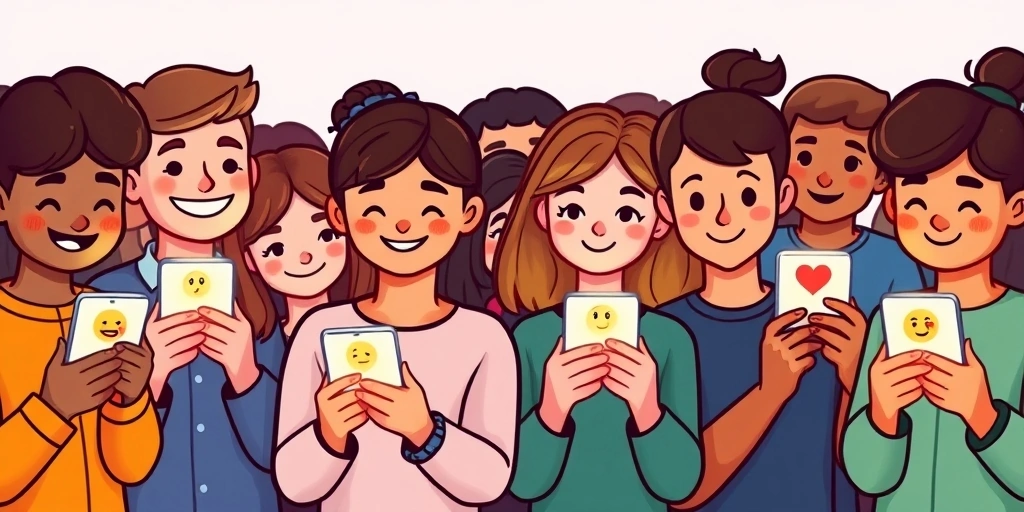
Of course, this system isn't foolproof. Emoji interpretation can vary by culture, age, and platform. What seems like a friendly gesture to one person might be read as passive-aggressive by another. The peach and eggplant emojis are classic examples of meanings diverging wildly from their official descriptions. The tone you think you're setting might not be the tone that's received. This inherent ambiguity is part of the dance of digital communication.
Yet, we keep using them. The drive to clarify tone, to connect emotionally, and to navigate the social risks of public posting is powerful. We intuitively reach for the smiley to take the edge off a request. We add the fire emoji to amplify praise. We use the eyes emoji to signal intrigue without commitment. Each choice is a micro-calibration of our public persona and the conversational atmosphere we hope to create.
As our public discourse continues to migrate and expand online, these small symbols play an outsized role. They are the punctuation marks for the digital age, but they do more than end sentences—they define their emotional trajectory. They help a scattered, text-based conversation feel a little more human, a little more understood. For more on the subtle power of these symbols, consider reading about how a single emoji can change a conversation.
Looking across timelines and comment threads, it's clear that emojis have become essential. They are the quiet, colorful signals that help us navigate the complex social terrain of the internet, one tiny, meaningful image at a time.
📒 Related Blogs
More...The Unseen Tempo: How Emojis Control the Flow of Fast-Paced Chats
The Secret to Friendly Slack Messages? It's All in the Emoji
Beyond Text: How Emojis Shape Your Digital Identity Online
The Art of Intentionality: How Emojis Transform Casual Digital Chats
The Emotional Shortcut: How Emojis Rewire Your Brain's Digital Conversations
The Silent Nod: How Emojis Build Quiet Confidence in Our Private Chats