When Emojis Go Wrong: The Subtle Ways They Backfire in Casual Chats

Feb 23,2026
You know that feeling. You send a text, maybe a simple "okay" or a "sounds good." You pause, thinking it might sound a bit cold or blunt. So, you add an emoji. A smiley face, a thumbs up, something to soften the edges. You hit send, feeling better. But then... silence. Or a reply that feels just a little off. A tiny knot forms in your stomach. Did the emoji backfire?
It happens more often than we'd like to admit. Emojis, those tiny bundles of visual emotion, are supposed to be our allies in the often-toneless world of digital chat. They're meant to clarify, to add warmth, to prevent misunderstandings. Yet, sometimes, they do the exact opposite. They introduce a new layer of subtle confusion, a quiet awkwardness that can linger in a conversation.
The Intention vs. Interpretation Gap
The core of the problem is a simple gap: the gap between what you mean and how it's read. Your screen and your friend's screen might show the same little yellow face, but the context in your head is entirely different from the context in theirs.
Take the classic smiling face with smiling eyes. 😊 To you, it's genuine warmth. You're happy, you agree, you're being friendly. But to the recipient, especially if the preceding text was neutral or slightly serious, that same emoji can read as passive-aggressive. It can feel like you're brushing them off with a plastered-on smile. It's not what you meant at all, but the seed of doubt is planted.
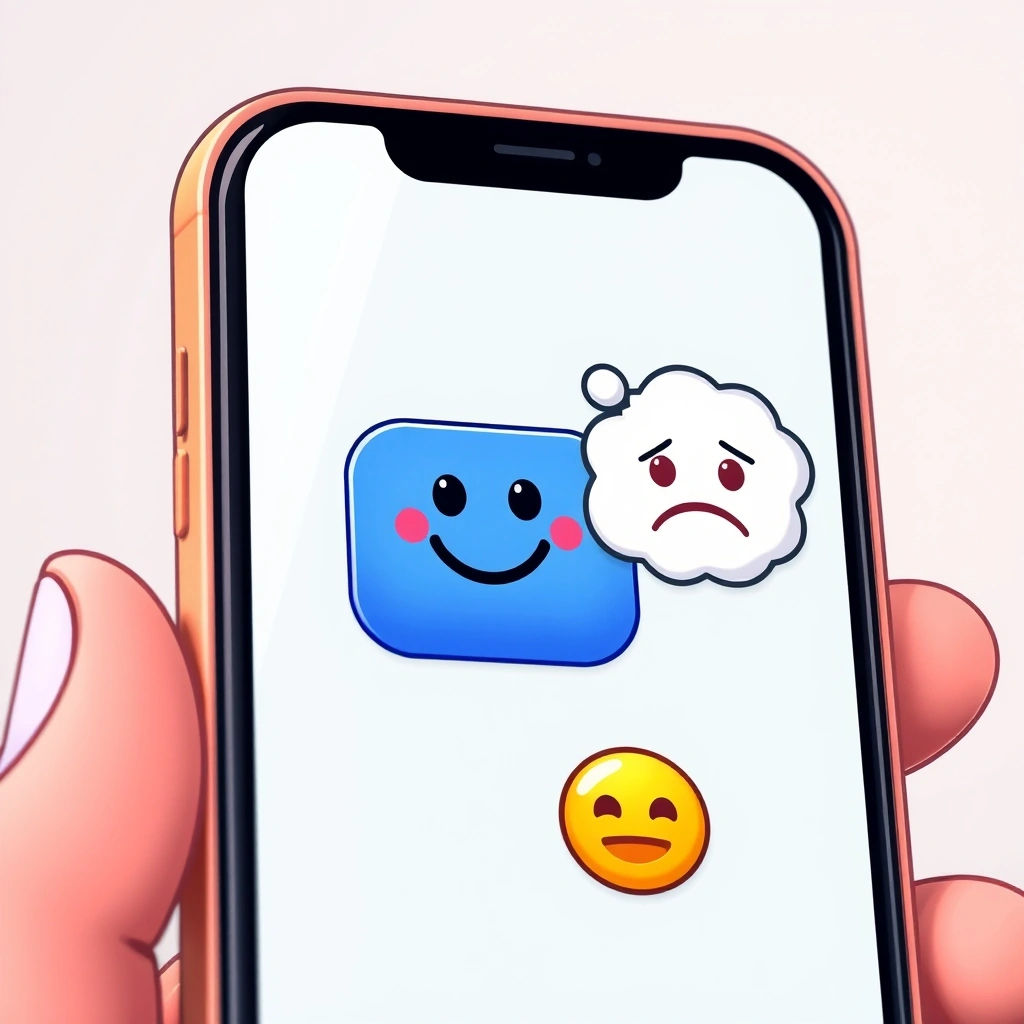
This isn't about major fights or dramatic falling-outs. It's about the subtle stuff. The slightly cooler tone in the next message. The conversation that just... fizzles out a bit sooner than it should have. It's the digital equivalent of a slightly awkward pause in a face-to-face chat. You can read more about these common points of confusion in The Emoji Enigma.
When "Playful" Feels Dismissive
Then there are the emojis meant for playfulness. The winking face 😉, the tongue-out face 😛. In the right context with the right person, they're perfect. They signal a joke, a tease, a shared understanding.
But in a conversation that's even slightly tense, or with someone you don't know super well, that same winking face can be a landmine. Instead of "I'm joking," it can scream "I'm not taking this seriously." Instead of easing tension, it can amplify it, making the other person feel like their concerns are being minimized with a pixelated wink. It turns a moment of potential connection into a moment of subtle alienation.
The Danger of Assumed Universality
We often operate under the assumption that emojis are a universal language. A heart means love, a crying face means sad. But even these "basics" have shades of meaning. Is the red heart ❤️ too intense for a casual friend? Does the loudly crying face 😭 mean "this is hilarious" or "this is devastatingly sad"? The answer often depends on your age, your culture, and your personal chat history with the other person.
What feels like a safe, neutral emoji to you might carry a very specific, and unintended, subtext for someone else. You can explore more about these awkward moments in this article on unintentional awkwardness.
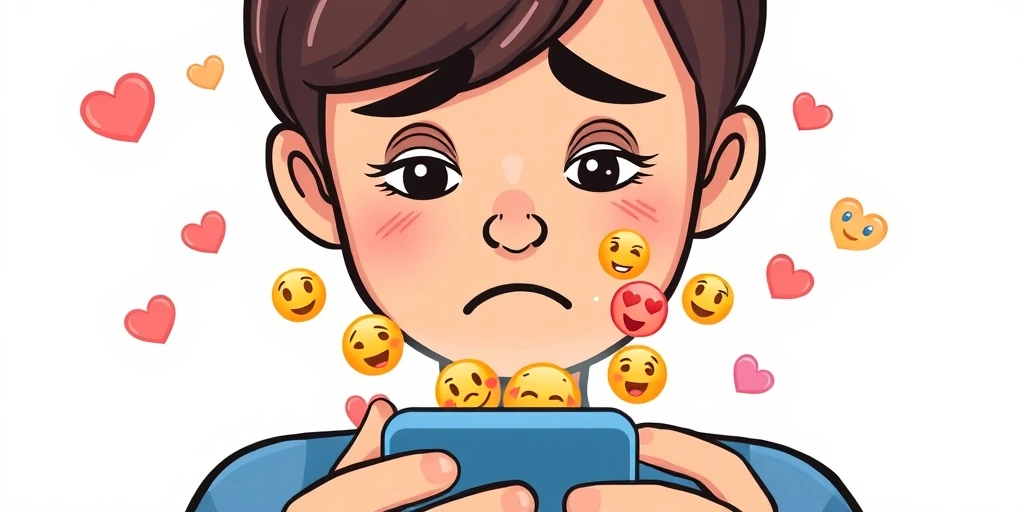
The thumbs-up 👍 is a prime example. For many, it's a simple "got it" or "agreed." For others, it's the digital equivalent of a curt nod—a conversation-ender that feels impatient or dismissive. You meant "thanks!" but they read "whatever."
The Overcompensation Spiral
This is where the real subtle backfire happens. You sense a chill. The reply was short. Maybe you mis-stepped. So what do you do? You double down on emojis. The next message has two smileys. Then a heart. Then a celebratory confetti ball. 🎉
Instead of correcting the course, this overcompensation can make things worse. It can come across as desperate, inauthentic, or like you're trying too hard to cover up the initial awkwardness. The conversation becomes less about the actual topic and more about managing the unspoken emotional subtext, all conveyed through these tiny, ambiguous pictures.
Navigating the Minefield (Gently)
So, what's the solution? Abandon emojis altogether? Of course not. Their value far outweighs their pitfalls. The key is mindful use.
First, consider the context and the person. Is this a lifelong friend who gets your humor, or a new colleague? Match the emoji to the depth of the relationship and the tone of the conversation.
Second, when in doubt, use words. If you're worried a "haha" might sound sarcastic, just say "That's really funny!" If you're concerned a period might seem angry, a simple "Sounds good to me!" removes all ambiguity. Let the words carry the primary meaning, and let the emojis be subtle enhancers, not the main event.
Finally, don't panic at the first sign of a potential backfire. Sometimes the awkwardness is just in our heads. Other times, a quick, honest "Hey, I hope that came across okay, I was just trying to be friendly!" can clear the air instantly. It shows you care about the connection more than you care about being perfectly emoji-fluent.
Emojis are a wonderful, colorful layer to our digital lives. But like any language, they require a bit of nuance. Their power to connect is matched by their subtle power to create tiny fractures. By being just a little more aware of that gap between our screens and our intentions, we can use them to build warmth, not wonder what went wrong. For more insights on navigating the tricky world of emoji communication, check out our broader section on emoji mistakes and misuse.
📒 Related Blogs
More...Decoding the Digital Heartbeat: How Emojis Capture Our Ever-Changing Cultural Moods
The Emoji Filter: How Tiny Icons Shape Public Opinion Online
The Psychology Behind Emojis: Unlocking Our Digital Emotions
The Final Touch: How Emojis Make Your Fast Messages Feel Complete
The Unspoken Language: How Emojis Cut Through Text in Familiar Chats
The Viral Heartbeat: How Emojis Fuel the Spread of Reactions Online