Beyond the Text: How Emojis Add Intention to Your Short Messages

Feb 05,2026
We've all been there. You type out a quick reply—'Okay,' 'Sounds good,' 'Thanks'—and your finger hovers over the send button. Something feels off. It's not wrong, but it feels… bare. A little cold, maybe. In the absence of body language and vocal tone, our shortest messages can land with a thud, leaving room for misinterpretation or just feeling oddly impersonal.
This is where the humble emoji performs its quiet magic. It’s not about being childish or unprofessional in casual chats; it’s about injecting a dose of human intention into a limited medium. A short message with an emoji isn't just longer; it's fundamentally different. It carries a mood, a subtext, a feeling that the words alone cannot convey.
The Clarity Gap in Digital Talk
When we speak face-to-face, so much of our meaning comes from non-verbal cues. A smile, a shrug, a raised eyebrow—these elements frame our words. In text, especially brief text, that frame is missing. 'Sure' could mean enthusiastic agreement, reluctant acceptance, or even sarcastic defiance. Without context, the receiver is left to guess, often defaulting to a neutral or negative interpretation—a phenomenon psychologists call 'negative bias' in digital communication.
An emoji acts as a clarifying signal. It provides that missing non-verbal frame. 'Sure 😊' feels warm and agreeable. 'Sure 👍' feels supportive and confirmed. 'Sure 😏' carries a playful, knowing edge. The core word is the same, but the intention behind each message is crystal clear. You're not just transmitting information; you're managing the emotional temperature of the exchange.

Think of it like the punctuation of the 21st century. A period ends a sentence, but a period at the end of a short text can now feel passive-aggressive. An exclamation point shows excitement, but too many can seem over the top. Emojis offer a more nuanced palette for expression. They help us soften statements, show gratitude, express empathy, or share a joke without a lengthy explanation.
From Transactional to Relational
Short messages often serve a transactional purpose: confirming plans, answering a question, providing an update. But our relationships aren't built on transactions; they're built on connection. An emoji is a micro-gesture that transforms a transactional message into a relational one.
Sending 'On my way!' is efficient. Sending 'On my way! 🚗' feels more engaged. 'Good luck today!' is nice. 'Good luck today! ✨' feels more supportive and personal. That tiny symbol says, 'I'm not just informing you; I'm *with* you in this moment.' It bridges the physical gap and makes the digital space feel a little more human. For more on building effortless connection in your chats, you might enjoy this piece on the unspoken magic of emojis.
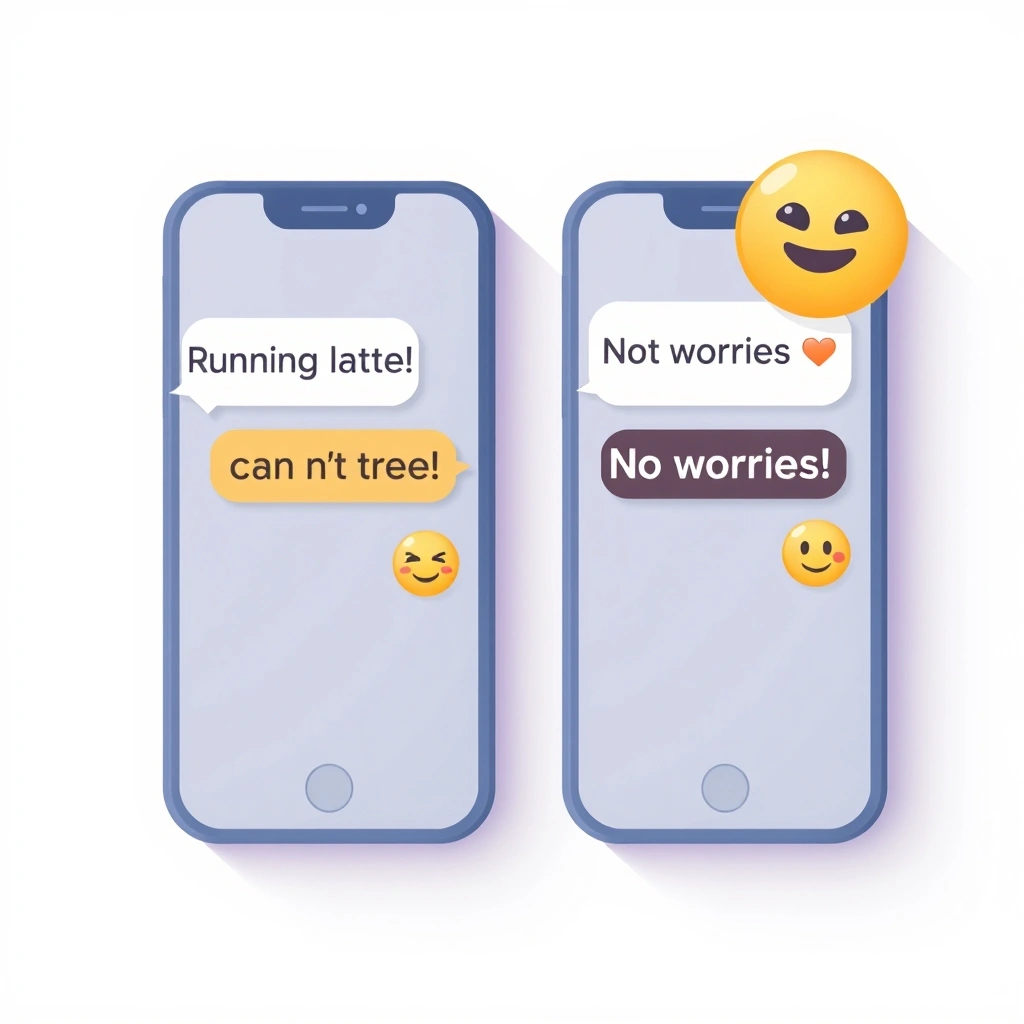
This is especially crucial in ongoing conversations. A string of bare-bones replies can make a chat feel like a bureaucratic exchange. Sprinkling in relevant emojis maintains a sense of warmth and continuity. It shows you're still present and invested, even when your words are few.
Intentionality Over Volume
Using emojis for clarity isn't about stuffing your messages with every symbol available. In fact, the power often lies in restraint and choice. A single, well-chosen emoji can be more impactful than a string of them. It’s about being intentional.
Before you send that short text, pause for a second. Ask yourself: What's my true tone here? Am I happy, rushed, sympathetic, joking? Then, see if there's an emoji that can telegraph that subtext. This moment of consideration is what makes the message feel intentional. You're curating the recipient's experience of your words.
For instance, declining an invitation with 'Can't make it, sorry!' feels flat. 'Can't make it, sorry! 😔' expresses genuine regret. 'Can't make it, sorry! 🥴' (with a dizzy face) might humorously imply a chaotic schedule. The emoji does the heavy lifting of conveying your attitude, preventing the short message from being read as dismissive or uncaring.
This practice of intentional emoji use is a form of digital empathy. It actively works to prevent misunderstanding and foster a positive connection. It says, 'I care enough about how this lands to add a visual cue.' If you're interested in how a single symbol can soften a message, the gentle art of the emoji explores this idea further.
Of course, context is everything. The emojis you use with a close friend will differ from those in a group chat with acquaintances or a quick note to a colleague. The key is that within any given context, your choice is deliberate. It's a tool for better, clearer, and more human communication.
The Bottom Line
In the fast-paced flow of online conversation, we shouldn't underestimate the power of small signals. Emojis are more than decorative; they are functional tools for clarity and connection. They fill the emotional void left by short, text-only messages and allow us to communicate our intentions with precision and warmth.
So next time you're about to send a brief 'K,' 'Thanks,' or 'No problem,' consider the gap between what you mean and how it might be read. Then, let a simple emoji do the talking for your tone. It’s a small effort that makes a world of difference in making our digital interactions feel thoughtful, clear, and genuinely connected. For more guides on navigating the world of emojis, check out our full collection of emoji guides and how-tos.
📒 Related Blogs
More...The Magic of Emojis: How to Make Your Casual Chats Effortlessly Lighter
Emoji Etiquette: Master the Art of Digital Communication (Avoid Faux Pas!)
The Emoji Effect: How Icons Shape Public Reactions Across Social Platforms
Emoji Power-Ups: Boost Your Brand with Strategic Emoji Use for Marketing
Decoding New Emojis: A Guide to the Latest Additions & Their Meanings