How Emojis Became My Secret Weapon for Everyday Connection

Feb 17,2026
It starts in the morning. The phone lights up. A message from a friend, a family member, a colleague. Sometimes it’s just a single emoji. A sun. A coffee cup. A sleepy face. You don’t need to craft a reply. You just send one back. A matching sun. A thumbs-up. It’s over in seconds, but something has passed between you. A recognition of the shared, mundane start to the day.
This is the quiet work of emojis. They operate in the background of our digital lives, not as the main event, but as the filler. The glue. They step in precisely where formal language feels too heavy, and where silence might feel too cold.
The Space Between Words
Think about the conversations that make up your day. The check-ins, the updates, the ‘thinking of you’s. How often do you find yourself typing out, “Hope you’re having a good day!” and then deleting it? It can feel repetitive, even insincere, when said for the hundredth time. But a smiling face with sunglasses? A little sparkle? It conveys the same sentiment—a nudge of goodwill—without the weight of the full sentence.
It’s not about being lazy with language. It’s about being efficient with emotion. A heart emoji after a partner texts about a stressful meeting says “I’m here, I sympathize” faster than typing it out. A crying-laughing face in response to a friend’s minor mishap instantly communicates shared humor and solidarity. These tiny icons handle the emotional labor of small talk, leaving room for the conversations that need more words.
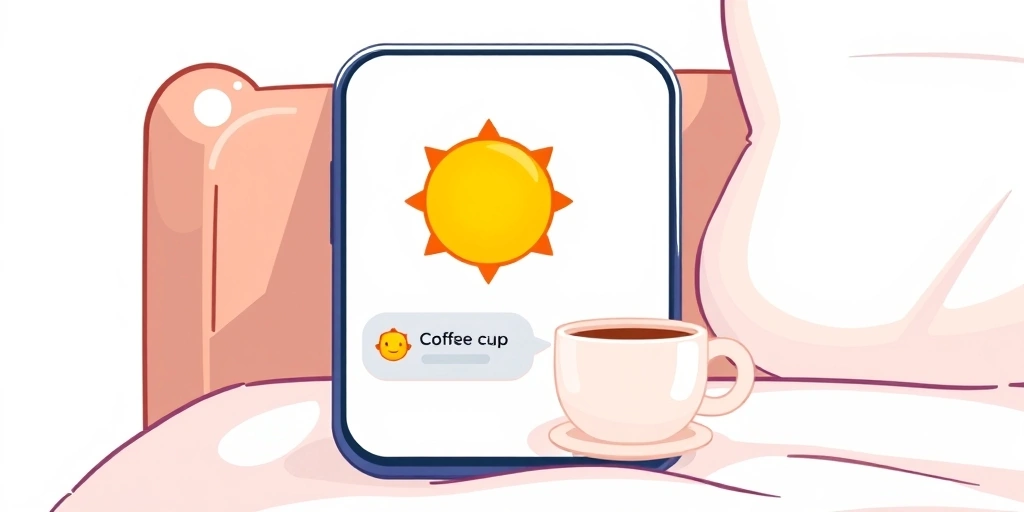
This rhythm creates a kind of daily glue. It’s the digital equivalent of a nod across the room, or a pat on the shoulder in passing. It maintains the connection without demanding a full stop in everyone’s day to engage in a deep dialogue. The connection hums along, sustained by these little bursts of pictorial feeling.
The Comfort of the Routine
There’s a deep comfort in the predictability of it. The same good morning coffee cup. The same tired moon at night. The same celebratory confetti for small wins. These repeated emojis become personal shorthand, rituals unique to each relationship. They build a private, visual language that belongs just to you and the person on the other end.
This repetition is the opposite of boring. It’s reassuring. In a world that often feels chaotic, these small, consistent exchanges are anchors. They are tiny promises of normalcy. “I’m still here. Our rhythm is still the same.” You don’t question what a red heart means from your best friend. You just feel it.
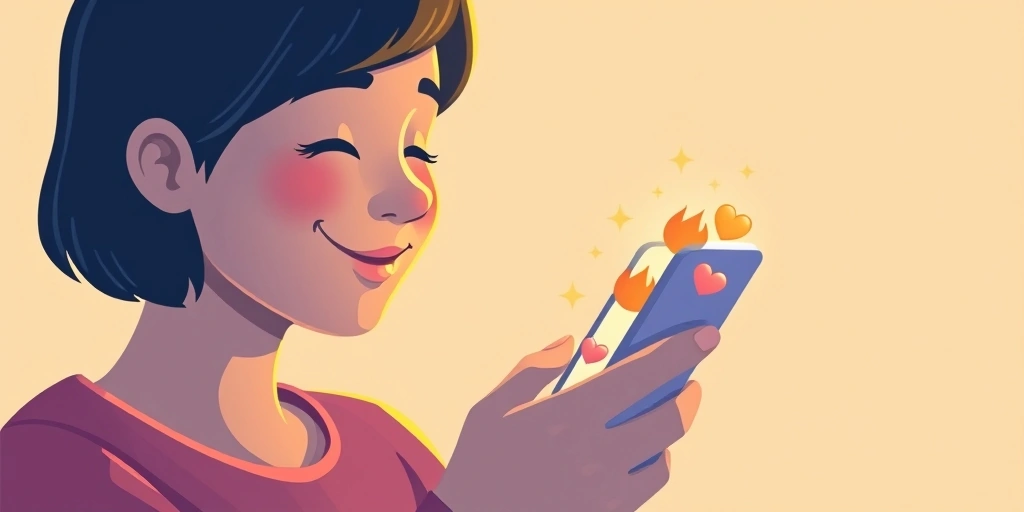
And in group chats, this function is amplified. A string of heart-eyes or fire emojis under someone’s news creates a chorus of support. It’s a way for everyone to chime in with a unified, positive emotion without creating a messy scroll of near-identical text messages. The chat moves forward, buoyed by this collective, effortless reaction.
When Words Fail, or Feel Like Too Much
Some days, you’re just tired. Or busy. Or emotionally drained. Finding the right words for even a simple exchange can feel like a chore. This is where emojis truly shine as replacements for small talk. You can acknowledge a message, express a feeling, and maintain a connection with a single tap.
Sending a heart doesn’t mean you have nothing to say. It often means you have too much to say, and the heart contains it all. A sad face can express empathy when someone shares bad news, and you haven’t got the emotional bandwidth to craft the perfect paragraph of comfort. It’s honest. It’s enough.
It’s fascinating how these little symbols have woven themselves so completely into the fabric of daily life. They handle the micro-interactions, the social upkeep, the gentle ping of “you are in my thoughts” that keeps relationships warm and active. They are the sighs, the nods, the smiles, and the eye-rolls of our text-based world.
So the next time you automatically reach for that thumbs-up or that crying-laughing face, don’t think of it as a shortcut. Think of it as participating in a new, deeply human language of routine care. It’s the small talk of the digital age, stripped of awkwardness and filled with intention. It’s how we say “I’m here” without having to say anything at all.
📒 Related Blogs
More...Emoji's Global Reach: Unpacking Diverse Cultural Interpretations of Digital Icons
The Emoji Filter: How a Simple Icon Can Change Your Entire Argument
The Quiet Confidence of Emojis: When Words Feel Too Risky
Emojis in Marketing: How Brands Boost Engagement and Connect Visually
The Future of Emojis: Predicting the Next Evolution in Digital Communication