How Emojis Became Our Shared Internet Diary

Feb 09,2026
Think about the last time you scrolled through your social media feed. Chances are, you didn't just see words. You saw a cascade of tiny, colorful pictures telling a story all their own. A crying-laughing face on a friend's silly pet video. A single red heart under a major news announcement. A series of fire emojis celebrating someone's personal achievement. This isn't just decoration; it's a reflection of our shared internet moments, a visual diary we're all writing together.
Emojis have moved far beyond their original purpose of adding tone to a text message. On social platforms, they function as a kind of communal pulse. When a major event happens—a sports victory, a new movie release, a cultural milestone—specific emojis surge in usage. They become the agreed-upon symbol for that moment, a way for millions of people, regardless of language, to participate in the same conversation. It's a collective nod, a digital wave across the crowd.
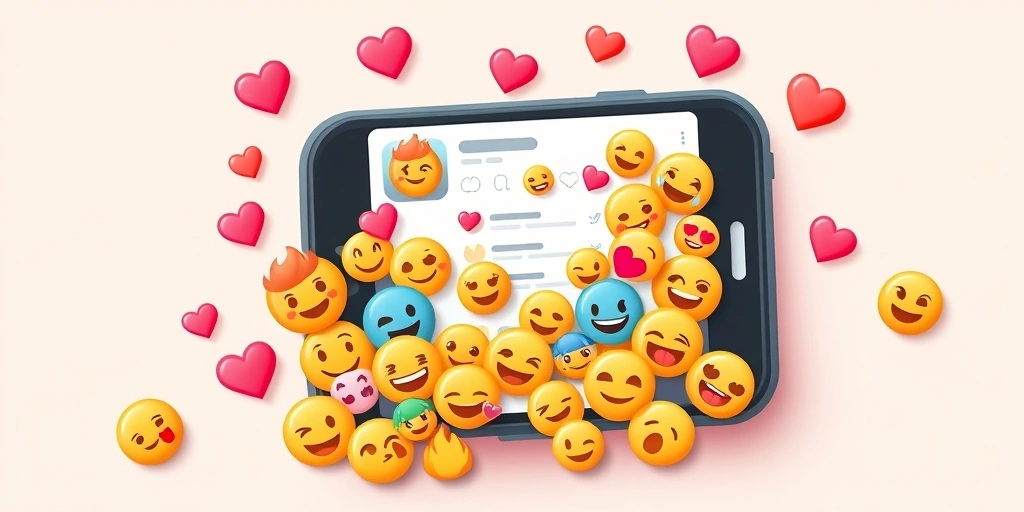
This phenomenon is deeply tied to how online communities operate. Platforms like Twitter, Instagram, and TikTok thrive on immediacy and shared context. An emoji can convey a complex reaction—sarcasm, solidarity, excitement, exhaustion—faster than typing out a sentence. When a new slang term or meme takes off, an emoji often gets attached to it, becoming part of its identity. The emoji doesn't just represent the thing; it becomes a badge of belonging for those "in the know." You can learn more about this community-driven evolution in our article on how online communities shape our favorite emojis.
These shared moments also have a lifecycle. An emoji might explode in popularity around a specific event, its meaning tightly wound to that context. Over time, that meaning can soften, evolve, or even be reclaimed by a different group. The peach emoji, for instance, has had quite a journey. The skull emoji has transformed from a symbol of literal death to a way of saying "I'm dead" from laughter or secondhand embarrassment. This constant flux shows that emojis are living elements of our language, changing as our culture and conversations do.
The Feedback Loop of Trends
It's a two-way street. While emojis reflect our moments, they also actively shape them. Brands, influencers, and even news organizations now strategically use emojis to connect with audiences and tap into the cultural zeitgeist. Seeing an official account use a specific emoji in a tweet can validate its meaning and cement its association with a topic. This creates a feedback loop: we use emojis to talk about our world, and then the symbols we choose become part of how that world is framed and understood.
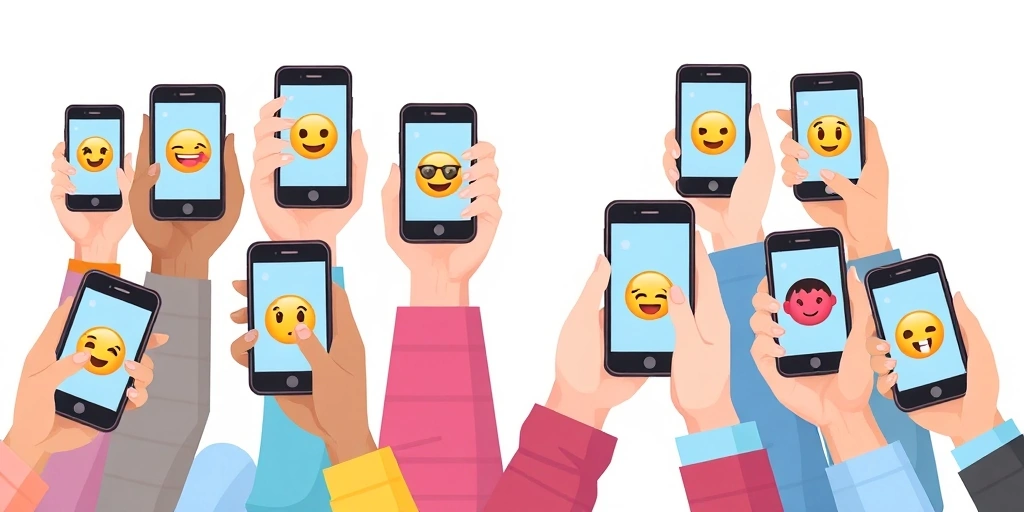
This isn't just about the big, global events either. It happens in our micro-communities every day. Inside a group chat for a TV show fan club, a single emoji can summarize an entire plot twist. In a family chat, a specific food emoji might become code for "remember that great meal we had." These small, shared lexicons of emojis build intimacy and a sense of private understanding, mirroring the in-jokes and shorthand of offline friendships.
More Than Just Fun and Games
To dismiss this as trivial is to miss the point. This collective use of emojis represents a fundamental shift in how we communicate en masse. It's a move towards a more visual, efficient, and emotionally nuanced form of public discourse. It allows for rapid, empathetic connection across vast distances. During times of crisis or celebration, seeing a flood of the same emoji can be a powerful, unifying experience—a way to feel connected to a broader human response without saying a word.
Of course, this shared language isn't perfect. Misinterpretations happen. Cultural differences can lead to awkward mix-ups. The meaning of an emoji in one corner of the internet might be completely different in another. But even these misunderstandings are part of the story, highlighting the diverse and sometimes fragmented nature of our online worlds. The journey of emojis is a fascinating mirror to our own. For a deeper look at this reflection, consider reading about how our digital heartbeats mirror a changing world.
So, the next time you double-tap a post or reply to a tweet with a string of emojis, take a second to think about what you're participating in. You're not just reacting. You're contributing to a vast, ongoing, and incredibly human project. You're adding your voice to a visual record of what we, as a connected society, are paying attention to, laughing about, mourning, and celebrating. Our shared internet moments are fleeting, but in the emojis we choose, we leave a little piece of our collective memory behind.
To explore more about the intersection of emojis and the culture they spring from, check out our other posts in the Emoji Culture & Trends section.
📒 Related Blogs
More...The Ever-Shifting Emoji Landscape: How Digital Trends Reshape Our Favorite Icons
Beyond the Smile: Understanding the Global Cultural Nuances of Emojis
The Instant Feeling: How Emojis Spark Our Gut Reactions
When Emojis Muddle Your Message: The Unseen Cost of Digital Tone
Emoji Etiquette: Navigating the Unwritten Rules of Digital Communication
When Words Feel Heavy: How Emojis Quietly Ease Our Nervous Moments