How Emojis Grow Up With Us: The Secret Language of Every Generation

Mar 20,2026
Think about the last text you sent. Chances are, it had an emoji. That little picture did more than just decorate your words—it carried a tone, an inside joke, or a feeling that plain text couldn't quite capture. But have you ever stopped to wonder why you use the emojis you do? It's not random. Our emoji keyboards are a living archive, constantly being rewritten by the communities we're part of and the trends we swim in every day.
It all starts with a simple need: to be understood. In the early days of texting and instant messaging, we had to get creative. The humble :) was born out of necessity, a way to signal 'just kidding' or soften a statement. This was the first wave of community-driven emoji creation, long before the official ❤️ or 😂 existed. We were building a shared language from the ground up.
[[emojilar_img1]]
Fast forward to today, and that process has exploded. New emojis are officially added to our keyboards every year, but the real evolution happens much faster, in the wilds of the internet. A viral TikTok dance, a meme format that dominates Twitter for a week, a catchphrase from a popular show—these moments don't just give us something to talk about; they give us new ways to talk.
Take the skull emoji, 💀. For years, it meant just that: death, danger, something spooky. But in online spaces, particularly among younger users, it morphed into something entirely different. 'I'm dead' became slang for 'I'm laughing so hard.' Suddenly, 💀 wasn't morbid; it was hysterical. This shift didn't come from a dictionary or a software update. It came from a community using the tool in a new, shared context until that new meaning stuck.
This is where generational lines often get drawn. The emojis a Gen Z user reaches for can sometimes be a mystery to a Millennial, and vice versa. It's not that one generation is 'right' and the other is 'wrong.' It's that they've learned the language in different digital classrooms. A Millennial might use 😂 for genuine laughter, having adopted it when it was the 'Tears of Joy' emoji of the year. A Gen Z user might see that as a bit intense or even outdated, opting for the more subdued 😭 or the ironic use of 🔥 to mean something is amazing. These aren't mistakes; they're dialects.
Platforms themselves act as powerful communities that shape emoji use. The culture of Twitter (or X) with its rapid-fire, witty discourse breeds a different emoji style than the aesthetic, curated world of Instagram. On Discord servers dedicated to specific games or hobbies, you'll find entire sets of custom emojis (emotes) that only make sense to that inner circle. This is emoji evolution at its most granular, creating micro-languages for micro-communities. For more on how viral moments shape this language, you can see some fascinating examples here.
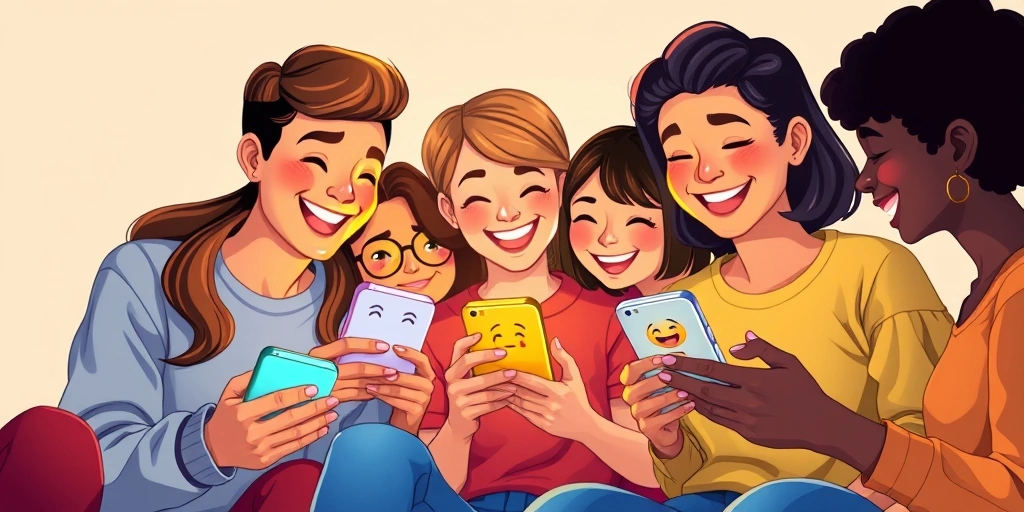
So, what does this constant change tell us? Primarily, that emojis are far more than decorative stickers. They are a fundamental, flexible part of how we connect. They help us bridge the gap that plain text leaves, conveying sarcasm, warmth, solidarity, or humor in an instant. When a community collectively decides that a peach 🍑 isn't just a fruit or that a frog 🐸 represents a specific feeling, they are participating in the oldest human tradition: creating a language that serves them.
This evolution can feel dizzying. Just when you think you've got the hang of it, a new trend emerges and the meaning of an emoji flips. But there's a beauty in that fluidity. It proves that our digital communication is alive, responsive, and deeply human. It's a reminder that language has always been a crowd-sourced project. We are all, in our own small way, contributing to the next chapter of how we express ourselves.
Instead of worrying about 'keeping up,' maybe we can just observe and appreciate. Notice the emojis your friends use. Ask what a new one means in a certain context. You're not just learning an icon; you're getting a glimpse into a community's shared experience. The story of emojis is, ultimately, the story of us trying to see and be seen by each other in a digital world. And that's a story that's always worth following. Dive deeper into the cultural journey of emojis in our emoji culture & trends section.
📒 Related Blogs
More...That Awkward Moment: When Your Emoji Message Gets Totally Misread
From Harsh to Human: How Emojis Make Workplace Feedback Feel Friendlier
How Emojis Keep Your Online Chats Flowing Smoothly
The Neutral Zone: How Emojis Keep Your Work Chats Calm, Clear, and Professional
When Emojis Feel Wrong: The Unintended Awkwardness of Digital Tone