The Gentle Art of the Quick Reply: How Emojis Soften Brief Messages in Group Chats

Feb 09,2026
We've all been there. Your phone buzzes with a flurry of messages from the family group chat, the work project thread, or your friend's weekend planning chaos. Someone asks a direct question, or makes a statement that needs acknowledgment. You're busy, so you tap out the fastest, most efficient reply possible: 'Okay.' 'Sure.' 'Thanks.' 'No problem.' You hit send.
And then... a tiny pang of doubt. Did that sound too blunt? Too cold? Like I'm annoyed? In the absence of body language and vocal tone, our shortest messages are the most vulnerable to misinterpretation. This is where the humble emoji performs its quiet magic.
In simple exchanges, especially in the bustling arena of group chats, emojis are the ultimate tone-setters. They are the digital equivalent of a warm smile, a friendly nod, or a reassuring pat on the back—all delivered in a single tap.
Why Brief Replies Need a Little Help
Think about the physics of a group chat. Multiple people, multiple threads of conversation, all happening asynchronously. Brevity isn't just convenient; it's often a necessity to keep up. But when we strip our language down to its bare bones, we also strip away the social cues that tell others how we feel.
The word 'okay' is a perfect example. On its own, it's neutral. But in a chat, it can be read as resigned ('okay... fine'), annoyed ('OKAY.'), or enthusiastic ('okay!'). Without context, the group is left to guess. An emoji resolves the ambiguity instantly.
[[emojilar_img1]]
The Softening Power of a Single Character
Let's walk through some classic quick-reply scenarios and see the transformation.
The Acknowledgment: Someone shares a long update or confirms a time.
'Got it.' feels like a robotic receipt.
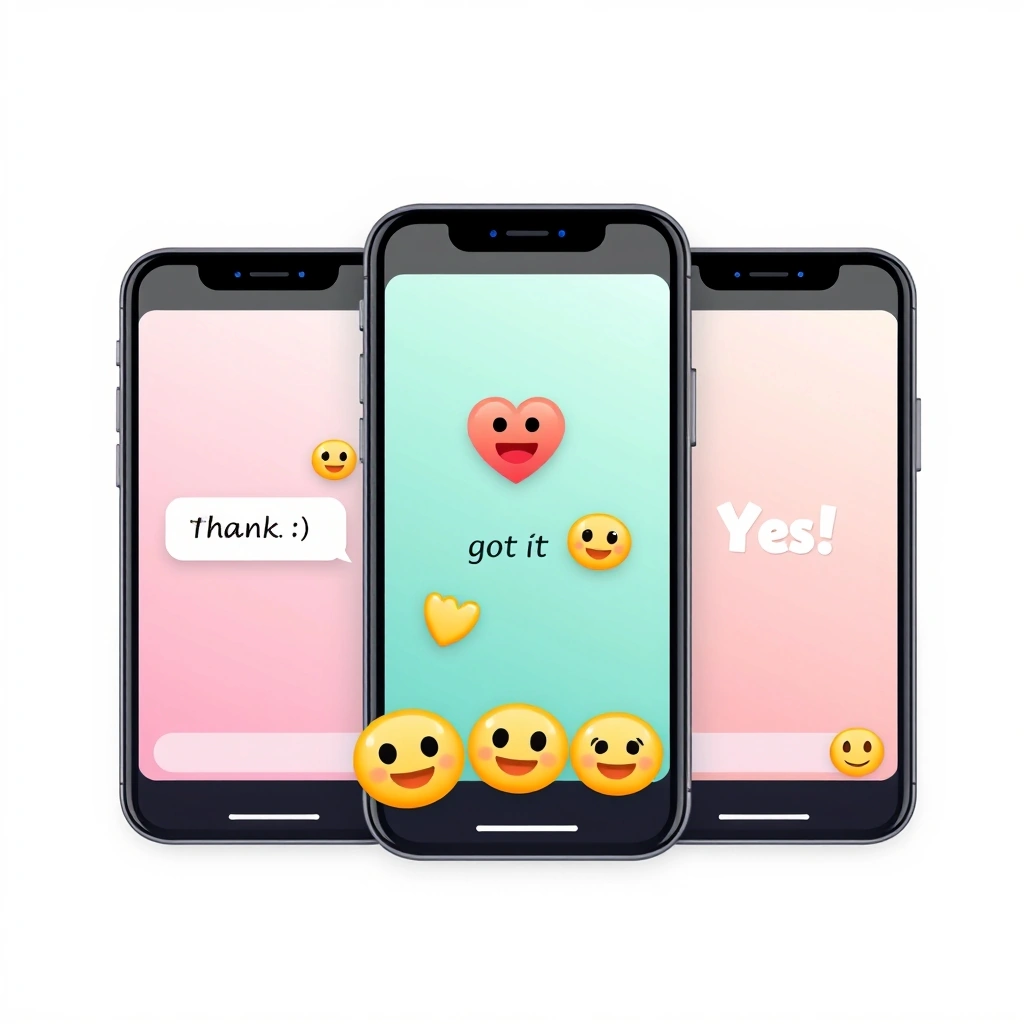
'Got it 👍' or 'Got it 👌' says 'I've seen this, I understand, and we're good.'
The Agreement: The group is deciding on a movie or a lunch spot.
'Yes.' can feel like a grudging concession.
'Yes 😊' or 'Yes 🎉' communicates happy agreement and gets everyone on the same positive page.
The Thanks: Someone does you a small favor in the chat.
'Thanks.' is perfectly polite.
'Thanks 🙏' or 'Thanks ❤️' feels genuinely grateful and personal. It closes the loop with warmth.
This isn't about being overly effusive or fake. It's about aligning the emotional subtext of your message with your actual intent. For more on how emojis create connection in fast chats, check out our thoughts on the magic of a single tap.
Choosing the Right Softener
Not all emojis soften equally. A 😒 or 💀 after a short reply adds sarcasm or dramatic humor, which is great with close friends but risky in a work chat. The classics—🙂, 😊, 👍, ❤️, 🙏—are your safest and most versatile tools for adding universal goodwill.
The key is to consider the group's dynamic. What works for your college friends won't necessarily fly on the company Slack. Observe and mirror the tone others use.
It's About More Than Just Being Nice
This practice does more than just make you seem friendlier. It actively improves the health of the group chat. It reduces the chance of misunderstandings that lead to unnecessary follow-up messages ('Wait, are you mad?'). It builds a collective atmosphere of cooperation and ease. When everyone uses little visual cues, the conversation flows more smoothly and feels more human, even at high speed.
It turns a functional space for information exchange into a pleasant social space. You can explore more guides like this in our emoji guides section.
So next time you go to type that two-word reply, pause for a half-second. Ask yourself: 'What's the tone here?' Then, let an emoji do the heavy lifting. That tiny icon bridges the gap between efficiency and empathy, ensuring your quick message delivers exactly the right feeling. It’s the simplest tool we have to make our digital conversations feel a little more like the real thing.
📒 Related Blogs
More...More Than Just Faces: How Emojis Reveal Our Generational Digital Fingerprint
How Emojis Tell the Story of Our Changing Digital World
Emoji Magic: How Little Icons Make Your Digital Chats Flow Seamlessly
The Unspoken Stop Sign: How Emojis Mark the End of a Chat
How Emojis Keep Your Casual Chats Warm and Friendly
Emoji's Emotional Shortcut: Understanding Instant Judgments in Digital Chat