The Hidden Cost of a Smiley Face: When Emojis Backfire in Your Texts

Feb 12,2026
We've all been there. You send a quick text, punctuating it with a friendly emoji—a smiling face, a thumbs up, a heart—and you wait. The reply comes back, and it feels… off. Maybe it's short. Maybe it's devoid of any emoji at all. A little knot forms in your stomach. What did you do wrong? The answer, often, is nothing you meant to do. It was the emoji.
In our quest to add warmth, clarity, and personality to our flat, text-based conversations, we've embraced emojis as a digital savior. They're supposed to bridge the gap where tone of voice and body language fall away. And most of the time, they do. But there's a hidden, subtle layer to emoji use where things quietly backfire. The very tool we use to prevent misunderstanding can become its primary source.
The Illusion of Universal Understanding
We operate under a shared myth: that a 😊 means happy, a 😢 means sad, and a 👍 means approval. While these are the dictionary definitions, the emotional weight and context we assign to them are deeply personal and cultural. The grinning face with smiling eyes might be your go-to for "friendly acknowledgment." To your boss or a new acquaintance, it might read as unprofessional or, paradoxically, insincere—a painted-on smile masking real feeling.
This gap in interpretation is where the first cracks appear. You send a string of laughing-crying emojis 😂 to show you found a story hilarious. Your friend, who just shared a vulnerable moment, might perceive it as you laughing at them, not with them. The emoji intended to amplify connection instead creates distance.
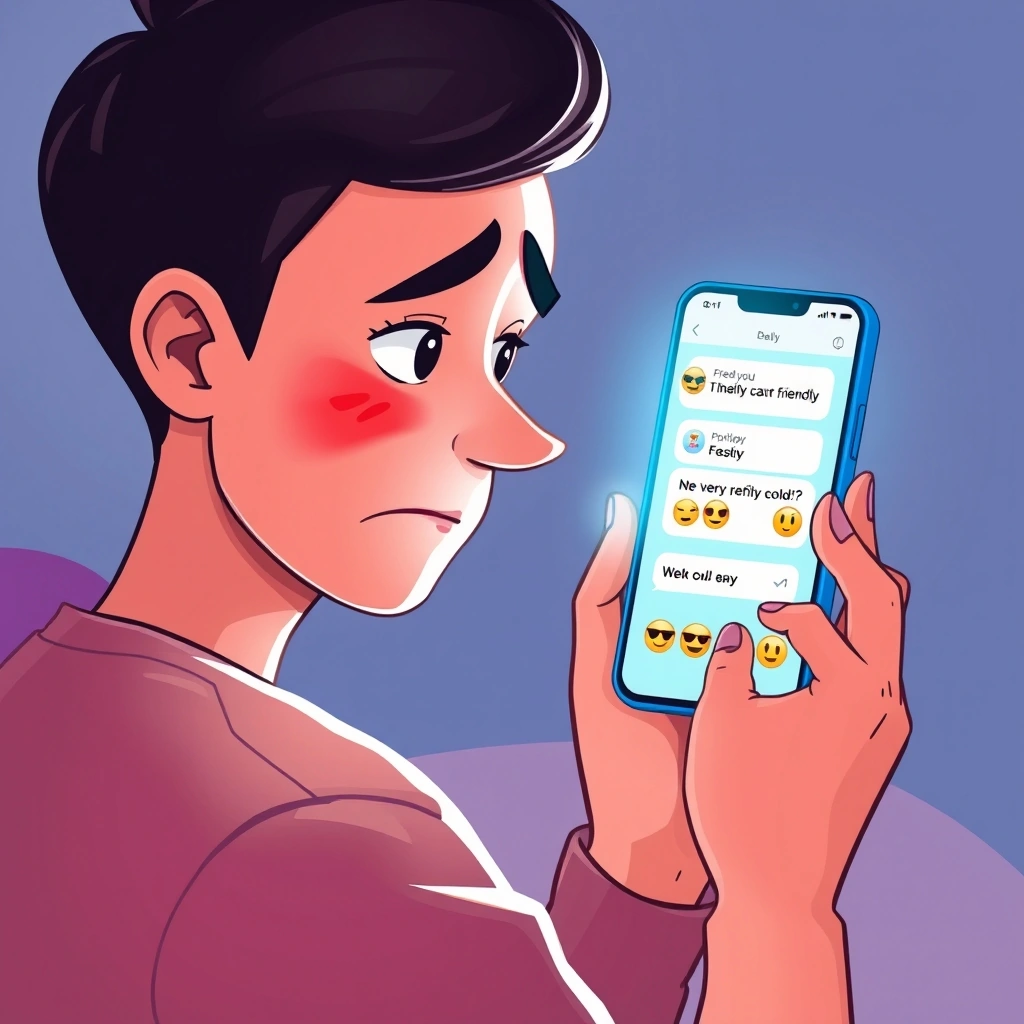
These moments of misfiring aren't usually dramatic blow-ups. They're the slow leaks in relationships—the slightly colder tone in subsequent messages, the hesitation before sharing something personal next time, the unspoken feeling that you're not quite on the same page. For more on how these tone shifts happen, you can read about the unexpected tone twists in casual conversation.
When Intent and Impact Diverge
Consider the classic period (.) at the end of a sentence. In a text, it can transform a neutral "Okay" into a terse, final, and even angry "Okay." Now layer an emoji on top of that. "Okay. 👍" What does that mean? Is it genuine agreement with a period for grammatical correctness? Or is it passive-aggressive acquiescence, sealed with a sarcastic thumbs-up? The receiver gets to decide, and their decision is often based on their current mood, their history with you, and their own emoji dialect.
The single red heart ❤️ is another minefield. For some, it's a casual sign of affection, no heavier than a "xoxo." For others, it's reserved for deep, romantic love or family. Sending it to a colleague or a casual friend can send a signal you never intended, either making things awkward or creating an expectation of closeness that isn't there.
The Compounding Effect of Ambiguity
The problem compounds in serious or tense conversations. During a disagreement, firing off a 😐 (neutral face) or a 😑 (expressionless face) can feel like a nuclear option—a visual eye-roll that shuts down dialogue. You might use it to convey "I need a moment" or "I'm processing," but it's almost universally received as "I am done with this and with you."
Similarly, the prayer hands emoji 🙏 is used by many to mean "thank you" or "please." But in a message about a serious illness or loss, it can inadvertently come across as religious or dismissive, when a simple "I'm here for you" in words would have landed with more authentic weight. The emoji becomes a placeholder for emotional labor we're not quite sure how to do, and it shows.
These digital misunderstandings have a real, unseen cost. They force us to spend mental energy decoding and worrying, energy that could be spent on the connection itself. Sometimes, the translation fails completely, as explored in when emojis get lost in translation.
Navigating the Emoji Minefield
So, do we abandon emojis? Absolutely not. They are a brilliant, colorful part of our language. The solution isn't avoidance, but mindful use. It's about recognizing that they are not a universal shorthand. Before sending that potentially ambiguous symbol in a sensitive context, pause. Ask yourself: Could this be read another way? If there's even a shadow of doubt, lean on words. Use the emoji to accent a clear message, not to be the message.
Pay attention to the emoji "dialects" of the people you talk to most. Notice what they use and how it makes you feel. And when in doubt—especially in moments of importance, tension, or new relationships—err on the side of clarity. A genuine "That means a lot, thank you" will always carry more true connection than a heart-eyes emoji ever could. The goal isn't to communicate perfectly, but to communicate with care. And sometimes, care means putting the emoji keyboard away and finding the words instead.
For more reflections on the tricky side of our digital symbols, explore other thoughts in our emoji mistakes & misuse category.
📒 Related Blogs
More...The Unspoken Wait: How Emojis Whisper Our Anticipation
Beyond Words: The Subtle Power of Emojis in Navigating Sensitive Conversations
The Unsung Heroes of Work Chat: How Emojis Make Your Slack Messages Land Perfectly
The Unspoken Magic of Emojis in Project Updates
Emoji Etiquette: Navigating the Unwritten Rules of Digital Communication
Emoji Etiquette: Mastering the Unspoken Rules of Digital Communication