The Hidden Power of Emojis: How a Simple Icon Shapes Your Feelings Online

Mar 24,2026
Think about the last text you sent. Did you add a smiley face? A thumbs up? Maybe a thinking emoji? Chances are, you didn't overanalyze it. You just felt it was the right thing to add. That's the magic—and the power—of emojis in action. They're not just cute pictures; they're tiny emotional conductors, silently guiding how we feel and react in every online conversation.
Without the tone of voice, a furrowed brow, or a genuine smile, our digital words can feel flat, even cold. A simple "okay" can be read as agreement, indifference, or passive aggression. This is where emojis step in. They fill that emotional void, acting as a form of digital body language. They're the mental shortcuts our brains desperately need in a text-only world.
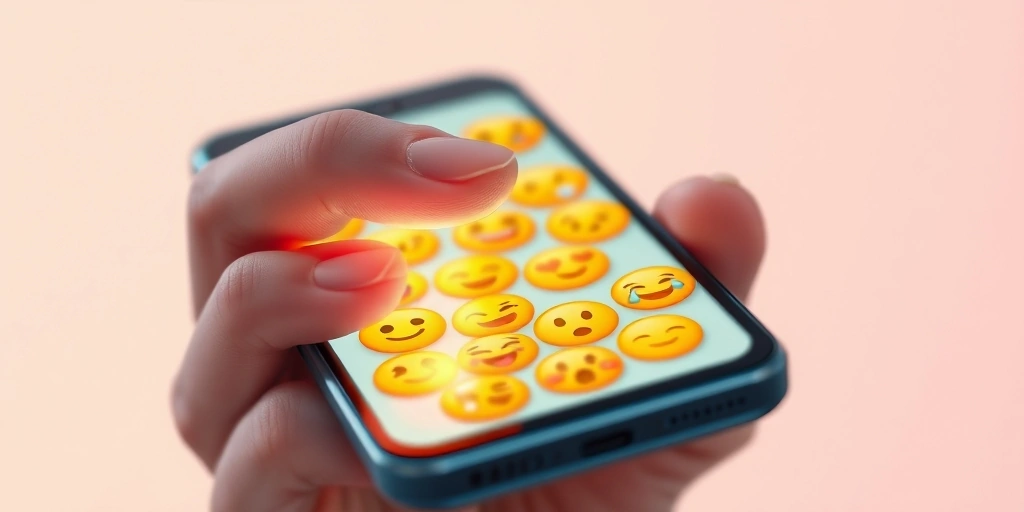
Our brains are wired for efficiency. When we communicate face-to-face, we process thousands of nonverbal cues in milliseconds—a smirk, a shrug, a softening of the eyes. Online, that rich data stream is gone. So, our minds latch onto the next best thing: the emoji. A single 😊 at the end of a sentence does the heavy lifting of a friendly tone and a warm expression. It tells our subconscious, "This is safe. This is friendly." We don't consciously think, "Ah, a smiling face denotes happiness"; we simply feel the warmth and adjust our emotional response accordingly.
This process happens instantly and beneath the surface of our awareness. It's a subconscious negotiation. When someone uses a 😐 or a 😬, it sends a subtle signal of discomfort or awkwardness, priming us to tread carefully or offer reassurance. Conversely, a string of ❤️ or 🎉 can create a shared sense of excitement and connection, making a group chat feel like a celebration. You can explore more about this instant emotional bridging in our article on the secret language of emojis.
How Emojis Color Our Perceptions
The influence goes beyond just setting a tone. Emojis can actively reshape how we interpret the words around them. Researchers have found that the same message is perceived more positively when accompanied by a positive emoji and more negatively with a negative one. The emoji acts as an emotional lens, coloring the entire message.
For example, a boss texting "We need to talk" could induce anxiety. But "We need to talk 😊" feels collaborative and positive. The words are identical, but the subconscious reaction is worlds apart. The emoji doesn't just sit beside the text; it infuses it with meaning, guiding our brain toward a specific emotional conclusion.

The Unseen Rules of Engagement
This subconscious guidance creates unspoken rules in our digital interactions. We learn that replying with just "K." can seem curt, but "K! 👍" feels engaged and agreeable. We understand that a heart react ❤️ on a vulnerable post carries more weight than a simple "like." These aren't rules we're taught; they're patterns we absorb through experience, and emojis are the primary symbols in this silent grammar.
This silent grammar even shapes how we see others. The emojis a person consistently uses become part of their digital personality. Are they always using 😂? They're probably seen as fun and easygoing. Do they favor 🧐 or 🤔? They might be perceived as thoughtful or analytical. Our brains use these patterns to build a subconscious profile of the person on the other side of the screen. Dive deeper into this idea of perception in our piece on how emojis shape how we see each other.
Of course, this system isn't perfect. Misinterpretations happen—a sarcastic 😉 can be missed, or a playful 😛 can be read as dismissive. But even these missteps highlight how reliant we've become on these symbols to convey nuance. When they fail, we feel the disconnect acutely, because our expected emotional shortcut has broken down.
Embracing the Emotional Toolkit
So, what does this mean for us? It means we have a powerful, subconscious toolkit at our fingertips. Being mindful of this power can make us better communicators. Choosing a 🥰 over a simple 🙂 can amplify care. A supportive 🤝 can solidify camaraderie. A well-placed 😅 can diffuse potential tension.
It's not about overthinking every icon. It's about recognizing that these small choices have a real, psychological impact. They help build trust, convey empathy, and foster connection in a medium that can often feel isolating. They are the glue that holds the emotional subtext of our digital lives together.
Next time you go to send a message, pause for a second. Think about the emotional landscape you want to create. Is it supportive? Excited? Apologetic? Let that feeling guide your emoji choice. You're not just decorating your text. You're gently, subconsciously, guiding the heart of the conversation.
For more insights into the fascinating intersection of symbols and psychology, check out our full collection of articles on emoji psychology.
📒 Related Blogs
More...The Secret Language of Reactions: How Emojis Shape Opinions Online
The Psychology Behind Emojis: Unlocking Our Digital Emotions
The Art of the Quick Reply: How Emojis Effortlessly Elevate Our Daily Chats
The Secret to Effortless Chats: How Emojis Keep Your Conversations Alive
The Cringe-Worthy Emoji: When Professional Messages Go Awry
Beyond Words: How Emojis Master the Art of Short and Sweet Daily Chats