The Quiet Confidence of Emojis: When Words Aren't Enough

Mar 17,2026
Have you ever stared at a text you just typed, feeling like it didn't quite capture what you meant? The words are there, but the feeling is missing. It's in those moments of hesitation that I've noticed something interesting happening. Instead of typing another sentence, we reach for an emoji. It's not a retreat from language; it feels more like a quiet act of confidence.
Think about it. Sending a plain "okay" can feel cold, even passive-aggressive. But "okay 👍" or "okay 😊"? It changes everything. That tiny icon does the heavy lifting of tone, intention, and emotion. It’s a small stamp of assurance on your message, a way of saying, "I mean this, and I mean it kindly." It closes the emotional gap that plain text so often leaves wide open.
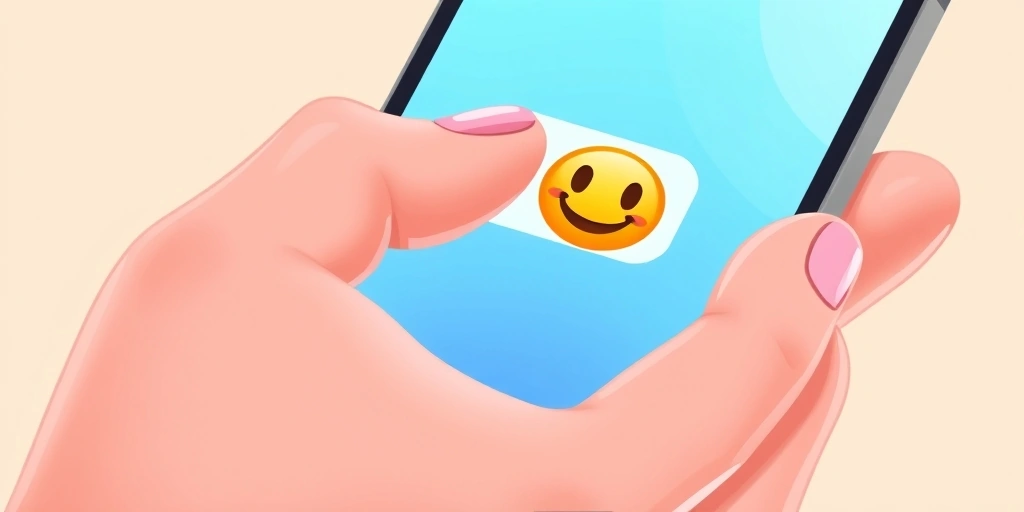
This isn't about being overly casual or lazy with words. It's the opposite. It's about precision. When feelings are complex—a mix of excitement and nervousness, support and worry, agreement with a slight caveat—an emoji can hold that nuance in a way a paragraph of explanation sometimes can't. It’s a tool for emotional clarity. You're confidently defining the emotional landscape of your message, ensuring the other person doesn't have to guess.
The Armor of the Smile
I've seen this play out most clearly in situations that require a bit of emotional bravery. Delivering slightly difficult news, setting a gentle boundary, or even just being vulnerable and sharing a personal win. The words might feel exposed on their own. But tagging a 🙂 or a 🤗 onto the end isn't just decoration. It acts like emotional armor—not to hide, but to frame the message with warmth and self-assurance. It says, "I'm okay, and I want you to be okay receiving this."
It’s fascinating to observe how this confidence builds over time. You start to learn which emojis are your personal ambassadors. For me, the simple smiling face with smiling eyes 😊 has become a go-to. It feels genuine, warm, and steady. It’s my way of planting a friendly flag on whatever I’ve just said. This isn't unique to me; we all develop our own emoji shorthand for navigating digital conversations with more grace and assurance.
Beyond Substitution: Emojis as Emphasis
Sometimes, the confidence isn't about softening a message, but about strengthening it. A fist bump 👊 after agreeing on a plan, a fire emoji 🔥 to hype up a friend's achievement, or a hundred points 💯 to show unwavering agreement. These aren't replacements for words; they are amplifiers. They add a layer of enthusiastic, embodied agreement that "cool" or "I agree" often lacks. They let you lean into the sentiment with full force, projecting a collaborative and supportive confidence.
This subtle behavior reveals a deeper truth about our digital lives. We are constantly, intuitively, working to make our text-based communication more human, more resonant, and more truthful to our inner state. The emoji has become a crucial instrument in that orchestra. It helps us assert our emotional presence in a medium that can easily flatten it.
Of course, it's a dance. Overuse can dilute meaning, and context is everything. But when used with intention, that little picture does something profound. It allows us to stand more fully behind our digital words. It lets us be both the writer and the editor of our tone, injecting a dose of confident humanity into the pixelated conversation. In the end, it’s less about the emoji itself and more about the conscious choice to connect more clearly. It’s a small, powerful act of saying, "This is me, and this is how I feel." And that is a fundamentally confident thing to do. For more on how emojis shape our emotional world, explore our thoughts on emoji and emotion.
📒 Related Blogs
More...The Hidden Power of Emojis: How a Simple Icon Can Change Everything
The Magic of a Single Tap: How Emojis Make Quick Chats Feel Truly Connected
The Unseen Tempo: How Emojis Control the Flow of Fast-Paced Chats
The Hidden Impact of Emojis on Your Mental Health & Digital Well-being
The Hidden Conversation: How Emoji Pairs Change Everything in Your Texts
Beyond Words: How Emojis Subtly Shift Meaning in Your Messages