The Risky Silence: How Emojis Save Us When Words Feel Too Dangerous

Mar 20,2026
You know that feeling. Your thumb hovers over the send button. The cursor blinks in the text box, a tiny, judgmental metronome. You've typed something, then deleted it. Typed something else, deleted that too. The conversation has hit one of those moments—a delicate, emotional ledge—and stepping forward with words feels like a genuine risk.
What if it's misunderstood? What if it's too much? What if it's not enough?
So often, we retreat into silence. An uncomfortable, digital silence that stretches between messages. But more often than we notice, we don't just leave a blank space. We send a little picture instead. A heart. A face with a single tear. A pair of praying hands. We use an emoji to soften the edge of that silence, to occupy the dangerous territory without fully committing to a sentence that could backfire.
The Space Between Words
It's not that we have nothing to say. It's that we have too much to say, and no safe way to package it. Language is clunky. It's definitive. "I'm sorry" can feel woefully inadequate. "I'm thinking of you" can feel strangely invasive. "I'm hurt" can feel like an accusation.
But a 🥺? A 😔? A ❤️🩹?
These aren't replacements for words. They're placeholders for the complex swirl of emotion that words struggle to contain. They're a way of saying, "I am here, in this feeling with you, but I can't quite articulate its shape yet." They build a bridge over the uncomfortable silence, allowing the conversation to continue its flow without demanding a resolution that neither person is ready for.
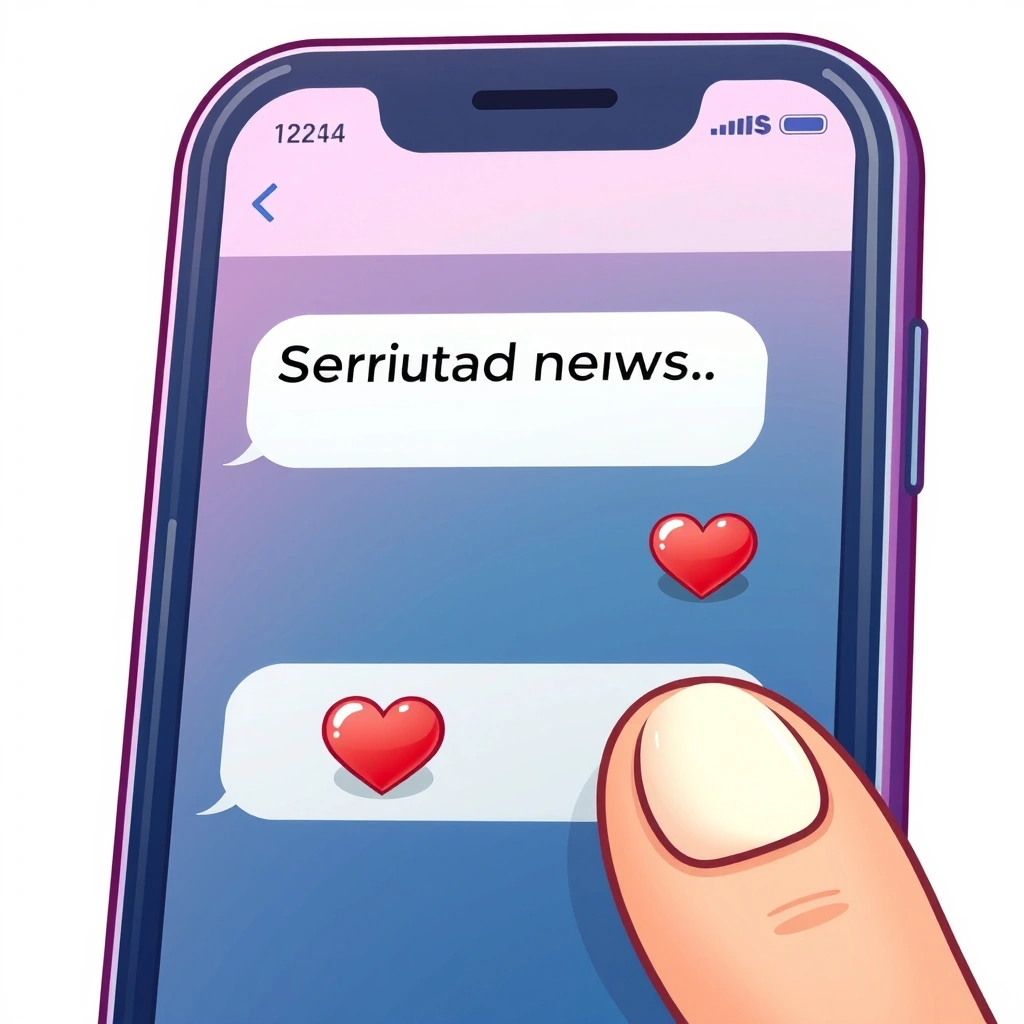
Think about the last time you got bad news from a friend. "My dog passed away last night." What do you type back? "I'm so sorry for your loss" feels like a Hallmark card. "That's awful" feels dismissive. You might type a paragraph, then erase it, worried it will make their grief about your need to say the right thing.
So you send a single emoji. A 💔. Or a 😢. Or maybe just a 🫂.
It’s a gesture. A digital arm around the shoulder. It says, "I see your pain. I acknowledge it. I'm holding space for it." It softens the brutal finality of their message and your subsequent silence. It’s a form of emotional punctuation that doesn't try to end the sentence, but simply acknowledges its weight. This is part of the unspoken language emojis create, where a symbol can carry the burden of shared feeling.
When Vulnerability Feels Like a Trap
This happens just as often, maybe more, when the feelings are our own. When we're the ones feeling vulnerable, exposed. Telling someone you're anxious, or lonely, or disappointed in them… it requires a level of bravery that doesn't always surface at 11 PM on a Tuesday.
So we test the waters. We send a message that's almost neutral, but we cap it with an emoji that hints at the subtext.
"Long day." followed by a 😮💨.
"No worries." followed by a 🫠.
"It's fine." followed by a 🙂 (the most dangerous emoji of them all).
The emoji does the heavy lifting. It colors the plain text with the emotion we're too scared to spell out. It's a risk, but a smaller, more controlled one. If the recipient questions it, we can always retreat. "Oh, the emoji? It was nothing, just felt like using it." The emoji gives us plausible deniability while still broadcasting our true frequency to anyone listening closely enough.
We use them as buffers. A cushion between our raw feeling and the other person's perception. That cushion is what makes the conversation feel safe enough to continue. Without it, we might just shut down. The silence would harden, and the connection would stall. The emoji keeps the door propped open, just a crack, letting a little light in.
It’s fascinating how a tiny, cartoonish image can perform such a vital social function. It navigates the minefield of sensitive conversations where direct words might detonate. It’s diplomacy in digital form.
The Unfinished Conversation
And maybe that's the key. Emojis in these moments don't seek to finish the conversation. They seek to continue it. They resist closure. A period ends a thought. An emoji extends an invitation.
A "K." is cold and final.
A "K 😊" is… ambiguous, but open.
That openness is everything. It allows for the messiness of human emotion to exist without immediate categorization or solution. It says, "This is a feeling, not a fact. Let it breathe."
So the next time you find yourself in that risky silence, thumb poised, heart hesitating—notice the impulse. The impulse to say something, anything, to break the tension. Before you force out a sentence that doesn't fit, consider the humble emoji. It's not a cop-out. It's often the most emotionally intelligent tool in our digital toolkit. A way to be present, to be kind, to be connected, without having to find the perfect words that may not even exist.
It’s the gentle tap on the shoulder in a noisy room. The shared glance across a table. The squeeze of a hand. It’s communication stripped back to its most essential, human core: I am here. I feel this with you. We don't have to solve it right now.
And sometimes, in the spaces between our words, that’s all that really needs to be said.
📒 Related Blogs
More...The Secret Shortcut: How Emojis Help Our Brains Communicate Faster
Emojis: The Secret Sauce for Friendly, Flowing Digital Conversations
The Secret Life of Emojis: Decoding Their Hidden Meanings & Cultural Impact
The Global Language of Emojis: Cultural Interpretations & Usage
How Emojis Became Our Secret Weapon for Calming Awkward Chats
The Fascinating Evolution of Emojis: From Early Kaomoji to Global Unicode