The Secret Language of Emoji Pairs: How Two Little Icons Change Everything You Say

Mar 06,2026
Think about your last text. You probably didn't just send a single emoji and call it a day. More likely, you sent a couple. Maybe a laughing face followed by a crying one. Or a heart, then a thinking face. On their own, they're simple. But together? That's where the real conversation happens.
We all know that emojis add tone to our plain text, acting like the body language of the digital world. But the most fascinating shift isn't from text to emoji—it's from one emoji to two. A sequence creates a story, a mood, a nuance that a single symbol just can't capture on its own.
From Statement to Conversation
A single emoji is a period. It's a definitive stamp on a sentence. "Great job!" followed by a clapping hands emoji is clear, direct praise.
But "Great job!" followed by clapping hands AND a winking face? Suddenly, it's playful. It might be genuine praise with a friendly nudge, or it could be sarcastic, depending on the context. The pair creates a dialogue between the two feelings, leaving room for interpretation and shared understanding between you and the person you're talking to.
This is the core of how pairs change understanding. They introduce relativity. One emoji modifies the other, softening a sharp comment or adding a layer of irony to a straightforward statement. It’s the difference between a shout and a whisper, a nudge and a shove.
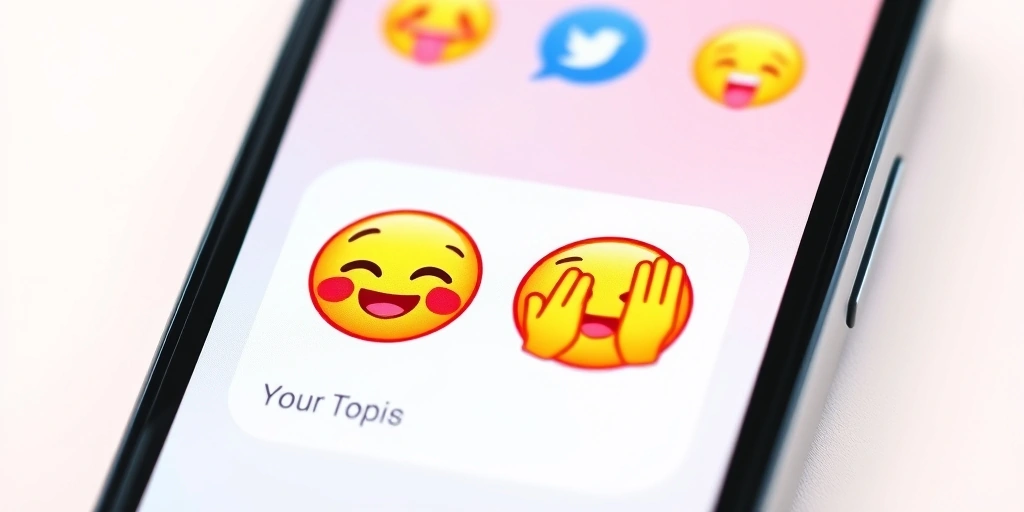
Think about the classic "face with tears of joy" emoji. It's the universal sign for "this is hilarious." But pair it with a pleading face or a face holding back tears? Now you're not just saying something is funny; you're saying it's so funny it's almost painful, or you're laughing through a slightly awkward or stressful situation. The second emoji provides the emotional subtext.
Building Bridges and Preventing Fights
This relational power makes emoji pairs incredibly useful for navigating the tricky waters of casual chat, where tone is famously easy to misread. A plain text "Sure" can feel cold or even passive-aggressive. "Sure" with a thumbs-up is better—positive and agreeable.
But "Sure" with a thumbs-up AND a smiling face with smiling eyes? That's warm, genuine, and enthusiastic agreement. You've used the pair to build an emotional bridge, ensuring your friend feels your positive intent. It's a tiny act of emotional labor that makes digital communication feel more human.
Similarly, pairs are excellent for softening feedback or delivering slightly sensitive news. A sentence that could be read as criticism can be followed by a grimacing face and a red heart. The pair says, "This is awkward for me to say, but I care about you." The meaning emerges entirely from the sequence. You can explore more about this softening power in this deeper look at how pairs affect your words.
The Unwritten Grammar of Pairs
There's no official rulebook for this, but we've all developed an intuitive sense for it. The order often matters. A fire emoji followed by a skull (meaning "I'm dead from laughter") tells a story of something being so cool it's overwhelming. Reverse them, and the meaning might slightly shift or feel less natural.
This sequencing is how we create mini-narratives. A series of heart emojis in different colors tells a story of abundant, multifaceted love. A heart-eyes face followed by a drooling face intensifies the desire or appreciation. We're not just listing emotions; we're showing their progression.
This aspect of digital body language is especially potent in private, ongoing conversations where you have shared history. A specific pair can become an inside joke, a shorthand for a whole shared experience. That inside knowledge is part of what makes emoji pairs in private chats so uniquely powerful.
When Pairs Create Entirely New Meanings
Sometimes, the combination creates a third, distinct meaning that isn't contained in either symbol alone. The "eyes" emoji paired with a speech bubble isn't just "I see you talking." In modern use, it's often "I'm watching this drama unfold" or "Tell me more, I'm listening." It's a prompt for gossip or deep conversation.
A rocket ship followed by a money bag doesn't just mean space and wealth. It means "to the moon!"—a phrase about rapid growth and success, borrowed from crypto and stock culture. The pair has been lexicalized; it's now a unit of meaning itself.
This is the most advanced level of emoji pair communication: creating idioms. We're collectively building a visual slang, and it's evolving faster than any formal language ever could.
So, the next time you're about to hit send, pause for a second. Look at your message. Could a second emoji add the warmth, the irony, the clarity, or the nuance you're really feeling? That simple act of pairing is you doing the essential work of human connection in a digital space—ensuring the person on the other end doesn't just read your words, but feels your meaning. And that's a skill worth cultivating. For more on the fascinating world of how we combine these symbols, check out our broader collection of thoughts on emoji and emoji combinations.
📒 Related Blogs
More...The Journey of Emojis: From Early Kaomoji to Global Unicode Standards
The Unspoken Magic: How Emojis Soften Project Updates and Build Better Teams
The Secret Power of Emojis in Viral Conversations
The Ever-Shifting Emoji Code: How Online Trends Reshape Digital Language
The Little Smiles That Make a Big Difference: Emojis and Casual Fun