The Unseen Sting: When Your Emojis Accidentally Hurt

Feb 24,2026
We use emojis to add warmth, humor, and clarity to our texts and DMs. They're the digital equivalent of a smile or a wink across the room. But what happens when that wink is seen as a smirk? When the heart feels hollow? The truth is, our tiny digital ambassadors don't always land as intended. Sometimes, they backfire in the quietest, most subtle ways, leaving a faint but lingering sting.
It's rarely about malice. More often, it's a perfect storm of context, personal history, and the inherent ambiguity of a pictogram. You send a message feeling perfectly clear, while the person on the other end is assembling a completely different story from the same set of clues.
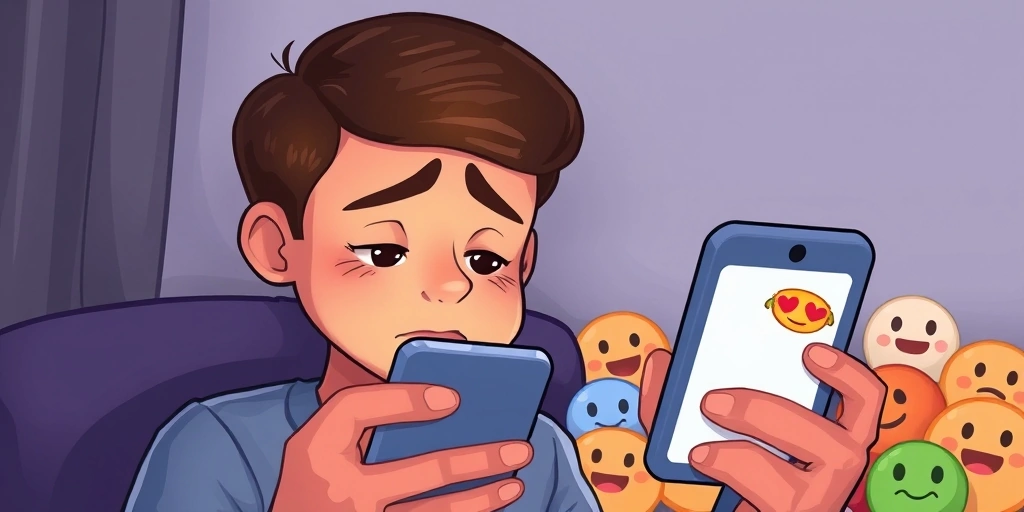
The Context Collapse
The biggest culprit is what communication experts call 'context collapse.' In person, your tone of voice, facial expression, and body language do most of the work. Online, that all gets flattened into text and a few small images. An emoji is asked to carry an enormous emotional load, and sometimes it buckles under the pressure.
Think about the classic 'thumbs up.' To you, it might mean "Got it!" or "Sounds good!" To someone else, especially in a more sensitive conversation, it can read as dismissive, cold, or even passive-aggressive. It shuts down dialogue instead of affirming it. The gap between your intent and their perception is where the misunderstanding blooms.
The Professional Pitfall
This gets especially tricky in professional settings. That playful 'winking face' emoji you used to soften a request in a Slack channel? To a colleague or a boss you don't know well, it might seem unprofessional or oddly intimate. The 'face with tears of joy' emoji in response to a client's serious question can accidentally telegraph that you're not taking them seriously. We often adopt a more casual, personal emoji style with friends and accidentally let it seep into areas where it doesn't fit, causing subtle friction. For more on navigating these tricky waters, especially in group settings, our piece on when emojis go rogue in group chats dives deeper.
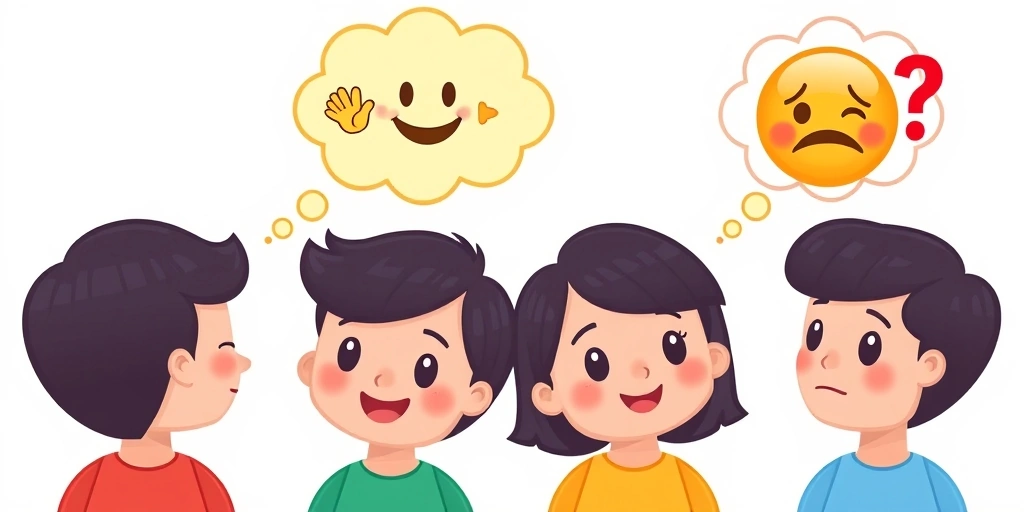
The Personal History Filter
Everyone views emojis through the filter of their own experiences. The 'smiling face with smiling eyes' might be your go-to for genuine warmth. But if someone's past interactions have involved people using that emoji sarcastically, they'll forever be suspicious of it. You have no way of knowing their emoji baggage.
This is common in closer relationships. A partner might use a 'neutral face' or a simple period where a heart used to be. To them, it's just a quick reply. To you, it might trigger a spiral of "Are they upset with me?" The absence of an expected emoji can sometimes speak louder than any symbol ever could.
When Generations Collide
The generational divide in emoji use is a rich source of subtle backfires. The 'prayer hands' emoji, for example, is used by many to express gratitude or "thank you." For others, it retains a strictly religious connotation. Using it in the wrong context can cause quiet confusion or offense. The 'clapping hands' meant as praise can be read as sarcastic. These mismatches aren't about right or wrong; they're about unspoken dictionaries that we assume are universal, but aren't.
Exploring the broader category of emoji mistakes and misuse can help you spot these patterns before they happen.
Navigating the Minefield (With Grace)
So, how do we avoid these subtle backfires? The goal isn't to stop using emojis—they're too valuable for connection. The goal is to use them more mindfully.
Read the room (or the chat). Match the emoji tone to the context and your relationship with the person. A string of cartoon hearts might be perfect for your best friend, but a single red heart might be more appropriate for a family group chat.
When in doubt, use words. If a conversation is emotionally charged or important, an emoji is rarely enough. A sentence like "I'm saying this with kindness" or "Just joking!" does the work that an emoji cannot. Words are your precision tools; emojis are the highlighters.
Ask for clarification. If you're on the receiving end and feel a sting from an emoji, try asking. A simple "Just checking—what did you mean by that emoji?" can clear up 90% of misunderstandings instantly. It opens a door instead of building a wall.
Remember, the person on the other side is just that—a person, trying to connect, just like you. Their interpretation isn't a character flaw; it's a different reading of a deeply imperfect language. For a closer look at how these intentions get twisted, this article on emojis causing confusion breaks down specific group chat dynamics.
Emojis are a wonderful, flawed, evolving dialect. Their subtle backfires are reminders that digital communication, for all its speed, still requires our empathy and attention. The next time you reach for that perfect symbol, take a half-second to consider its journey to the other screen. That tiny pause might be the most meaningful thing you send all day.
📒 Related Blogs
More...How Emojis Create the Unspoken Rhythm of Our Digital Chats
The Invisible Hand: How Emojis Steer Understanding in Online Communities
Bridging the Unspoken: How Emojis Resolve Emotional Uncertainty in Group Chats
Emoji Fails: Hilarious Misinterpretations & Communication Blunders
The Unseen Power of Emojis in Public Social Media Replies
The Playful Power of Emojis: Turning Casual Chats into Mini Adventures