The Unspoken Language: How Emojis Fill the Quiet Moments in Our Texts

Feb 28,2026
Think about the last text you sent. Maybe it was a quick "On my way!" or a thoughtful "Thinking of you." Now, think about whether you added an emoji. Chances are, you did. It’s almost a reflex now, a tiny tap that does so much heavy lifting. We don't often stop to think about why, but these little icons have become the glue for our digital conversations, especially in those everyday pauses where words alone feel incomplete.
Texting is a strange medium. It’s immediate, yet distant. We have the person's attention, but we can't see their face or hear their tone. That space—the gap between sending a message and getting a reply, or the silence where a nod or a smile would live in person—is where misunderstandings breed. A plain "okay" can feel cold. A "sure" can seem sarcastic. This is the void emojis were born to fill.
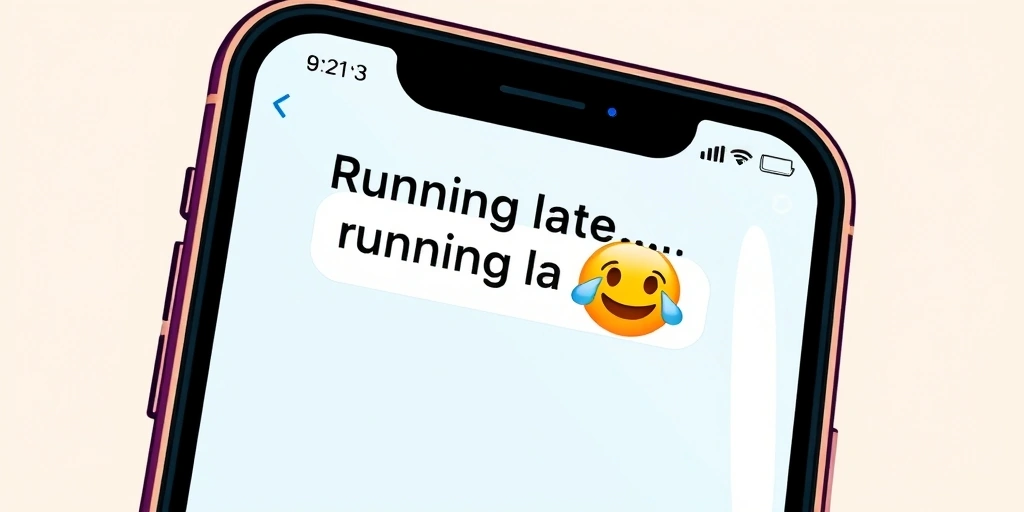
It’s not about the information anymore; it’s about the feeling. You're running late, so you send "Sorry, 5 mins late 😅". That sweaty smile emoji isn't an apology; it's the visual equivalent of an embarrassed, out-of-breath shrug. It communicates fluster, regret, and a plea for patience all at once. Without it, the message is just a statement of fact. With it, it's a shared moment of human fallibility.
These pauses happen all day long. The awkward lull after a heavy confession, filled with a heart or a hugging face. The playful tension after a joke, punctuated by a winking face 😉. The supportive silence when someone shares bad news, now occupied by a folded hands emoji 🙏 or a simple red heart ❤️. Emojis do the emotional labor that punctuation marks simply can't. A period ends a sentence; an emoji continues the conversation.
This subtle art of filling space is something we've all gotten incredibly good at, often without realizing it. We’ve developed a shared intuition for which emoji softens a request (🥺), which one adds playful sarcasm (🙃), and which one conveys genuine enthusiasm without shouting (🔥). It’s a new layer of literacy. For more on how these icons have woven themselves into the fabric of our chats, check out our piece on the emoji takeover of small talk.
More Than Just Decoration
Calling them decorations misses the point entirely. They are functional. They are pragmatic. In a world of rapid-fire communication, efficiency is key. An emoji is often the fastest, most precise way to convey a complex emotional state. Trying to type out "I'm saying this with affectionate exasperation" is clunky. Sending a 😮💨 (face exhaling) or a 🤦♀️ (facepalm) does it instantly and universally.
This function becomes most clear in group chats. That chaotic, flowing river of messages is punctuated by emojis that act as social cues. Someone shares good news, and a wave of 🎉🎊👏 emojis floods in. It’s a digital round of applause, a way for everyone to participate in the celebration simultaneously, filling what would otherwise be a disjointed series of "congrats" texts. The emojis create a sense of togetherness in the pause.
The Comfort in the Quiet
Perhaps the most profound way emojis fill our pauses is by offering comfort. When words fail us—when a friend is grieving, or a partner is stressed—what do you say? Sometimes, there are no right words. But sending a 🌻 (sunflower) to say you're thinking of their brightness, or a 🤍 (white heart) to express pure, gentle love, can bridge that gap. It says, "I'm here in this quiet with you." It’s a non-intrusive, deeply felt presence. This quiet comfort is a powerful aspect of how we use emojis in our deepest relationships.
So next time you go to tap that smiley face or that thumbs up, take a half-second to appreciate what you're really doing. You're not just decorating your text. You're pouring tone into a toneless medium. You're building a bridge over a pause. You're translating a feeling from your heart into a symbol that fits on a screen, ensuring the person on the other end doesn't just read your words, but feels your meaning. In the hustle of everyday life, where our connections are increasingly digital, these tiny icons are the quiet heroes of clarity, keeping our conversations human, one filled pause at a time. For more reflections on emojis in daily life, explore our full collection of articles here.
📒 Related Blogs
More...When Words Aren't Enough: Decoding the Unspoken Feelings Emojis Convey in Delicate Exchanges
When Words Feel Heavy: How Emojis Quietly Ease Our Nervous Moments
The Unspoken Rules: How Emojis Reveal Social Expectations in Your Private Chats
The Unspoken Language: How Emojis Gently Guide Conversations Through Sensitive Topics
The Secret Language of Emojis: How Tiny Icons Capture Our Collective Mood
Rhythm and Reaction: How Emojis Steer Fast-Paced Conversations