The Unspoken Rules: How Emojis Steer Our Gut Reactions in Every Text

Feb 23,2026
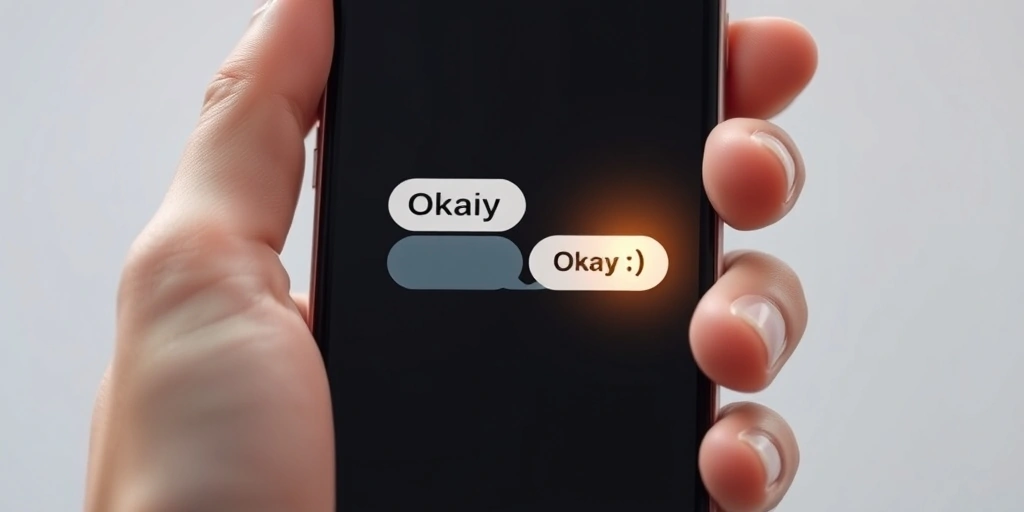
Think about the last time you got a text that was just plain words. Maybe it was a simple "okay" or "sounds good." How did it make you feel? Neutral? A little cold, perhaps? Now, imagine that same message with a smiling face tacked on the end. "Okay :)" or "Sounds good! 😊" Suddenly, the entire emotional temperature of the exchange changes. That's the power at play in our pockets every single day.
In modern messaging, we're not just exchanging information; we're conducting a delicate dance of tone, intent, and emotion without the benefit of voice or body language. This is where emojis step in, not as cute decorations, but as essential guides for our subconscious reactions. They are the mental shortcuts our brains desperately need in the text-only wilderness.
Your Brain on Autopilot
Our brains are wired for efficiency. When we communicate face-to-face, we process thousands of micro-signals—a raised eyebrow, a slight smile, the tilt of a head—in an instant. These signals help us gauge sincerity, sarcasm, joy, or annoyance without conscious thought. Text strips all of that away, leaving our social brains scrambling. An emoji acts as a brilliant, instant substitute for that lost nonverbal data.
When you see a winking face 😉 after a statement, your brain doesn't slowly analyze it. It immediately applies the context of "playfulness" or "sarcasm" to the preceding words, preventing misunderstanding. A single red heart ❤️ can transform a simple "thank you" into a moment of genuine warmth and connection. These reactions happen in milliseconds, below the level of our active thinking. They guide our gut feeling about the message and, by extension, the person sending it.
This isn't just speculation; it's a fundamental part of how emoji psychology works. They fill the empathy gap inherent in digital text. A friend sharing bad news with a sad face 😔 cues our brain to respond with compassion. The same news without the emoji might leave us uncertain about how to react, potentially leading to a more detached or clumsy reply. The emoji gently steers our emotional response in the right direction.
The Subconscious Social Script
Emojis also help us navigate unspoken social scripts. Think about a group chat planning a night out. Someone suggests a time, and another person replies with a thumbs-up 👍. That's not just an agreement; it's a social signal that says "I'm on board, I'm engaged, I'm a cooperative part of this group." It's a digital nod. Conversely, replying with just "k" might be interpreted as passive-aggressive or disinterested, even if that wasn't the intent.
We use emojis to soften requests ("Could you send that file when you get a chance? 🙏"), to amplify excitement ("I got the job!!! 🎉"), and to diffuse potential tension ("Just kidding! 😅"). They act as social lubricant, smoothing over the rough edges that plain text can create. Our subconscious picks up on these cues and adjusts our own reaction and subsequent behavior accordingly. We mirror the emotional tone that's been set.
When a Symbol Changes Everything
The influence is so profound that a single emoji can completely reframe a message. Research has shown that the same sentence is perceived as more sincere, friendly, and competent when accompanied by a positive emoji. This secret power of emojis shapes not just the conversation, but how we view the person on the other side of the screen.
Consider the difference between "Great job" and "Great job! 🔥" The first is praise. The second is enthusiastic, hype-building praise that makes the recipient feel seen and celebrated. The sender is subconsciously framed as more supportive and engaged. The emoji didn't change the words; it changed the entire emotional and social context around them.
Of course, this guidance system isn't foolproof. Misinterpretations happen—the crying-laughing face vs. the actual crying face, the ambiguous use of the smirk 😏. But even in ambiguity, our subconscious is working overtime, trying to land on the correct emotional read based on our relationship with the sender and the conversation history.
So the next time you're about to send a message, pause for a second. Think about the gut reaction you want to elicit. Are you informing, celebrating, consoling, or joking? That moment of consideration before you tap the emoji keyboard is you consciously engaging with a powerful subconscious tool. You're not just adding a picture; you're gently taking the receiver's hand and guiding their emotional reaction to exactly where you hope it will go. And when you're on the receiving end, know that your quick, felt response—that flash of happiness, warmth, or understanding—isn't an accident. It's the quiet, brilliant work of a tiny, colorful guide, doing its best to make our digital world feel a little more human. For more on this subtle shaping of perception, explore the hidden language of emojis and how they craft our digital interactions.
📒 Related Blogs
More...Do Emojis Break Grammar Rules? The Evolving Impact on Written Communication
The Quiet Confidence of Emojis: When Words Feel Too Risky
The Secret Life of Emojis: How They Morph with Every Internet Trend
Emoji Etiquette: Navigating Professional Communications with Emojis
The Secret Code in Your Group Chat: How Emoji Pairs Change Everything
The Silent Language: How Emojis Fill the Gaps in Our Daily Texts