The Unsung Heroes of Chat: How Emojis Absorb Social Tension

Mar 12,2026
Think about the last slightly awkward text you sent. Maybe you were running late, had to cancel plans, or needed to give some gentle, unwelcome feedback. Before hitting send, your thumb probably hovered over the keyboard, searching for the right thing to say. And then, almost instinctively, you reached for an emoji.
It wasn't an afterthought. It was a necessity. That little pictogram did a heavy lift your words couldn't manage alone.
In our fast-paced, text-heavy world, we've lost the vocal tones, the facial expressions, and the body language that have guided human interaction for millennia. A plain "okay" can read as cold agreement or seething resentment. A simple "thanks" can feel genuine or sarcastically dismissive. This ambiguity is a breeding ground for social tension—misunderstandings, hurt feelings, and unnecessary conflict.
This is where our digital pictographs step in, not as mere decorations, but as essential social tools. They act as emotional shortcuts and, more importantly, as tension absorbers.
The Softening Power of a Symbol
Consider the classic scenario: delivering bad news. "The meeting is moved to 8 AM tomorrow." Sent on its own, it's a blunt, jarning statement that might elicit groans or passive-aggressive replies. But add a weary face 😩 or a pleading one 🥺? The message transforms. It's no longer just a decree; it's a shared moment of slight pain. The emoji absorbs the potential frustration directed at the messenger and reframes it as a collective, "We're in this together."
Similarly, constructive criticism is a minefield. "I think this section needs more work" is a hard pill to swallow. But "I think this section needs more work 😅" or "...could use a tweak 🙏" introduces a layer of humility and warmth. The emoji absorbs the sting, signaling that the critique comes from a place of collaboration, not condemnation. It preemptively defuses defensive reactions.
Navigating the Unsaid
Much of social tension lives in what is left unsaid. Emojis give us a way to acknowledge that subtext without having to spell it out awkwardly. When a friend vents about a tough day, responding with just text can feel inadequate. A heart ❤️ or a hugging face 🤗 says, "I hear your pain and I'm here with you," absorbing the emotional weight and offering comfort where words fail.
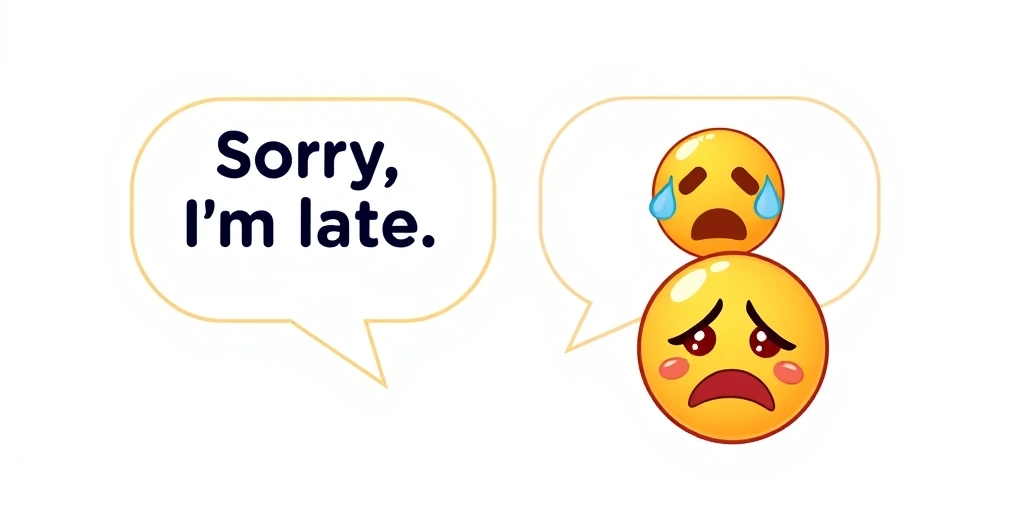
They also help us navigate the subtle dance of invitations and rejections. A "Can't make it, sorry!" feels flat. A "Can't make it, sorry! 😔" or "...next time! 🤞" acknowledges the disappointment and maintains the connection. The emoji absorbs the slight social friction of the rejection, keeping the relationship intact. For more on how these symbols help in tricky social moments, you can explore related thoughts here.
The Fine Line of Tone
Of course, this system isn't foolproof. The same emoji can absorb tension for one person and create it for another. A winking face 😉 after a contentious statement might be intended as a playful nudge, but it can be read as dismissive or smug. The crying-laughing face 😂 has evolved from genuine hilarity to, for some, a marker of passive aggression or overuse.
This ambiguity means we're constantly calibrating. We choose our emojis based on the recipient, the history of the conversation, and the platform's own culture. It's a new form of literacy—reading not just words, but the emotional intent behind the chosen symbol.
What's fascinating is how seamlessly we've adopted this. We don't consciously think, "I will now deploy a tension-absorbing pictogram." We feel the awkwardness in a draft message, sense the potential for misunderstanding, and our brain offers up an emoji as the most efficient solution. It's a non-verbal nod, a digital shrug, a virtual pat on the back inserted directly into the text stream.
They manage the emotional humidity of a chat, preventing it from becoming too dry and cold or too heated and volatile. In group chats especially, they are the glue, offering quick affirmations (thumbs up 👍, fire 🔥), shared laughter (the ever-reliable 😂), or collective sympathy (a string of hearts ❤️) that keep the communal vibe positive and engaged. You can see more examples of emojis acting in these group and situational roles over at our emoji situation blog.
So the next time you pause before sending a message, scrolling through that grid of tiny faces and objects, recognize what you're really doing. You're not just accessorizing your text. You're engaging in a delicate act of social maintenance. You're choosing the right tool to absorb the static, clarify your intent, and ensure your words land as softly as intended.
In the silent, punctuation-less void of digital chat, they are our tone of voice, our facial expression, our gentle touch on the arm. They do the quiet, essential work of keeping our connections smooth, ensuring that what we mean is what is actually understood. And most of the time, we don't even notice they're there, working overtime in the background of every conversation.
📒 Related Blogs
More...The Shifting Faces of Digital Culture: How Emojis Mirror Our Online Worlds
The Quiet Comfort of Emojis: How a Simple Icon Says 'I'm Here'
How Emojis Change Our Voice: A Mirror to Our Digital Selves
Beyond the Text: How Emojis Add Intention to Your Short Messages
Beyond Words: How Emojis Enhance Emotional Expression in Digital Communication
The Silent Scream: Why Your Emojis Are Being Misunderstood in Group Chats